
Europe faces winter gas risks as reserves fall to historic lows
 5 Min Read
Analysts warn of elevated European gas prices through winter and into 2027, although the current situation is not expected to mirror the 2022 energy crisis.
-
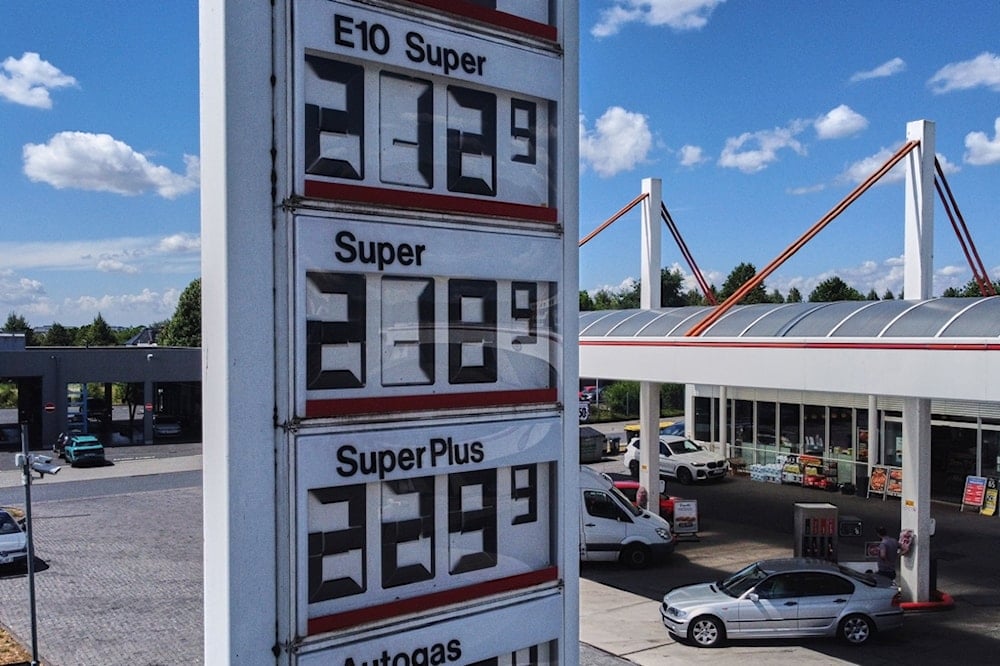
Fuel prices are displayed at a gas station in Frankfurt, Germany on July 1, 2026, the day after the government's fuel discount ended. (AP Photo/Michael Probst)
Europe could face tighter gas supplies this winter as global production growth remains limited and inventories have been depleted, with analysts warning that the continent is moving closer to an energy crisis.
Liquefied natural gas (LNG) plays a significant role in the energy mix of the UK and Europe. Natural gas accounts for around 21% of total energy consumption across the continent, according to Eurostat, while LNG made up approximately 40% of European gas consumption in 2024.
Europe's dependence on external supplies has also increased its exposure to disruptions in global markets. Around 89% of the continent's total gas supply in 2025 came from outside the EU, including the UK, according to Wood Mackenzie analysts, who warned that Europe “is approaching energy crisis territory.”
European gas reserves at historically low levels
The research firm said European gas storage levels were “only just above 50 per cent, an historically low level” for this point in the year. “Low European inventories, strong Asian demand and limited new LNG supply growth almost guarantee elevated prices through this winter and into 2027,” said Massimo Di Odoardo, Wood Mackenzie's vice president of gas research.
“European storage will only reach 75 per cent capacity at best by 1 November. That’s well below the 90 per cent average of the past five years ahead of winter.”
Despite the concerns, Di Odoardo said the current situation should not be compared directly with the energy crisis that followed the start of the Russia-Ukraine war in 2022. European gas prices, he noted, remain “nowhere near” the levels reached at that time.
UK faces exposure to European gas price pressures
The UK has relatively limited gas storage capacity, estimated at only around 5% of its annual demand, leaving the country heavily dependent on imports. Natural gas accounts for roughly one-third of the UK's total energy mix, with less than half of that supply produced domestically.
Norway provides more than a third, or 35%, of the UK's gas, while the remainder comes through LNG imports, particularly from the US and Qatar. The potential shortage in Europe could therefore affect around 7% of the UK's total annual energy consumption.
Although the UK relies on Norway rather than the EU for much of its gas supply, falling European storage levels could still push prices higher. European countries competing to replenish their reserves could bid up the cost of available supplies, potentially increasing wholesale prices in the UK and putting pressure on supply stability elsewhere.
Chris O’Shea, the head of British Gas, also raised concerns about the UK's gas reserves last week, warning that a cold winter could expose the country to supply problems. “European gas storage levels are low. UK gas storage levels are incredibly low. If it’s not a warm winter, then there’ll be problems, and the problems will be associated with having less gas in storage,” O'Shea said.
“If I was the prime minister or I was in the Cabinet, I would want to ensure I’ve done everything I could to reduce the chance of not having enough energy over the winter.”
Russian gas ban adds to Europe's supply pressures
Europe's gas outlook has been further complicated by two major developments. The first is the phased ban on Russian gas imports, with a full ban on Russian LNG scheduled to take effect by the end of this year.
The second is damage to Qatar's Ras Laffan LNG facility following Iranian missile strikes in March. The facility previously accounted for around one-fifth of global LNG production, and repairs are expected to take years to complete fully.
Jess Ralston, head of energy at the Energy and Climate Intelligence Unit, warned that low storage levels could leave Europe particularly vulnerable to further disruptions. “Lower levels of gas storage leaves the continent more exposed to gas price rises if there are further supply disruptions, for example from conflict in the Middle East or if there's a particularly cold winter. And that could impact the UK too as gas prices are strongly linked,” she said.
Ralston noted that the UK's limited storage capacity is partly offset by its substantial LNG import infrastructure, which provides the country with a different form of resilience. During the energy crisis linked to Ukraine, she said, UK LNG terminals helped channel gas into European markets.
However, she warned that dependence on LNG also carries risks, particularly as competition for available cargoes could intensify during the coming winter amid uncertainty over global supplies.
“The lesson from recent years is that relying on gas in any form leaves us exposed to the actions of people like Putin and Trump. Energy security that lasts will come from reducing demand for gas altogether through electrification and clean power.”


