
Hormuz risks push LNG buyers to demand UAE, Qatar price cuts
 4 Min Read
Asian and European LNG buyers are using disruptions caused by the US war on Iran to demand lower prices and stronger supply guarantees from Qatar and the UAE.
-
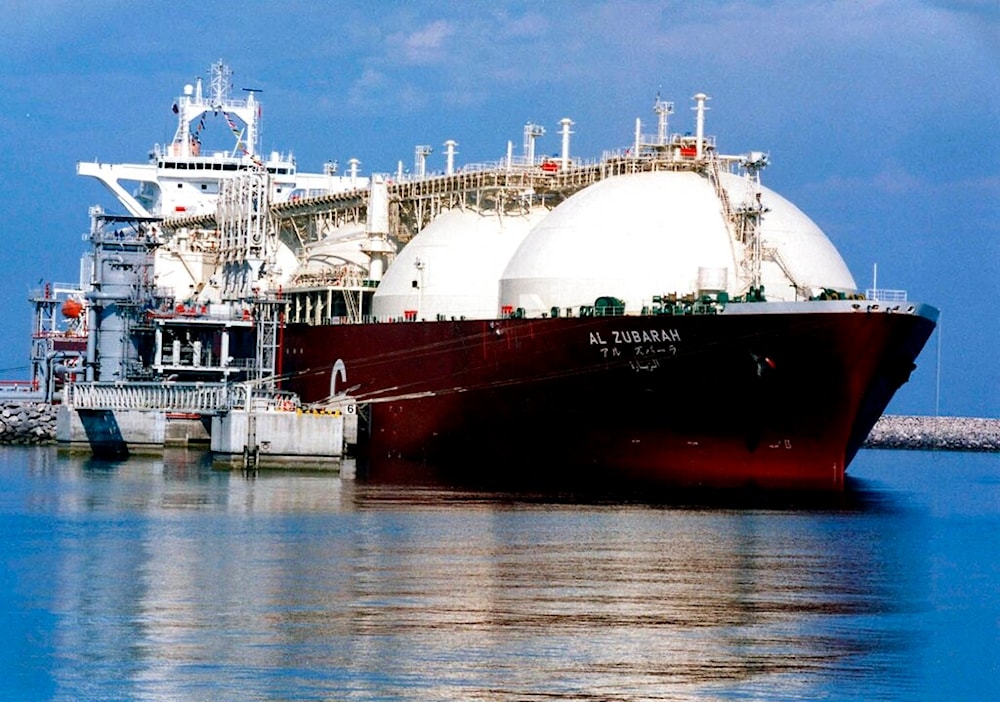
This undated file photo shows a Qatari liquefied natural gas (LNG) tanker ship being loaded up with LNG, made up mainly of methane, at Raslaffans Sea Port, northern Qatar (AP)
Asian and European importers of liquefied natural gas are preparing to press Qatar and the United Arab Emirates for lower prices, greater contractual flexibility, and stronger delivery guarantees as the fallout of the war on Iran disrupts shipping through the Strait of Hormuz.
Industry executives, traders, and buyers told Reuters that the war has altered the balance of power in negotiations with Gulf exporters by raising insurance costs and exposing the vulnerability of supply routes that depend entirely on the strategic waterway.
Qatar and the UAE together represent roughly one-fifth of global LNG export capacity. However, all of their Gulf-based shipments must pass through Hormuz, where the suspension of most oil and gas traffic has damaged the region’s reputation as a dependable energy hub.
Buyers seek discounts
Qatar has long held a dominant position in the LNG market because of its vast reserves and exceptionally low production costs, while the UAE has attracted buyers by offering comparatively flexible commercial terms.
Importers now argue that the added cost of insuring cargoes and the possibility of future disruptions should be reflected in new contracts.
“Anyone entering into new contracts in the Gulf region will also have to take into account potential insurance costs, which are set to increase,” Nicola Monti, chief executive of Italy's Edison, told Reuters.
War disrupts supplies
Before the war, long-term LNG agreements with Qatar and the UAE were commonly priced at between 12.6% and 12.7% of Brent crude. Some contracts concluded since the outbreak of the conflict have reportedly been priced closer to 12.3%, indicating that buyers are already demanding discounts linked to regional instability.
The disruption has forced QatarEnergy to halt liquefaction operations, suspend exports, and invoke force majeure clauses on contracted deliveries.
Edison, which receives 6.4 billion cubic metres of Qatari gas annually, equivalent to around 10% of Italy’s yearly demand, has had shipments cancelled from April through early September.
QatarEnergy and the UAE’s state-owned ADNOC did not respond to Reuters requests for comment.
Buyers demand guarantees
Traders in Asia said upcoming negotiations would extend beyond price and focus increasingly on security of supply and access to alternative sources.
Buyers are expected to ask Qatar and the UAE to guarantee replacement cargoes if shipments through Hormuz are interrupted. One possible source would be Qatar’s Golden Pass LNG project in the United States, which lies outside the Gulf shipping route.
Purchasers also believe expanding LNG production in the US, Canada, and Mozambique will strengthen their bargaining position by offering more alternatives to Gulf supplies.
Expansion drives discounts
Qatar’s LNG production costs are estimated at around $0.50 per million British thermal units, significantly below the $3 to $5 range faced by many competing projects. Its proximity to major Asian markets also keeps shipping expenses relatively low.
Both Qatar and the UAE are planning further production increases, which traders say could make them more willing to offer discounts in order to secure long-term customers.
“Going forward (Gulf suppliers) will have to contend with a new risk profile stemming from what happened in the Strait of Hormuz and from the fact that nobody can rule out the possibility of a recurrence in the future,” Monti said.
Read more: QatarEnergy extends force majeure on LNG supplies to Edison


