
UK food inflation falls despite war-driven cost pressures
 4 Min Read
British food inflation fell to 1.7% in June despite warnings of a sharp rise after the US-Israeli war on Iran, as retailers absorb higher costs.
-
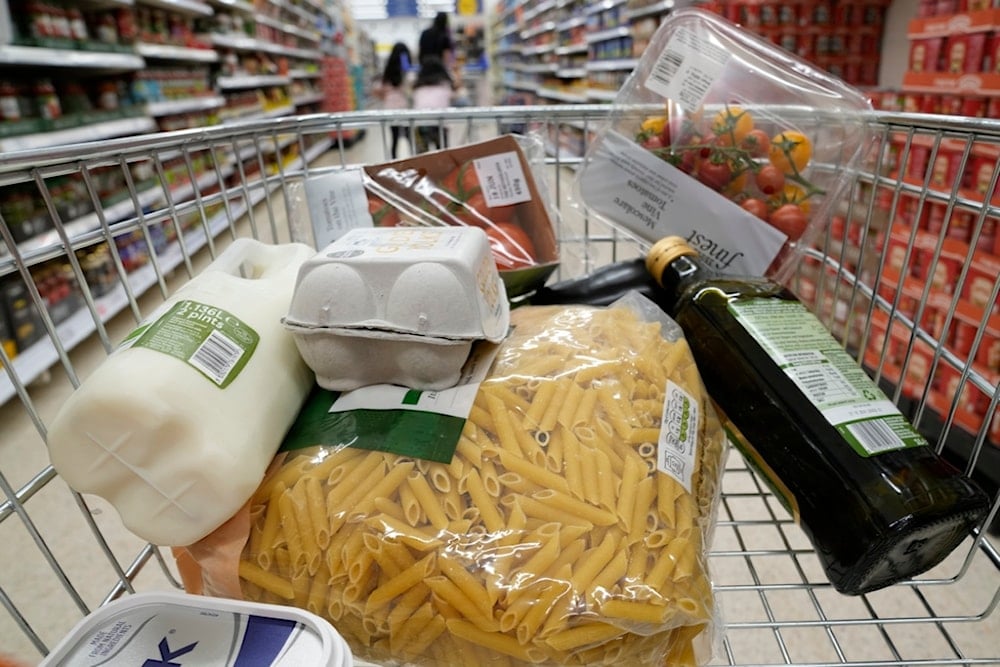
A shopping cart of groceries at a supermarket in London on June 10, 2023. (AP Photo/Alastair Grant)
Britain's food industry warned earlier this year that soaring energy costs following US and Israeli strikes on Iran could push food inflation toward 10% by the end of 2026, Reuters reported on Thursday.
Instead, food inflation has fallen to its lowest level in almost two years, with intense supermarket competition, cautious consumers, and improved supplier hedging helping contain the impact of higher costs.
UK food and non-alcoholic beverage prices rose 1.7% in the 12 months to June 2026, down from 2.2% in May and marking the lowest annual rate since August 2024, according to official figures cited by Reuters.
The figure was also substantially below the 3.6% forecast by the Bank of England in April and the more than 9% increase forecast by the Food and Drink Federation for December.
Read more: UK presses supermarkets to freeze essential food prices
Food inflation falls despite geopolitical shocks
The muted rise comes despite continuing pressure from energy, wages, taxes, and regulatory costs.
Retailers and suppliers have sought to absorb part of those pressures rather than pass them fully on to consumers, particularly as British households remain under the strain of a prolonged cost-of-living squeeze.
Kunal Kothari, a fund manager at Aviva Investors, said the industry was taking multiple measures to contain cost pressures and limit their impact on consumers.
"There's lots of things going on to manage cost push inflation and keep a lid on the price that the consumer sees on the shelf", he said per the Reuters report.
The trend also reflects changes made by suppliers after the inflation shock that followed Russia's invasion of Ukraine. Companies have increasingly locked in energy and ingredient costs further ahead, reducing their exposure to sudden movements in commodity markets.
Reuters reports that Tesco CEO Ken Murphy said suppliers had learned from the earlier inflation shock. "They've learnt their lessons," Murphy said. "People are a lot better hedged this time round."
He also pointed to declines in the prices of some soft commodities, including cocoa and coffee, as another factor limiting food-price increases.
Supermarket competition keeps prices down
Competition between Britain's major supermarkets has become a key restraint on food prices.
Tesco, Sainsbury's, Asda, Morrisons, Marks & Spencer, Aldi, and Lidl are competing aggressively for consumers who have become increasingly sensitive to price.
Clive Black, head of consumer research at Shore Capital, said supermarkets had accepted lower profits in some areas to prevent prices of fresh and chilled products from rising sharply.
"The single biggest factor behind food inflation not progressing as strongly as we thought is the competitive intensity of the industry," Black said, per Reuters.
The pressure is particularly strong because consumers can shift quickly toward cheaper supermarket brands and discount retailers.
Branded food manufacturers have therefore also been cautious about seeking further price increases, amid the risk that consumers will switch to cheaper own-label alternatives.
Worldpanel data showed Tesco's market share declined in both June and July, the first such decline since July 2023.
Meanwhile, almost one-third of grocery sales were made through promotions during the four weeks to June 14, illustrating the extent to which retailers are competing for increasingly price-conscious households.
Retailers absorb higher costs
Supermarkets have also launched extensive cost-cutting programs to offset higher operating expenses.
Tesco says it has generated more than £2.2 billion ($3 billion) in savings over the past four years and is targeting another £500 million this year.
Automation across supply chains and the use of artificial intelligence to optimize markdowns and reduce food waste have contributed to those savings.
But the strategy has limits. Tesco and Sainsbury's have issued unusually broad full-year profit guidance ranges, with the lower end implying year-on-year declines in earnings.
This suggests the restraint in food inflation is not simply the result of falling costs. Retailers and suppliers are also absorbing part of the increase themselves, placing pressure on their margins.
Read more: UK fuel theft hits £200,000 daily as war on Iran inflates energy costs


