
UK inflation expected to rise to 2.9% as energy bills soar
 5 Min Read
UK inflation is expected to rise to 2.9% in July as higher energy bills add pressure to household budgets and fuel rate hike fears.
-
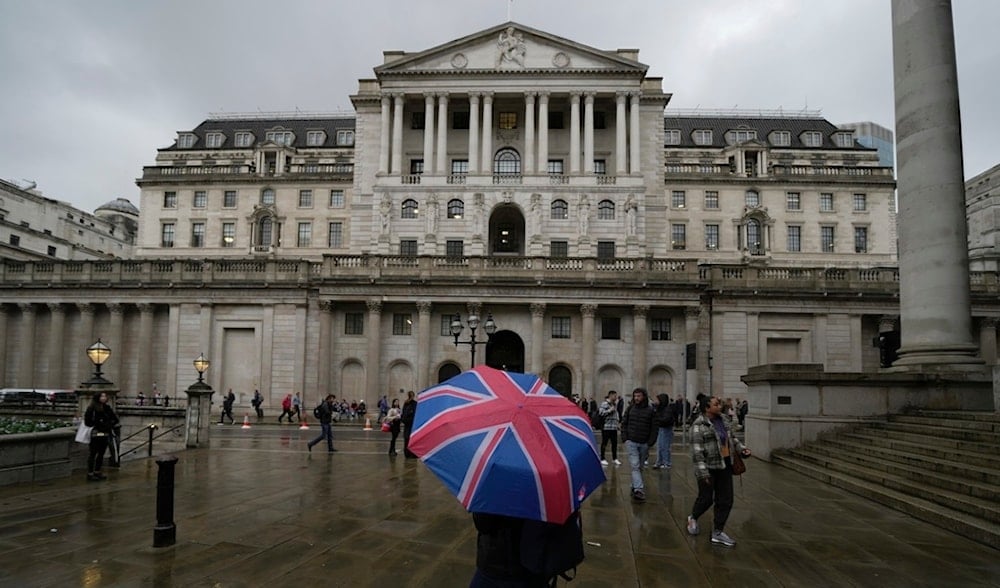
A woman with an umbrella stands in front of the Bank of England, at the financial district in London, , Nov. 3, 2022. (AP)
British households are facing a renewed living cost squeeze, with official figures expected to show that soaring energy bills pushed inflation higher in July. Economists forecast that the headline inflation rate will rise to 2.9%, up from 2.6% in June, as higher gas and electricity costs weigh on household budgets.
The figures from the Office for National Statistics (ONS), due on Wednesday, are expected to highlight the growing pressure on households as the effects of higher energy prices feed into the wider economy. The increase comes after Ofgem, the energy regulator, raised its cap on household gas and electricity bills by 13% in July.
The renewed rise in inflation could also complicate the Bank of England's interest rate outlook, with policymakers considering raising borrowing costs as early as September amid concerns that persistent price pressures could become entrenched.
Energy bills drive expected rise in UK inflation
Economists expect the increase in the inflation rate to be largely driven by the rise in household energy costs, although lower petrol and diesel prices are expected to partly offset the impact.
Thomas Pugh, chief economist at the accountancy firm RSM UK, said the increase in energy prices would add about 0.44 percentage points to headline inflation. “The cost of living squeeze is set to return to the headlines,” he said. “[Higher inflation is] adding fresh pressure to household budgets and complicating the outlook for interest rates.”
The development comes as the Iran war continues to fuel volatility across global energy markets, increasing uncertainty over the economic outlook for countries around the world. Britain had been on track for inflation to fall towards 2% before the conflict, but economists now expect its impact to weigh more heavily during the second half of the year.
Britain's economy has nevertheless shown greater resilience than initially expected, with official figures last week showing that it grew at the fastest pace among G7 economies during the first half of 2026. Inflation also fell more than expected in June, reaching 2.6% from a peak of 3.8% last year.
Bank of England weighs interest rate response
The expected increase in inflation comes as the Bank of England faces renewed pressure over its interest rate policy. The central bank has forecast that inflation will reach 3.2% before the end of the year despite government measures intended to limit the impact of rising costs.
Separate UK jobs market figures due on Tuesday are expected to show that wage growth has continued to slow, providing another important indicator for policymakers as they assess the inflation outlook.
The Bank of England kept borrowing costs unchanged last month, while warning that a worst-case scenario involving further escalation in West Asia could push inflation to a peak of 4.5% by the middle of 2027. Financial markets currently give an almost one-in-four chance of the first increase in the base rate, now at 3.75%, coming at the Bank's September policy meeting.
Victoria Scholar, head of investment at the financial platform Interactive Investor, said: “Inflation is expected to continue to rise, peaking above 3% later this year, as the UK economy continues to grapple with the backdrop of elevated energy prices and the effective gridlock in the Strait of Hormuz.”
“The Bank is likely to carry out roughly one 25 basis point hike by the end of the year as it looks to temper the risk of overheating and help push the inflation rate back in the direction of [its] 2% target.”
Government faces pressure over cost of living
The latest inflation figures will add to the challenge facing Andy Burnham's government as it seeks to ease pressure on households and businesses ahead of a difficult autumn budget.
Burnham used his first week as prime minister to announce a series of “breathing space” measures aimed at easing the cost of living, including a VAT cut designed to reduce consumer electricity bills by an average of £45 a year from October.
The government has also introduced a £2 cap on bus fares in England. The Bank of England said the measures together would lower the headline inflation rate by 0.1 percentage point.
Meanwhile, reports emerged that water regulator Ofwat was considering plans to introduce “surge pricing” for water use during droughts. Under the proposals, customers could pay more for water in summer and less in winter, or face higher charges after exceeding a certain consumption threshold.
With energy prices remaining elevated and global markets exposed to further geopolitical shocks, economists warn that a renewed rise in inflation could intensify pressure on UK households in the second half of 2026.
Read more: UK faces 2027 recession risk if Hormuz stays closed: Independent


