
US petrol prices reamin high despite US-Iran ceasefire
 3 Min Read
Despite a fragile US-Iran ceasefire, US petrol prices remain above $4 a gallon as Strait of Hormuz disruptions keep physical oil markets under pressure.
-
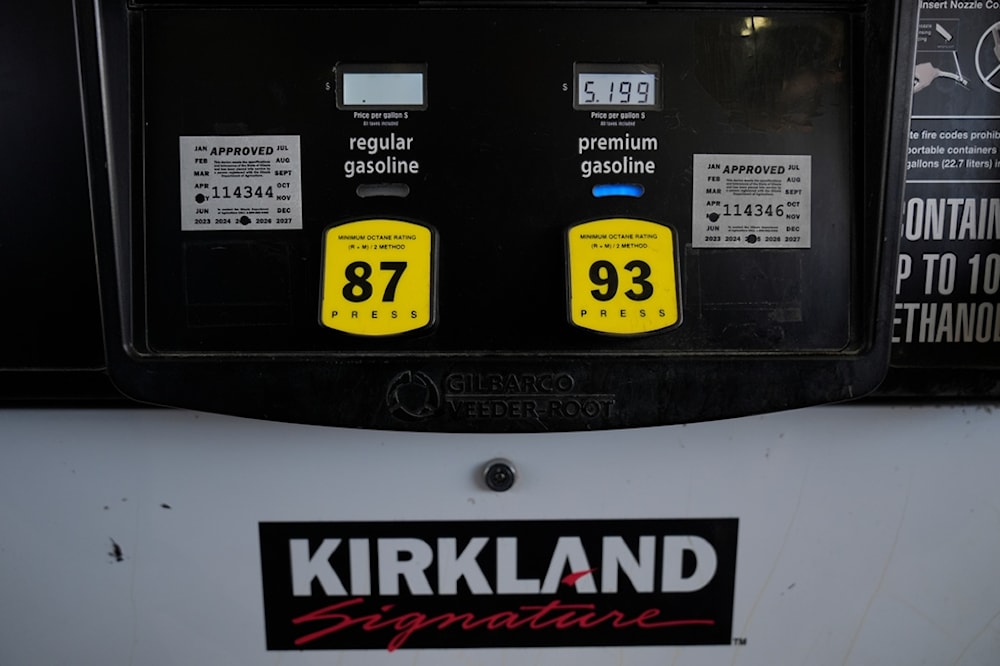
Gas prices are displayed at a Costco store, Wednesday, April 8, 2026, in Niles, Ill. (AP Photo/Erin Hooley)
Despite the temporary, as well as fragile, ceasefire between the US and Iran, drivers in the US are faced with a new economic reality, that of petrol prices hovering around four dollars a gallon, or higher, with no prospect of that price dropping soon.
Fuel costs across the United States have surged to levels not seen in years, with drivers in cities like Las Vegas and Seattle regularly paying five dollars per gallon. In California, prices in San Francisco and Los Angeles routinely exceed six dollars, while average diesel costs in the state reached 7.75 dollars a gallon as of Thursday.
Daniel Sternoff, a senior fellow at Columbia University's Center on Global Energy Policy, noted to the Wall Street Journal that despite the ceasefire, flows through the Strait of Hormuz remain severely constrained, keeping upward pressure on prices.
The gap between futures, physical markets
While front-month US crude futures settled at around 98 dollars a barrel Thursday, after a steep post-ceasefire selloff, spot prices for real-world crude shipments tell a different story.
Bids on physical oil cargoes tracked by Argus Media reached as high as 145 dollars a barrel on Wednesday, reflecting a scramble by refiners to secure supplies.
The divergence matters because refineries pay physical market prices, not futures prices, and those costs are passed directly to consumers at the pump.
Tom Kloza, chief energy adviser at Gulf Oil, told WSJ that futures would need to hold below the mid-90s to bring average US pump prices below four dollars a gallon, a scenario traders consider unlikely without a full resumption of tanker traffic through Hormuz.
Slow to rise, slower to fall
Average US petrol prices tracked by AAA reached 4.17 dollars a gallon Thursday, up from 2.98 dollars the day before the conflict began, one of the most rapid fuel cost surges in modern history.
Even if Hormuz reopens, analysts expect prices to drop only modestly, a few cents a day at most. This reflects a structural asymmetry in retail fuel markets, whereby station operators, whose margins narrow sharply when wholesale costs spike, tend to pass on price cuts to consumers far more gradually than they pass on increases.
"They also tend to come down more slowly, and the margin expands," said the CEO of Casey's General Stores on a recent earnings call.
Economic toll mounting
The hardest-hit states include Hawaii, Idaho, Utah, and California. JP Morgan analysts estimate the cumulative cost to American consumers could reach 100 billion dollars if elevated prices persist through year-end, with any prolonged Hormuz disruption pushing that figure even higher.
Economists and business leaders warn that a sustained spike through May or June would begin to have broader economic consequences, particularly for small businesses and lower-income workers, for whom fuel represents a significant share of expendable income.


