
US to slap EU with 25% car tariff soon unless trade deal approved
 4 Min Read
The new tariff threat adds to transatlantic friction already inflamed by Europe's refusal to join the war on Iran.
-
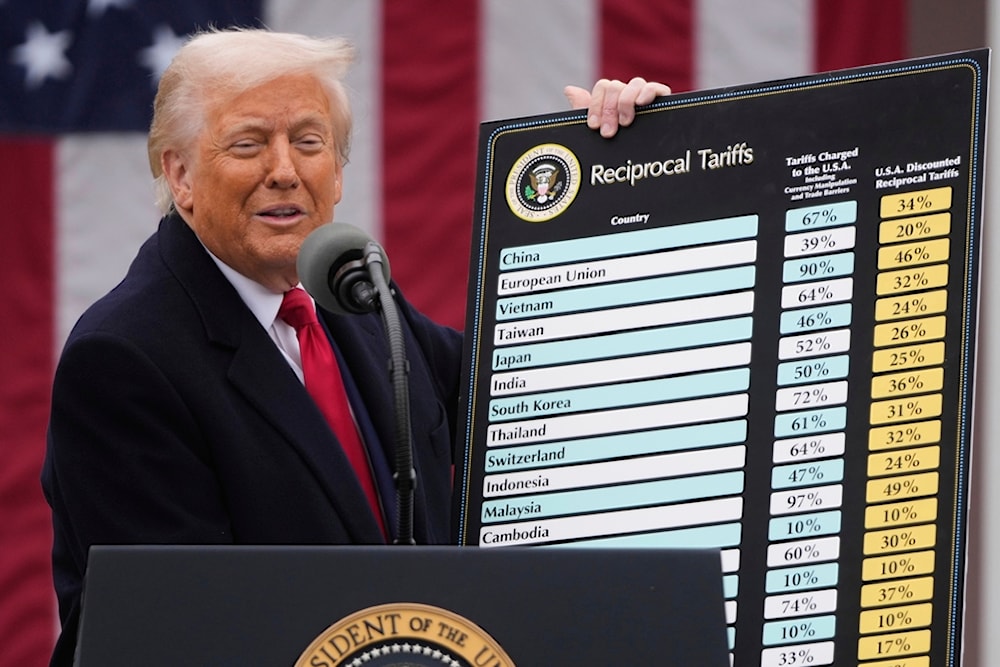
FILE - President Donald Trump speaks during an event to announce new tariffs in the Rose Garden at the White House, April 2, 2025, in Washington (AP)
Brussels must show "substantial progress" on the trade deal to avoid punitive tariffs, Andrew Puzder, the US ambassador to the EU, told Bloomberg Television. US President Donald Trump recently vowed to slap 25% tariffs on European vehicles, accusing the bloc of dragging its feet on an agreement initially reached last July.
"What the president was saying was, 'Look, this has gone on long enough. You've done nothing for nine months,'" Puzder said, referring to the ratification delay.
The dispute threatens to upend an agreement that the two sides struck over a year ago. Under its terms, the EU agreed to eliminate tariffs on American industrial goods in exchange for a 15 percent cap on most European products, including vehicles. A 25% car tariff would directly violate that ceiling.
EU warns of retaliation, seeks de-escalation
European officials have signaled they are prepared to retaliate if Washington follows through on its threat, though they would prefer to preserve the existing pact. The United States has partially implemented the agreement, while the EU has not yet finalized its approval.
On Tuesday, EU trade chief Maros Šefčovič told US Trade Representative Jamieson Greer that the bloc wants the core parts of the agreement in place by July. He also pressed Washington to honor its previous trade commitments.
Puzder dismissed the July timeline as insufficient. "I don't know that July would be fast," he said. "I think the president's saying he's pushing for something more rapid, something quicker."
Wider trade tensions fuel European frustration
The car tariff threat is the latest in a series of US actions that have exasperated European capitals. Washington recently expanded a 50 percent metals tariff to include hundreds of steel and aluminum products, from motorcycles to tableware. While the move did not explicitly violate any US commitments, many European officials believe it has effectively undermined the agreed tariff ceiling.
The US has attempted to address some of those concerns by adjusting how the tariff is calculated and exempting certain products. But European officials say the tweak made matters worse for roughly half of the affected items.
Puzder acknowledged that the two sides would continue discussions, but he voiced impatience with what he called European attempts to "renegotiate the deal." He insisted that "we're done debating" and warned that Trump would walk away from the entire agreement if the EU imposes additional trade measures.
Germany particularly vulnerable to car tariffs
Higher car tariffs would hit Germany especially hard, given its status as an auto manufacturing powerhouse and the EU's largest economy. German Economy Minister Katherina Reiche told reporters in Paris that "the topic of auto manufacturing and exports, being an automotive location, is very central" to her country, adding that she hoped the challenge could be resolved together.
The strained trade relations are symptomatic of a broader deterioration in transatlantic ties under the Trump administration. The president has repeatedly attacked the NATO military alliance, dismissed EU technology regulations, and expressed fury at Europe's refusal to provide military support for the US-Israeli war on Iran.
Trump has also announced plans to withdraw 5,000 US troops from Germany after Chancellor Friedrich Merz said US negotiators had been "humiliated" in talks with Iran.
French Trade Minister Nicolas Forissier, speaking at a G7 gathering in Paris, summed up the shifting landscape. "We're moving away from a balanced and stable international trade system," he said. "Now we have a more difficult environment, unstable, with weaponization of mutual dependencies, and so we have to act accordingly."


