
US trade deficit jumps in November as imports surge
 4 Min Read
The US trade deficit surged nearly 95% in November as imports rose and exports fell, reversing October’s sharp decline, Commerce Department data shows.
-
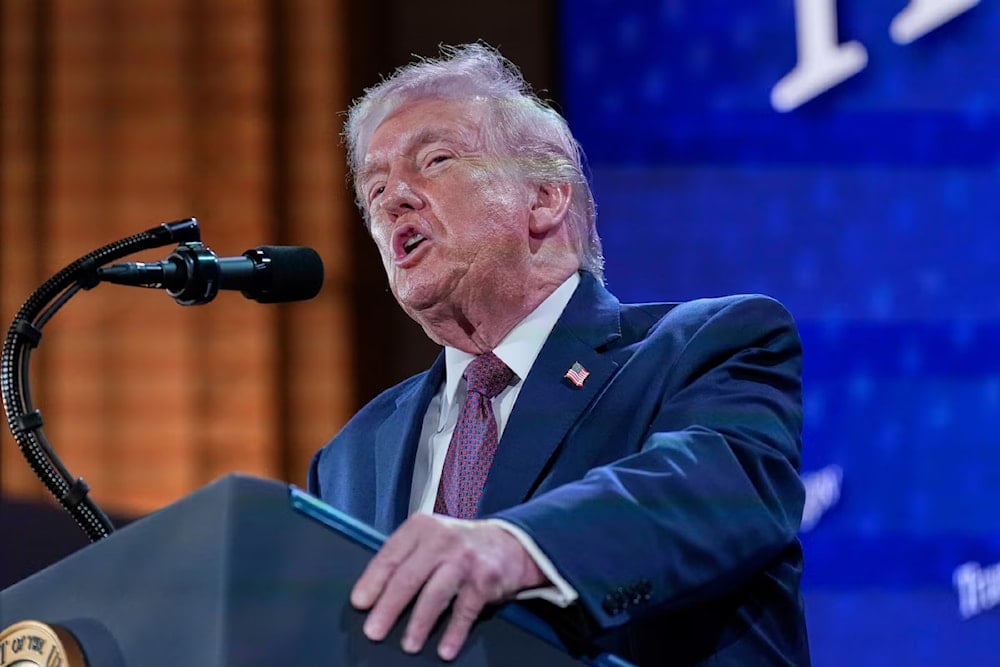
US President Donald Trump speaks during the launch of a program known as Trump Accounts at the Andrew W. Mellon Auditorium, Wednesday, January 28, 2026, in Washington, DC, the US (AP)
The US trade deficit widened sharply in November as imports rebounded, reversing an unexpected pullback the previous month that had been praised by President Donald Trump.
According to data released Thursday by the US Commerce Department, the trade gap surged 94.6% to $56.8 billion, returning close to levels recorded in June and August last year.
The widening deficit was driven by a 5.0% rise in imports to $348.9 billion, while exports fell 3.6% to $292.1 billion. Economists had broadly anticipated an increase, but the scale of the expansion exceeded forecasts surveyed by Dow Jones Newswires and The Wall Street Journal.
Earlier this month, Trump highlighted October’s sharp decline in the trade deficit to its lowest level since 2009, crediting tariffs and broader economic policies for the improvement. Economists, however, noted that October’s export growth was heavily influenced by gold transactions rather than a sustained rise in outbound trade.
Trade figures over the past year have been volatile as companies rushed to import goods ahead of successive tariff increases. In November, exports of goods fell by $11.1 billion, with declines recorded in industrial supplies and materials, including nonmonetary gold.
At the same time, goods imports rose by $16.8 billion, led by gains in consumer products and capital goods such as computers and semiconductors, underscoring continued demand despite trade policy uncertainty.
US Dollar at its lowest
This comes amid surging tariffs imposed by Trump on every US trade partner meant to discourage Americans and American businesses from importing goods and instead resorting to home-made products. However, it seems that the additional cost caused by the tariffs is still lower than the cost of US-made goods. This could also be attributed to the US dollar crashing.
The United States dollar crashed to its lowest level in four years this week, capping a dramatic slide that US President Donald Trump dismissed with nonchalance. "I think it's great," Trump told reporters in Iowa when asked if the currency had declined too much. "The dollar's doing great."
His words had the opposite effect. The ICE US Dollar Index, which measures the greenback against major currencies like the euro and yen, plunged as much as 1.5% in a single day, its worst performance since April's tariff-induced chaos. By late Tuesday, the dollar sat at levels unseen since early 2022.
Trump elaborated on his currency philosophy, saying he wanted the US dollar to "just seek its own level, which is the fair thing to do." He added, "I could have it go up or go down like a yo-yo," suggesting presidential control over currency markets that most economists would dispute.
Tariff turbulence
The president invoked competitive devaluation practices by trading partners: "If you look at China and Japan, I used to fight like hell with them, because they always wanted to devalue their yen. It's hard to compete when they devalue. But they always want our dollars."
Trump's "Liberation Day" tariffs in April, imposing a 104% levy on Chinese imports and 10% baseline rate on all trading partners, sparked what some analysts called a "sell America" trend. Foreign investors dumped $63 billion in US equities between March and April, the largest retrenchment in years.
Beyond the tariffs themselves, the administration's broader foreign policy moves compounded investor anxiety. Threats to annex Greenland, warnings of embargoes against Canada, and military aggression against Venezuela showed policy unpredictability, driving capital outflows.


