
US Treasury yields near 5% as inflation data loom
 4 Min Read
Rising oil prices and inflation remaining above the Federal Reserve’s target for nearly five years have fueled the latest selloff.
-
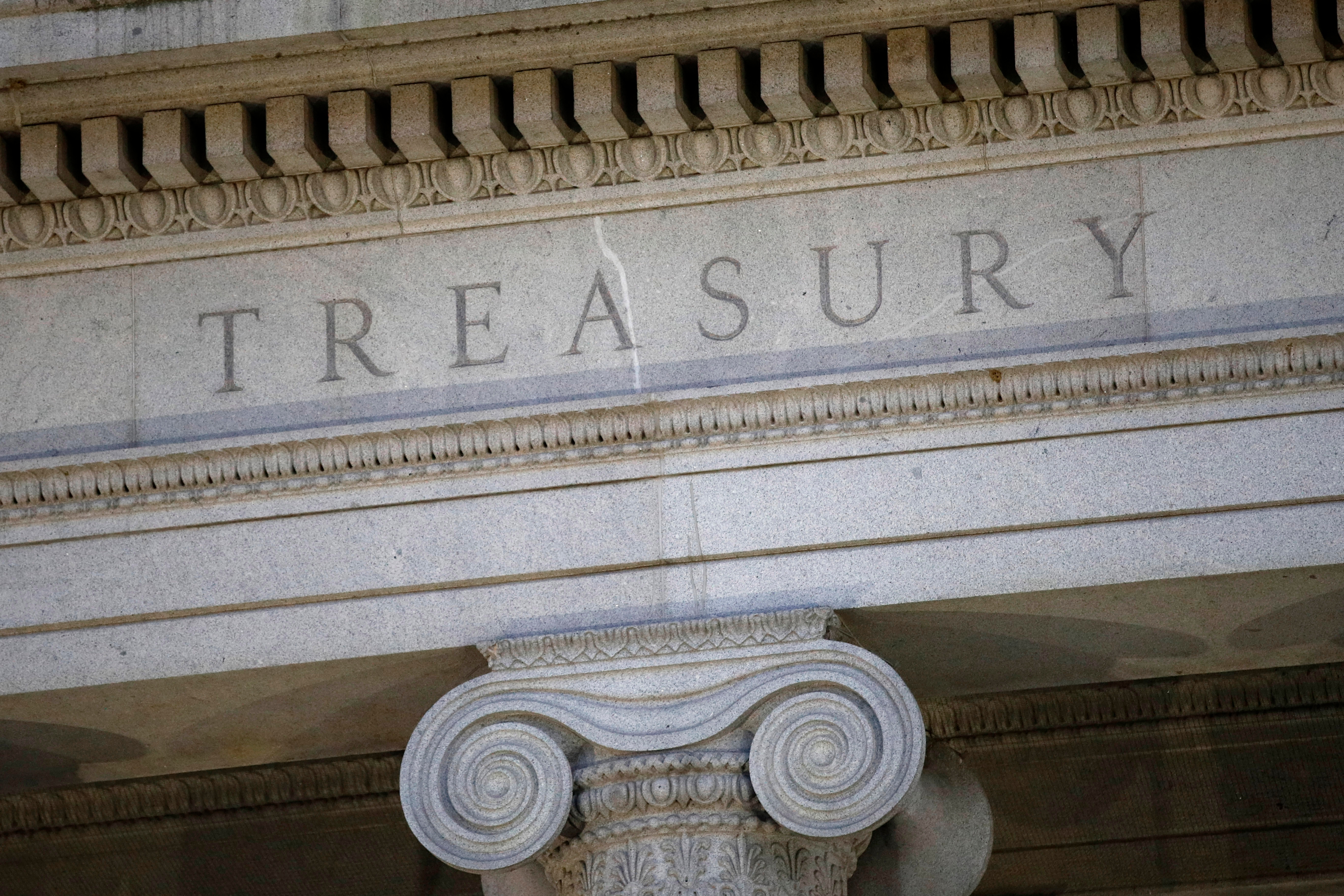
The US Treasury Department building is shown at dusk in Washington on June 6, 2019 (AP)
Bond bears are pushing benchmark US Treasury yields toward 5% ahead of inflation data that could shape expectations for a Federal Reserve interest-rate hike at next week’s policy meeting.
According to Bloomberg, the 10-year Treasury yield has climbed almost 20 basis points this week, reaching around 4.95% on Friday. That puts it at its highest level since 2023 and within striking distance of a level last seen in 2007.
Rising oil prices and inflation remaining above the Federal Reserve’s target for nearly five years have fueled the latest selloff, while traders are pricing in about a 70% chance of a rate increase at the Fed’s September 16 meeting.
“Hitting 5% on the 10-year Treasury yield looks more like an inevitability here than a forecast,” ING strategist Padhraic Garvey said. “These are worrying times for bond markets.”
The rise has extended across the Treasury curve. The two-year yield climbed to 4.59%, while 30-year yields reached their highest level since 2007 despite strong demand at recent auctions.
Global bond markets under pressure
The pressure has spread beyond the United States, with benchmark yields in major economies climbing alongside Treasuries. Germany’s 10-year yield reached its highest level since 2009, while Australia’s benchmark rose to a more than decade-high. Japanese equivalents approached 3%, and New Zealand’s two-year yield jumped 25 basis points.
A gauge of global bond yields is now at its highest level since 2007, highlighting the broader impact of rising borrowing costs and expectations for tighter monetary policy.
“A lower US CPI and a Fed hike are really the only circuit breakers I see at this point, otherwise I don’t think anyone is comfortable being long rates,” said Michael Tang of Commonwealth Bank. “It’s just massive hawkish sentiment taking over.”
Federal Reserve officials have increasingly focused on inflation, with markets closely watching the latest US inflation data. Core CPI is expected to have risen 0.2% month-on-month in August, according to a Bloomberg survey, while producer-price data has already pointed to renewed pressure from higher energy prices.
Total US public debt has topped $40 trillion for the first time, the Treasury Department confirmed, a milestone reached less than five months after debt crossed $39 trillion.
— Al Mayadeen English (@MayadeenEnglish) August 19, 2026
The debt load has more than doubled since 2017, growing by $7.8 trillion under Trump's first term and… pic.twitter.com/0qoDWqkcLb
5% Treasury yield could test markets, US finances
A move above 5% would be closely watched in the $32 trillion Treasury market and could create another challenge for Treasury Secretary Scott Bessent. The Treasury recently bought fewer bonds than expected in its first expanded buyback operation, although Bessent said the market was in “very good shape” and pointed to strong auctions and US economic outperformance.
Bloomberg's US Treasuries total-return gauge is down 1.4% this year, compared with a 1% decline for its global equivalent.
“Unconventional communication and actions from the US administration are rattling bond investors,” said Andrew Ticehurst of Nomura. “The underlying backdrop was already fragile, due to high government debt burdens and high funding tasks.”
Treasury yields also influence borrowing costs across the economy, including US mortgage rates, which have reached their highest level in more than a year. As Treasury yields serve as a benchmark for debt markets worldwide, a sustained rise could also weigh on equities.
A 5% yield has been viewed by some investors as a threshold that could trigger severe market stress. John Higgins of Capital Economics said that while he was not convinced 5% was a “magic” number, higher Treasury yields would pose risks to the sustainability of US public finances and threaten equities.
Read more: Fighting the war, losing the wallet: Trump's Iran war slaps Americans


