
Australian bushfires trigger mass evacuations amid extreme heatwave
 2 Min Read
Massive bushfires driven by extreme heat forced evacuations across New South Wales as dozens of blazes destroyed homes and threatened densely populated areas.
-
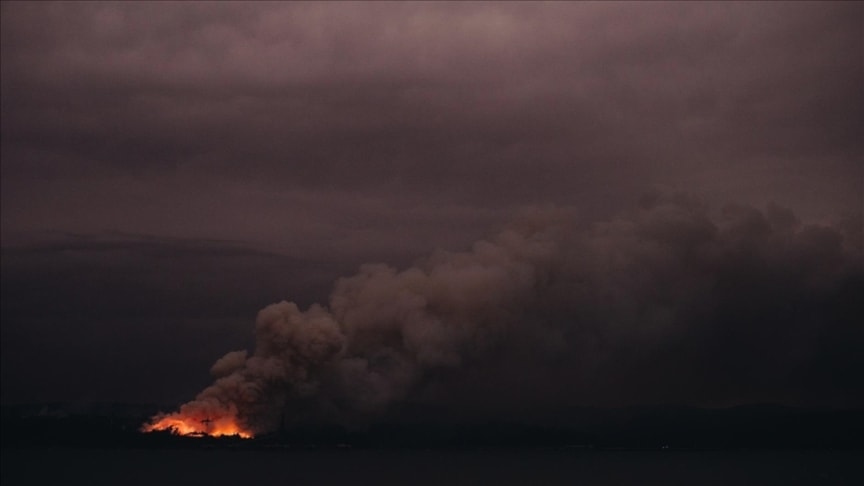
A wall of smoke rises into the darkening sky as a wildfire burns intensely across the landscape, casting an orange glow beneath the heavy clouds, on December 6, 2025, New South Wales, Australia. (Australian Department of Defence)
Raging bushfires swept across parts of New South Wales, Australia, on Saturday, devouring large stretches of bushland and forcing officials to issue top-tier emergency warnings for communities along the state's Central Coast. Authorities urged thousands of residents to leave immediately as conditions deteriorated rapidly.
The most severe alert covered the Phegans Bay and Woy Woy area, a densely populated region roughly 45 km north of Sydney. Local broadcasters reported that as many as 16 homes were destroyed as flames surged through dry terrain made volatile by soaring temperatures.
The state’s Rural Fire Service delivered a blunt message to people in the danger zone: “Leave now if the path is clear towards Woy Woy,” the agency posted on its website.
At least a dozen homes have been lost to a ferocious and fast moving bushfire on the New South Wales Central Coast. Across the state there have been around 50 blazes. @SamPayne50 pic.twitter.com/uRUXP3ta1l
— 7NEWS Queensland (@7NewsBrisbane) December 6, 2025
Blistering Inferno
The crisis unfolded amid a blistering heatwave, with the Bureau of Meteorology reporting temperatures climbing to 42°C (108°F) across parts of New South Wales. The extreme heat intensified fire behavior, complicating containment efforts and heightening risks for both residents and firefighters.
Prime Minister Anthony Albanese called on communities to stay alert and cooperate with emergency responders. “Please look out for each other and follow advice from authorities,” he said in a statement.
By late Saturday, authorities counted more than 50 active bushfires across the state. A particularly intense blaze in the Upper Hunter region had already consumed nearly 10,000 hectares (25,000 acres) and was also classified at the highest emergency level.
Absolute chaos at Hornsby for people wanting to get to the Central Coast/Newcastle. No trains running due to a bushfire causing dangerous conditions.
— Jason Ford (@TheFordFactor) December 6, 2025
Line for the bus stretches all the way back to the steps that lead to Westfield. pic.twitter.com/lqhj5XLm65
Officials have been warning for months that Australia is facing a dangerous bushfire season, following several relatively mild years. The memory of the catastrophic 2019-2020 ‘Black Summer’ fires, which destroyed an area comparable in size to Turkiye and claimed 33 lives, looms large as hot, dry conditions return.
Read more: Australian Scientists Suggest Climate Change Caused Megafires


