
Tehran researchers develop greener method to detect urban pollutants
 3 Min Read
Researchers at the University of Tehran have developed a reusable nanofibre membrane for detecting hazardous BTEX pollutants in air, water, and soil.
-
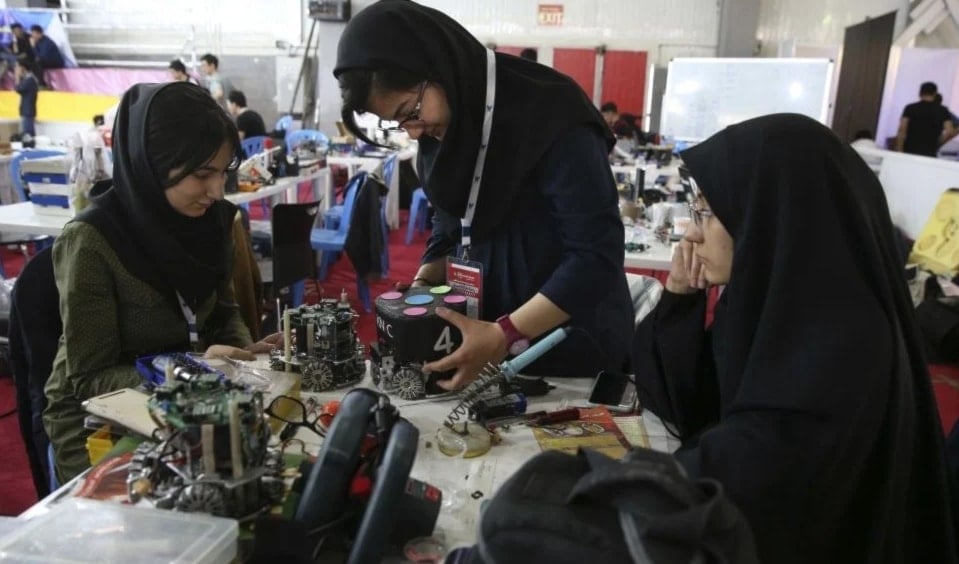
Iranian students prepare their robots during the international robotics competition, RoboCup Iran Open 2016, in Tehran, Iran, April 6, 2016 (AP/File)
Researchers at the University of Tehran have developed an environmentally friendly analytical method for detecting hazardous volatile organic compounds in urban environments, TV BRICS reported, citing Mehr News Agency.
The technique targets benzene, toluene, ethylbenzene, and xylene isomers, collectively known as BTEX. These compounds are widespread environmental pollutants and can be found in air, water, and soil, where their toxicity makes sensitive detection important for pollution monitoring.
Researchers from the university's College of Science developed a magnetic, asymmetric composite nanofiber membrane that extracts and concentrates BTEX compounds before they are analysed using gas chromatography-mass spectrometry (GC-MS).
Magnetic nanofiber membrane targets hazardous compounds
The method is based on membrane-assisted solid-phase microextraction and uses a two-layer nanofiber structure produced through electrospinning. According to the researchers, the approach combines high analytical performance with a lower environmental impact than conventional techniques.
Laboratory tests showed that the method produced a linear response across concentrations ranging from 10 to 10,000 micrograms per litre. Its detection limits ranged from 0.09 to 0.45 micrograms per liter, allowing the targeted pollutants to be detected at very low concentrations.
The technique recorded a relative standard deviation of between 2.5% and 7%, while enrichment factors ranged from 14.8 to 23.8. The researchers said these results demonstrated consistent performance and effective concentration of the compounds before analysis.
Method tested on air, water, and soil
The membrane was also tested using real samples collected from urban air, surface water, and soil. The researchers reported acceptable recovery rates for all four groups of target pollutants, indicating that the method can be applied outside controlled laboratory conditions.
Durability tests showed that the membrane retained more than 90% of its initial performance after seven consecutive cycles of use. The result suggests that the material can be reused while maintaining its analytical efficiency.
The researchers said the combination of sensitivity, reusability, and reduced environmental impact could make the technology a practical alternative to some conventional methods for monitoring volatile organic pollutants.
The development could contribute to more efficient environmental monitoring in urban areas, where detecting hazardous compounds at low concentrations is important for assessing pollution levels and potential risks to public health.


