
Winter blooms expose climate crisis across UK and beyond
 4 Min Read
Hundreds of native plant species are blooming in winter across the UK, with scientists linking the phenomenon directly to climate breakdown affecting ecosystems globally.
-
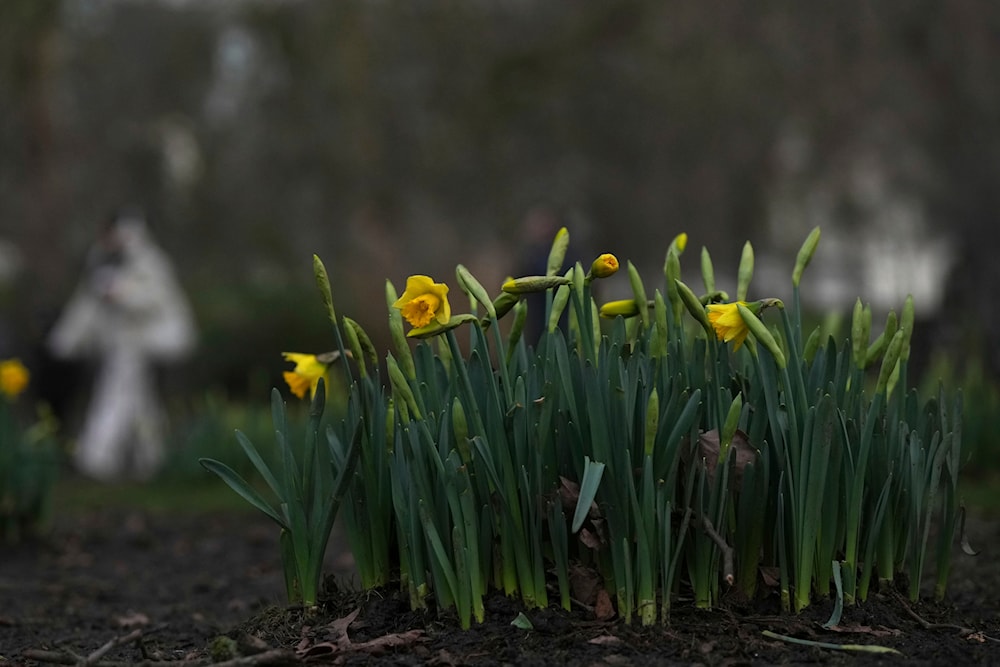
Daffodils bloom early in St James' Park, London, Tuesday, January 28, 2025. (AP Photo/Alastair Grant)
The winter of 2025-2026 has exposed a troubling ecological shift as native wildflowers across multiple continents abandon their traditional bloom cycles, emerging in December and January rather than waiting for spring's arrival.
Hundreds of native plant species are blooming across Britain during the winter months, providing what scientists describe as visible evidence of climate change disrupting natural ecosystems.
The Botanical Society of Britain and Ireland's annual New Year plant hunt revealed that 310 native species flowered during the surveying period in 2025, drastically exceeding the ten species typically expected at this time of year. Taking into account non-native varieties, citizen scientists documented 646 flowering species in total.
Early results from the 2026 hunt, conducted from Thursday through Sunday, show common wildflowers like daisies and dandelions unexpectedly in bloom alongside non-native species, including Mexican fleabane and white and red dead-nettles.
Direct temperature link confirmed
Met Office analysis of nine years of plant hunt data has established a clear correlation between rising temperatures and premature flowering. For every 1°C increase in November-December temperatures at a given location, an additional 2.5 species bloom during the new year period.
Scientists describe this phenomenon as phenological mismatch, when biological rhythms decouple from seasonal norms due to warming temperatures. Record-breaking mild winters are either failing to provide plants with the cold period needed for dormancy or triggering premature awakening through unseasonable warm spells.
"This new analysis shows a very clear link between rising temperatures and impacts on our plant species," said Kevin Walker, scientist at BSBI. "This is yet further evidence that climate change is affecting our wildlife indiscriminately," he told The Guardian.
Walker emphasized that these shifts represent a "visible signal" of climate breakdown that people can observe in their own gardens.
Global pattern emerges
The phenomenon reflects broader climate disruption driven by fossil fuel pollution, which has heated the planet approximately 1.4°C above preindustrial levels. Last week, the Met Office projected 2025 would likely rank as Britain's hottest year on record.
The trend extends well beyond Britain's borders. For instance, Mediterranean biodiversity hotspots face particularly acute disruption. Research on herbarium specimens indicates flowering now advances roughly 3.6 days per decade, accelerating to over 12 days per degree Celsius of warming during exceptionally warm years.
In Lebanon and the surrounding Levant regions, bulb-like plants broke dormancy in December and January instead of their traditional February-March window. Native species affected include almond trees pushing blooms in January across mountain ranges from Kashmir to the Levant.
Japan's iconic cherry blossoms demonstrate similar shifts, with Kyoto's peak bloom dates migrating from mid-April in the 1850s to late March in recent years.
Ecological risks mount
The premature blooming carries serious consequences. Flowers opening in January face vulnerability to late winter frosts that destroy reproductive capacity, threatening pollinator populations dependent on early nectar sources and potentially creating what ecologists term a "silent spring."
The timing mismatch proves particularly damaging because many native pollinators emerge based on daylight duration, while flowers respond to temperature. When blooms complete their cycles before bees activate, ecosystems face collapse through starved pollinators and unpollinated plants.
Agricultural sectors face similar risks as fruit trees bloom during winter, exposing crops to frost damage that devastates yields and drives price volatility.


