
'Israel' grumbles as Iran secures ceasefire under its own terms
 2 Min Read
Israeli media outlets express frustration over the two-week US-Iranian ceasefire mediated by Pakistan, coinciding with Iranian missile launches and public insecurity.
-
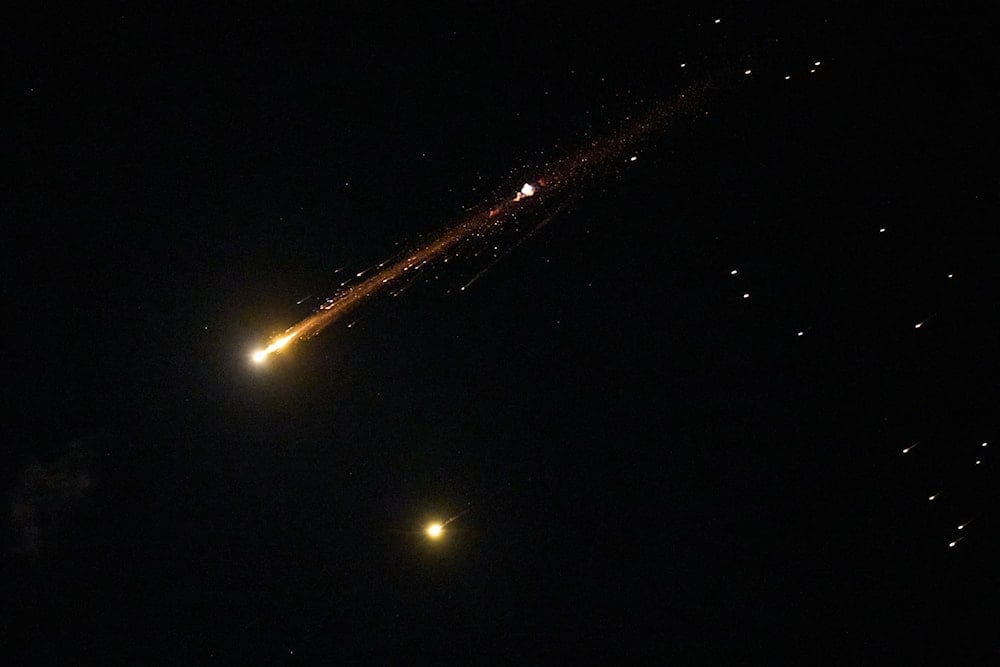
An Iranian cluster munition missile explodes in the sky over northern 'Israel', April 8, 2026 (AP)
Israeli media outlets expressed widespread frustration following the announcement of a two-week ceasefire mediated by Pakistan. The ceasefire, which coincided with missile launches from Iran toward the occupied Palestinian territories, has drawn sharp criticism throughout the occupation.
Israeli broadcaster Kan highlighted the tense reality on the ground, reporting that residents remained in shelters even as the ceasefire was declared. Other outlets described the initiative as “the largest failure in Israel’s history since October 7.”
Several Israeli platforms questioned the logic of the ceasefire, with one sarcastically asking, “Forty days and an entire nation staying home for a ceasefire?” Others targeted Trump personally, calling him “a global joke” and “a weak man unable to withstand pressure,” while noting that the timing of the announcement suggested external events were pressuring "Israel".
Iran secures ceasefire, talks under its own terms
Iran secured a significant diplomatic victory by reaching a two-week ceasefire with the United States, officials announced Wednesday. The agreement followed intense negotiations and regional mediation, with Iran agreeing to suspend defensive operations if US and Israeli attacks are halted.
The ceasefire also allows safe passage through the strategically vital Strait of Hormuz under Iranian coordination, ensuring continued maritime traffic while maintaining military and technical oversight. Iranian Foreign Minister Abbas Araghchi highlighted the role of Pakistan’s leaders in facilitating the agreement.
Araghchi stated that the ceasefire reflects the sacrifices of Iranian forces and the enduring support of the population since the start of the conflict. He cited US acceptance of the general framework of Iran’s 10-point proposal as a key basis for negotiations.
Iran’s demands under the ceasefire emphasize non-aggression guarantees, control over the Strait of Hormuz, recognition of its uranium enrichment rights, and relief from primary and secondary sanctions. The country also seeks termination of UN resolutions it views as punitive.
Tehran further calls for compensation for damages, the withdrawal of US forces from the region, and the end of aggression on all fronts, including in Lebanon. These measures aim to secure Iran’s national security, economic stability, and regional influence.


