
Trump reviews Pakistan proposal on ceasefire in Iran
 4 Min Read
US President Donald Trump reviews Pakistan’s proposal for a two-week Iran ceasefire as Tehran signals openness and diplomatic efforts intensify.
-
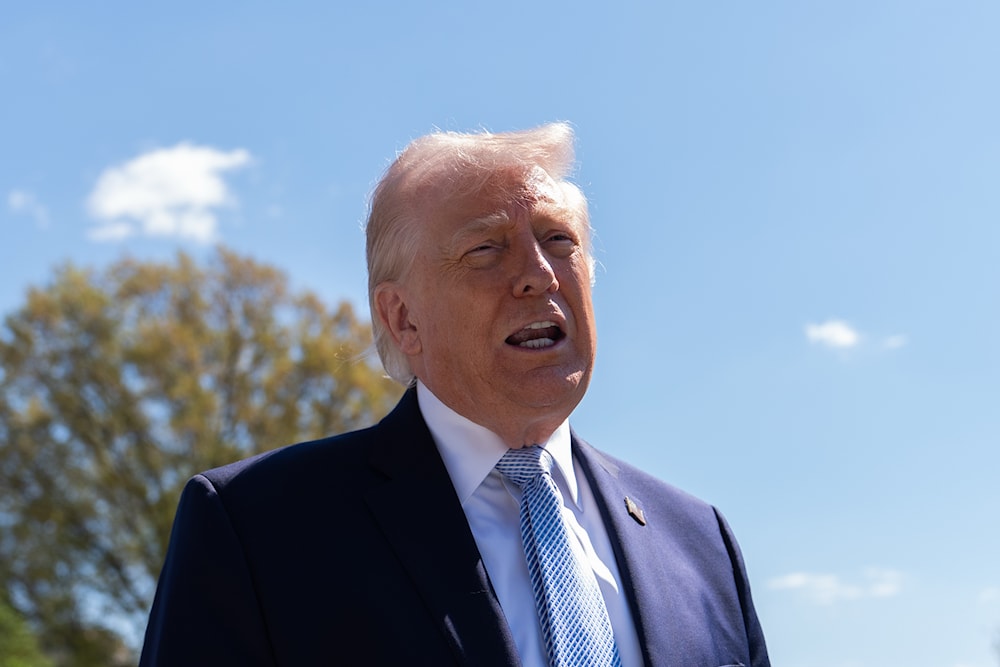
President Donald Trump speaks with reporters during the White House Easter Egg Roll on the South Lawn of the White House, Monday, April 6, 2026, in Washington (AP)
US President Donald Trump has been briefed on Pakistan’s proposal regarding Iran, adding that an official response will be issued, White House spokesperson Karoline Leavitt said on Tuesday.
Meanwhile, a senior Iranian official told Reuters that Tehran is positively considering Pakistan’s request for a two-week ceasefire.
Earlier, Pakistani Prime Minister Shehbaz Sharif had urged President Trump to extend the deadline for reaching an agreement with Iran by two weeks, while calling on Tehran to reopen the Strait of Hormuz during the same period.
Pakistan calls on Trump to extend his deadline
In an April 7 statement posted on X, Pakistani Prime Minister Shehbaz Sharif called for a two-week extension to allow diplomatic talks to continue, citing growing momentum toward a political resolution.
"Diplomatic efforts for peaceful settlement of the ongoing war in the Middle East are progressing steadily, strongly and powerfully with the potential to lead to substantive results in near future. To allow diplomacy to run its course, I earnestly request President Trump to extend the deadline for two weeks," Sharif said on X.
His appeal comes amid mounting contradictions in Washington’s position. A ceasefire framework, reportedly drafted around a US-led set of demands and conveyed through Pakistani mediation, has been presented to both sides. The proposal outlines a phased arrangement that includes reopening the strategic waterway and initiating negotiations toward a broader settlement.
The proposal itself, widely described as a two-phase plan, envisions an initial ceasefire, reported to last around 45 days, followed by negotiations toward a long-term settlement. The framework was developed through mediation efforts led by Pakistan, incorporating US proposals and conveyed via indirect contacts between American and Iranian officials, with Islamabad playing a central role in relaying messages between the sides.
Sharif’s call for a delay underscores growing concern among mediators that the US deadline could derail ongoing diplomatic efforts, particularly as the war continues to intensify and raises fears over global energy supplies due to potential disruptions in the Strait of Hormuz.
Trump threatens Iran with genocide
This comes in the wake of Donald Trump issuing his most severe warning to Iran yet, declaring that “a whole civilization will die tonight” if Tehran failed to meet a US-imposed deadline tied to reopening the Strait of Hormuz. In the same post, he added that “time has run out” and that “there will be consequences like never before” if demands were not met.
In the days leading up to the deadline, including April 5 and April 6, Trump repeatedly threatened large-scale attacks on Iranian infrastructure, including bridges and power plants, if no agreement was reached.
Meanwhile, Iran has responded to Trump's threats, warning that escalation will be met with an even harsher retaliation.
Iran prepared a decisive response to Trump's madness
Meanwhile, an informed Iranian military source told Tasnim News Agency on Tuesday evening that Iran has prepared a decisive response to any “potential madness by Trump in targeting power plants or other sites.”
The source said that “Trump’s threats stem from his desperation and incapacity, and from Iran’s strength on the ground more than from any real power or initiative.” He added, “However, if Trump, in his madness, wants to get out of a hole only to fall into a well, we have prepared a black hole from which escape will be impossible.”
The military source stressed that “surprises have been prepared to confront Trump’s madness,” revealing that Iran has added key regional energy infrastructure to its list of potential targets, including Saudi Aramco facilities, Yanbu oil installations, and the Fujairah pipeline. He warned that “if Trump commits any crime, Iran will not hesitate to impose heavy costs on the United States and its partners.”
The source dismissed the notion that US threats could stabilize energy markets, stating that “Trump is mistaken if he believes these threats will reopen the strait and lead to lower oil prices.” He added that “if Trump carries out his threat, he should expect oil prices to reach $200 per barrel in the coming days.”


