
'Israel' heightens readiness as US weighs aggression on Iran: Reuters
 4 Min Read
"Israel" has raised its security alert as Washington signals possible action on Iran amid armed riots, while Tehran views Israeli concern as tactical given prior US-Israeli coordination.
-
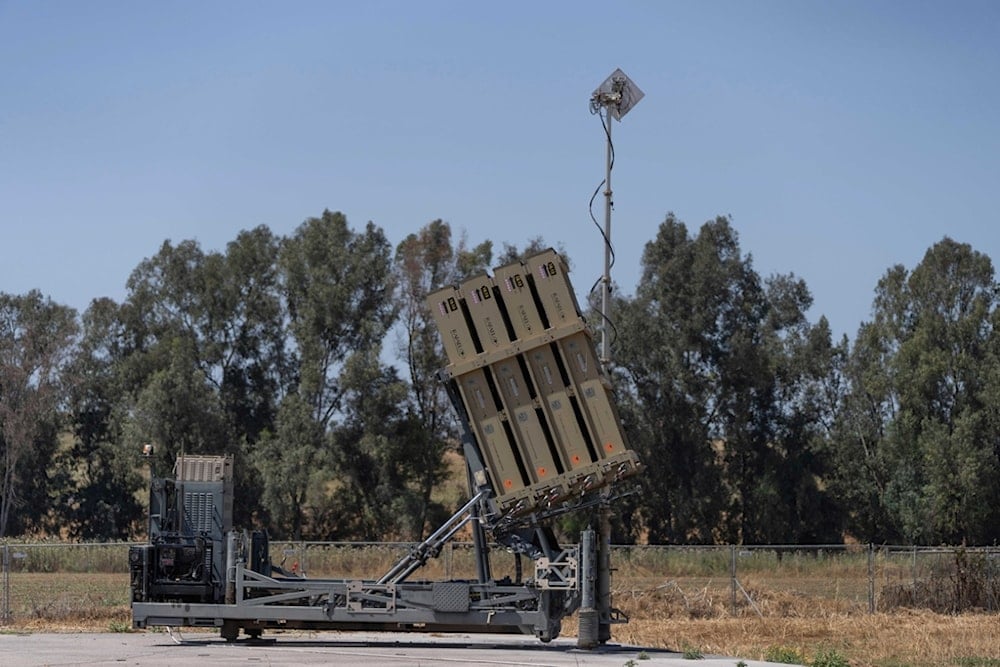
"Israel's" Iron Dome anti-missile system stand in place in Sderot, occupied Palestine, Wednesday, April 17, 2024. (AP Photo/Ohad Zwigenberg, File)
Reuters on Sunday reported that Israeli authorities have raised their security posture amid "concerns" that the United States could launch an aggression in Iran amid a wave of foreign-backed armed riots framed as anti-government protests by zio-imperialist elements.
Citing three Israeli sources, Reuters said the heightened alert stems from unease over a potential US escalation rather than any declared Israeli plan to intervene. The sources offered no details on concrete security measures, a lack of specificity that underscores uncertainty over Washington’s intentions following remarks by US President Donald Trump, who warned Iran’s leadership against using force against those involved in unrest and said the United States stood "ready to help", rhetoric Tehran views as thinly veiled interventionism rather than humanitarian concern.
The Israeli posture comes against the backdrop of the 12-day war in June, launched when "Israel", with direct US participation, carried out air and intelligence strikes across Iran that targeted not only military infrastructure but also civilian and dual-use sites, marking a decisive rupture with years of indirect confrontation and prompting Tehran to warn that any renewed US-Israeli aggression would be met with forceful retaliation against US assets and "Israel" alike
Against this backdrop, an Israeli source told Reuters that Prime Minister Benjamin Netanyahu discussed the possibility of US intervention during a phone call on Saturday with US Secretary of State Marco Rubio. A US official confirmed the call took place, while declining to disclose its substance.
Iranian officials, meanwhile, acknowledge that the riots have been driven in part by economic pressures intensified by years of Western sanctions, but stress that legitimate grievances have been deliberately weaponized. Tehran has accused hostile foreign actors, including "Israel’s" Mossad, of exploiting protests to inject sabotage, arson, and organized violence, transforming economic demonstrations into instruments of destabilization. Iranian authorities say recent arrests linked to espionage and covert activity substantiate claims that the unrest has been externally fueled with the explicit aim of destabilizing the state.
Analysis
From Tehran’s perspective, "Israel’s" portrayal of itself as a bystander rings hollow. Iranian analysts argue that Israeli expressions of alarm over possible US action clash sharply with Netanyahu’s long-standing record and recent engagements with Washington. Only weeks earlier, Netanyahu reportedly held direct talks with Trump in which military pressure and the prospect of aggression against Iran were openly discussed, reinforcing the view that "Israel" is not merely reacting to events but actively working to shape them.
This context casts Netanyahu’s public remarks in a starkly different light. In an interview with The Economist published on Friday, he warned that Iran would face "horrible consequences" if it attacked "Israel", before adding, in reference to the protests, "Everything else, I think we should see what is happening inside Iran." Seen from Tehran, such comments are viewed as a textbook case of duplicity: projecting caution to Western audiences while privately lobbying for escalation.
Iranian analysts argue that this dual messaging reflects a familiar Israeli tactic: publicly distancing itself from confrontation while quietly laying the groundwork for it. In this reading, Israeli concern about possible US intervention is less about averting conflict than about framing aggression as an external inevitability.
Iran, for its part, insists that its internal affairs must remain free from foreign coercion, intelligence manipulation, and military threat, maintaining that stability cannot be imposed through sanctions, sabotage, or airstrikes, but only through respect for sovereignty and de-escalation.
Read more: FM Araghchi rebukes US claims, accuses 'Israel' of fueling Iran unrest


