
'No American [soldier] will be safe', says IRGC chief
 4 Min Read
Iran’s armed forces chief warn that any attack would trigger swift retaliation, as Tehran signals a shift in its military doctrine amid US threats and buildup.
-
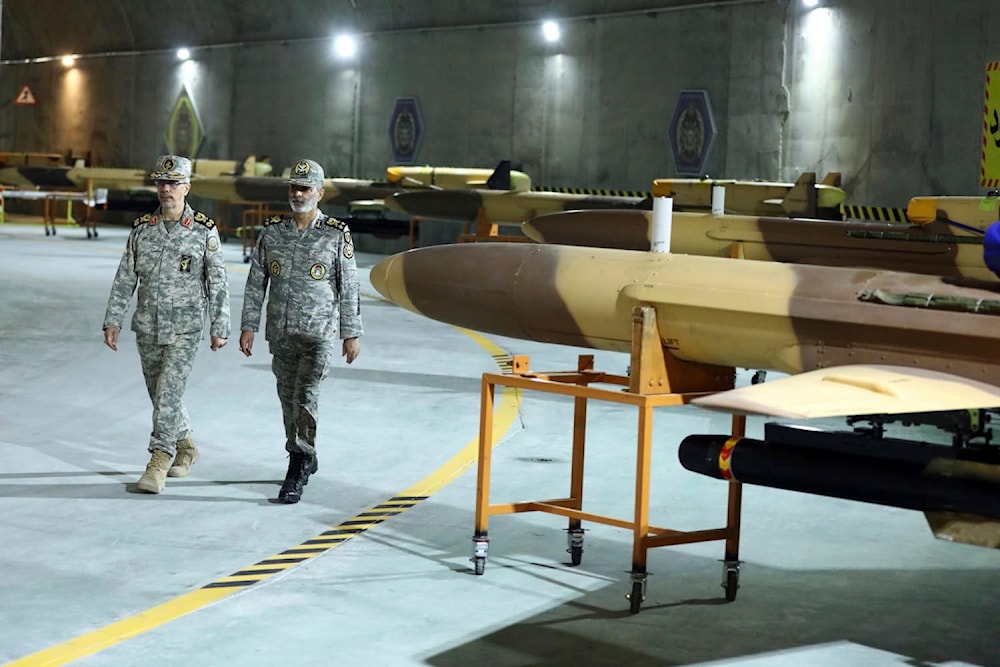
In this photo released on Saturday, May 28, 2022, by the website of the Iranian Army, martyred Chief of the General Staff of the Armed Forces Gen. Mohammad Hossein Bagheri, left, and then-Commander of the Army Gen. Abdolrahim Mousavi visit an underground drone base tunnel of the Army in the heart of the country's western Zagros Mountains. (Iranian Army via AP)
The Chief of Staff of the Iranian Armed Forces, Major General Abdolrahim Mousavi, warned that any attack on Iran would trigger immediate and far-reaching retaliation, saying "no American [soldier] will be safe, and the fire of the region will burn America and those with it."
Speaking during a nighttime inspection tour of military units, Mousavi said Iran’s response in any conflict would be "swift, decisive, and far removed from the calculations of the United States," adding that the world would soon witness "a different face of a strong Iran."
He said the Iranian armed forces are closely monitoring hostile movements and stressed that "we will never be negligent in the face of enemies," noting that retaliation remains open-ended and that "any mistake made by the enemy will be met with an immediate response."
Addressing repeated threats of a naval blockade, Mousavi dismissed the feasibility of such a move, urging those promoting it to revisit "their geography and geopolitics lessons," and asserting that "a strong and vast Iran is a country that cannot be blockaded."
Mousavi also announced a shift in Iran’s military doctrine, saying it has moved from a defensive posture to an offensive one, "based on a rapid and broad operations approach with the adoption of hybrid and powerful military strategies." He added that Iran is focused solely on victory and "is not afraid of false noise or the enemy’s formal arrogance."
The remarks come amid reports of an expanding US military buildup in the region, including the deployment of aircraft carriers, and continued threats by US President Donald Trump to launch an attack on Iran.
Heightened tensions, escalating threats
Mousavi's remarks come amid heightened regional tensions and escalating US threats, with multiple reports indicating that Washington could authorize military strikes on Iran as early as the next few days. Iranian officials have repeatedly warned that any US-led aggression would trigger a regional war, rather than a contained confrontation.
Iranian Leader Sayyed Ali Khamenei reiterated this warning on Sunday, saying Iran does not seek war but would "strike back decisively" against any aggressor, cautioning that a US-initiated conflict would quickly spread across the region.
At the same time, Iranian officials have emphasized that diplomatic channels remain open. In an interview for CNN published on Sunday, Iran's Foreign Minister Abbas Araghchi said a "fair" and "equitable" nuclear deal with Washington remains achievable, despite Tehran having "lost trust" in the US as a negotiating partner. He warned, however, that any collapse in diplomacy would be "a disaster for everybody," warning that US bases across the region would become legitimate targets.
On another note, Israeli media have also warned that a war on Iran would carry severe economic consequences for the Israeli entity, even if initiated by the United States. According to assessments cited by i24NEWS, a large-scale war could disrupt ports and airports, paralyze trade, drive up insurance and energy costs, and force thousands of factories and businesses to suspend operations.
Economists warned that soaring military expenditures combined with falling tax revenues could push "Israel's" public finances into an unprecedented deficit, while prolonged or regional escalation could trigger capital flight and risk a sovereign credit rating downgrade. As one assessment summarized, "the bill will be paid by Israel, even if the strike is American."


