
Araghchi to CNN: Fair, just deal achievable despite losing trust in US
 4 Min Read
Iran's FM Araghchi says nuclear deal is still achievable despite US military buildup, as regional powers work to prevent escalation into a wider conflict.
-
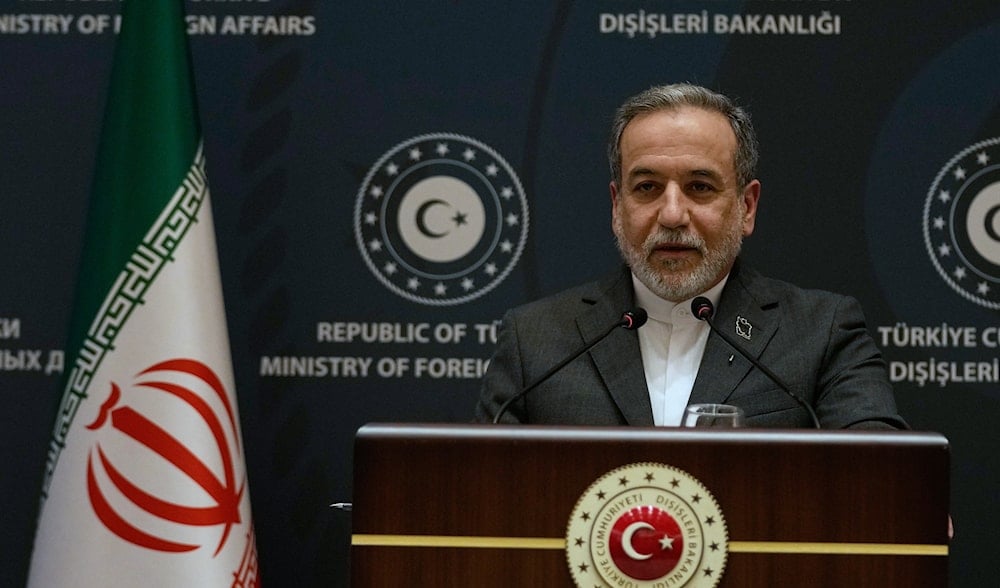
Iranian Foreign Minister Abbas Araghchi speaks to journalists during a joint press conference with his Turkish counterpart Hakan Fidan in Istanbul, Turkey, Friday, Jan. 30, 2026 (AP)
Iran's Foreign Minister Abbas Araghchi expressed confidence on Sunday that Tehran can reach a nuclear agreement with Washington, even as US warships position themselves for potential strikes on the region.
In an interview for CNN, Araghchi acknowledged that Iran has "lost trust in the US as a negotiating partner," but indicated that indirect communication through regional intermediaries has proven productive. The diplomatic channels, facilitated by "friendly countries" in the area, are enabling "fruitful" exchanges between the two sides.
The Iranian foreign minister emphasized substance over format, refusing to commit to direct negotiations while stressing the importance of focusing on the core issues at stake rather than the procedural framework.
US President Donald Trump appeared to confirm progress in talks during remarks to reporters aboard Air Force One on Saturday, stating that Iran was "talking to us, seriously talking to us."
Araghchi rejects expanded agenda
However, negotiations appear to have encountered obstacles over Iranian insistence that discussions concentrate solely on nuclear matters, while Washington maintains its substantial military deployment across the region, a presence that casts a shadow over diplomatic initiatives.
Araghchi insisted that the focus must remain on nuclear issues alone.
"Let's not talk about impossible things and not lose the opportunity to achieve a fair and equitable deal to ensure no nuclear weapons," he said, adding that such an agreement is "achievable even in a short period of time."
In exchange for nuclear limitations, Tehran expects comprehensive sanctions relief and recognition of its right to peaceful nuclear enrichment, demands that would reverse over a decade of economic pressure that has strangled Iran's economy.
Regional war warning
Araghchi's interview coincided with stark warnings from Iran's Leader Sayyed Ali Khamenei, who told attendees at Tehran's Imam Khomeini mosque that Iran "does not intend to attack any country, but the Iranian nation will deliver a firm blow to anyone who attacks and harasses it."
Sayyed Khamenei was explicit about the consequences of US aggression, affirming that "the Americans should know that if they initiate a war, this time it will be a regional war."
Araghchi reinforced this assessment, warning that while Iran is prepared for military confrontation if talks collapse, such a scenario "would be a disaster for everybody." He indicated that US bases throughout the region would become legitimate targets, drawing on lessons learned during last year's 12-day war with the Israeli regime that revealed a glimpse of Iran's missile arsenal.
Diplomatic efforts intensify
Regional powers have mobilized to prevent escalation, with Qatar's Prime Minister Sheikh Mohammed bin Abdulrahman bin Jassim Al Thani visiting Tehran on Saturday. Qatar's Foreign Ministry said discussions focused on "ongoing efforts to de-escalate tensions in the region."
Egyptian President Abdel Fattah el-Sisi also spoke with Iranian President Masoud Pezeshkian on Saturday, with Cairo reiterating its efforts to facilitate US-Iran dialogue. Pezeshkian told his Egyptian counterpart that "the Islamic Republic of Iran has never sought, and in no way seeks, war," emphasizing that conflict would serve neither country's interests.
These mediation attempts come as reports indicate Trump could authorize strikes as early as Sunday, with US military officials briefing regional allies on potential operations that would target not only nuclear and missile sites but also aim at destabilizing Iran's leadership, a strategy reportedly encouraged by Israeli officials.
On deadly riots
Addressing the violence that battered the country, Araghchi blamed “terrorist elements” receiving orders from abroad for stirring up dissent and provoking violence, providing evidence to this end.
“We consider these three days as the continuation of those 12 days of war that was an operation led by Mossad from outside and of course, we crushed that operation," he said, in reference to the armed riots in Iran which reached their climax on January 8–9, 2026.
“There was no plan for the execution or hanging” of perpetrators, he said, denying Trump’s assertion that he had received guarantees from Iran that executions would be halted.
“I can affirm that the right to each and every person who is arrested and detained would be observed and guaranteed,” he said.
Read more: Iran's Larijani says framework for nuclear talks with US progressing


