
Amnesty urges war crimes probe into deadly Israeli attacks on Lebanon
 6 Min Read
Amnesty International called for investigations into three Israeli airstrikes in southern Lebanon that led to the martyrdom of 24 civilians, saying the attacks may amount to war crimes.
-
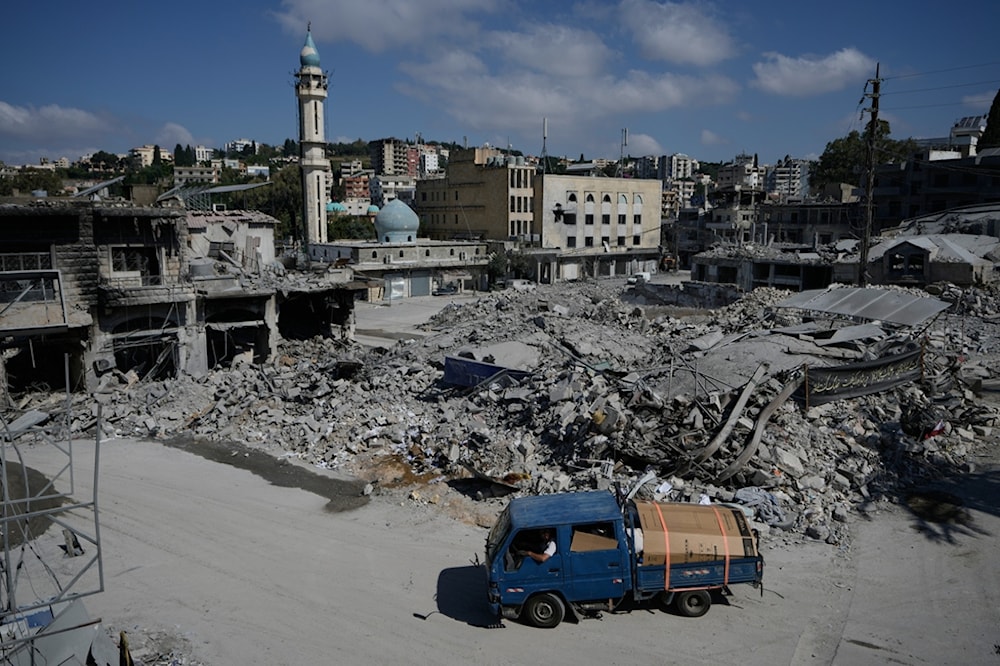
Returning residents drive past buildings destroyed by Israeli airstrikes in the town of Nabatiyeh, southern Lebanon, Wednesday, June 24, 2026. (AP Photo/Bilal Hussein)
Amnesty International has called for war crimes investigations into three Israeli airstrikes on southern Lebanon that led to the martyrdom of 24 civilians, including 12 children, saying the attacks displayed a "callous disregard for civilian lives" and may constitute grave violations of international humanitarian law.
In a report released on Tuesday, the human rights organization concluded that there are reasonable grounds to believe the attacks violated the laws of war, citing evidence that the Israeli occupation either failed to distinguish between civilians and alleged military objectives, directly targeted civilians or civilian objects, or neglected to take all feasible precautions to minimize civilian harm.
The attacks, carried out on March 6, 12, and 13, targeted homes in the al-Thakana neighborhood of Tyre district, Irkay village in Saida district, and the Rahbat neighborhood of Nabatiyeh district. In addition to the 24 people martyred, at least 18 others were injured.
Read more: Lebanon-'Israel' deal shields perpetrators, betrays war crimes victims
Amnesty documents pattern of attacks on civilian homes
According to Amnesty International, those martyred included 12 children between the ages of five and 16, six women, including a pregnant woman, and six men.
Drawing on satellite imagery, verified videos and photographs, witness testimony, and field interviews, the organization said it found no evidence of what "Israel" claimed were military objectives at any of the three locations at the time they were struck.
"Within the space of just a week, the Israeli military obliterated entire families, including a dozen children, in Lebanon, demonstrating a callous disregard for civilian lives," said Kristine Beckerle, Amnesty International's Deputy Regional Director for West Asia and North Africa.
"How many more families will have to pull the body parts of their children from the rubble before this devastating cycle of war crimes ends?" she added.
Beckerle urged governments to impose "an immediate comprehensive arms embargo on Israel" and called on states to investigate and prosecute those responsible using universal jurisdiction where applicable.
She also warned that international efforts aimed at de-escalation should not come at the expense of accountability.
"There are mounting fears that the latest, US-brokered Israel-Lebanon agreement could become yet another barrier to justice, denying victims a path to accountability", she said.
Survivors recount devastation
Among the attacks documented was the March 6 strike on the Saleh family home in the Tyre district. The attack led to the martyrdom of eight civilians, including three children and a pregnant woman, while destroying the family's residence without prior warning.
Hussein Saleh, who survived because he had briefly left to buy groceries before iftar, described returning to find his family buried beneath the rubble. "There was no trace left of the house, no walls, no blocks, and the body parts were scattered on the ground… I spent three days collecting body parts," he said.
"There was no military target whatsoever. All were women and children… They destroyed my whole life".
Amnesty said neither its investigation nor witness testimony uncovered evidence that the home was being used for military purposes.
Paramedic Moussa Chaalan, one of the first responders, described the strike's aftermath. "This is a civilian neighbourhood... There was nothing left of the house. The body parts were scattered as far as 200 metres away from the impact site," Chaalan said.
The organization concluded that the strike must be investigated as either a direct attack on civilians or an indiscriminate attack, both of which constitute war crimes.
Read more: Lebanon conditions Rome talks on IOF withdrawal from 2 'pilot zones'
Entire families wiped out
A second strike, carried out on March 12 in Irkay village, destroyed another family home, killing nine civilians, including five children.
Among the victims were the four daughters of Mohamad Taqi, Zeinab, Zahraa, Malika, and Yasmina, as well as his parents and brother.
"When I was able to stand up, I started looking for the girls and my parents," Taqi told Amnesty. "I couldn't find a trace of Zeinab and Zahraa... The paramedics later found their body parts."
Amnesty also added that it found no evidence supporting the false claims made by the Israeli occupation that it targeted Hezbollah fighters, adding that IOF authorities refused to provide details as to what their military objectives were.
The organization concluded that even if a military target had existed, the manner of the attack on a home full of civilians would still raise serious concerns under international humanitarian law.
The following day, another airstrike leveled a residence in Nabatiyeh, killing seven civilians, including four children from the Basma family. "Our loss is immense. An entire family is gone as if they never were here," relative Tahiya Basma told Amnesty.
The organization again found no evidence of military activity at the site.
Local official Abdul Latif Bitar said, "There's absolutely no military presence in the area; this is a residential neighbourhood, and there were no weapons at the site of the targeted house."
Calls for accountability grow
Amnesty criticized what it described as the continuing absence of accountability for attacks on civilians in Lebanon, arguing that repeated failures to investigate unlawful strikes have contributed to an environment of impunity.
It said Israeli authorities did not provide specific information regarding the three attacks documented in its investigation.
The organization called on Lebanese authorities to grant the International Criminal Court jurisdiction over crimes committed on Lebanese territory while urging independent domestic investigations and greater international support for accountability efforts.
Without coordinated legal action, Amnesty confirmed warnings made by those who faced countless attacks by "Israel" over the years that such strikes against civilians could become normalized.
Read more: Lebanon seeks UNESCO protection for South Lebanon fortresses


