
Andy Burnham nears Labour leadership after Jones declines bid
 4 Min Read
Andy Burnham emerges as frontrunner in Labour leadership race after Darren Jones rules out a bid, reshaping the path to a possible UK prime minister transition.
-
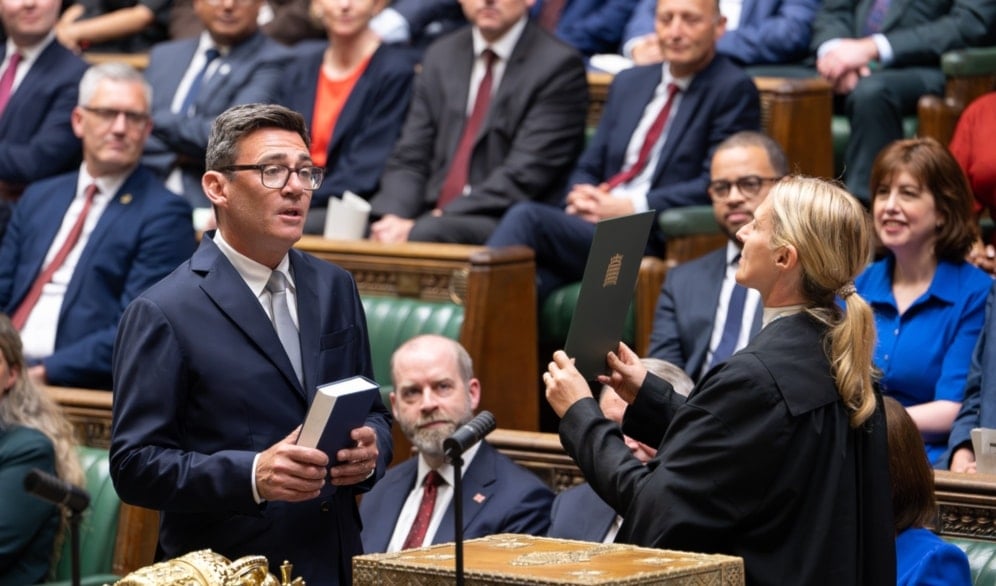
Andy Burnham, front left, is sworn-in as an MP in the House of Common in London, England, Monday, June 22, 2026. (House of Commons via AP)
The Labour Party’s leadership contest has narrowed sharply after Darren Jones ruled out a bid, leaving Andy Burnham as the dominant figure in the race to succeed Keir Starmer. Jones, a minister and ally of Starmer, said in an interview with Sky News that he would not enter the contest and indicated that Burnham was now positioned to become the next leader.
Jones’ decision significantly reshapes the succession dynamic within Labour, with Burnham, the former mayor of Manchester, now widely seen as the frontrunner to take over the party leadership. If unopposed, he could be installed as prime minister by mid-July, following Starmer’s resignation earlier this week.
Burnham is increasingly viewed within Labour as the central figure in the leadership transition, with internal momentum building around his potential unchallenged ascent. His recent electoral performance in Makerfield, where Labour successfully countered Reform UK, has strengthened perceptions that he can appeal to voters beyond the party’s traditional base.
However, concerns remain within sections of the party about the prospect of a rapid and uncontested transfer of power. Critics argue that Burnham could enter Downing Street without sufficient scrutiny of his policy direction, particularly on spending and borrowing commitments.
Concerns grow over untested path to Downing Street
Some Labour MPs have raised questions about the lack of clarity surrounding Burnham’s economic strategy and broader governing agenda. There is a particular focus on fiscal rules and how any future administration would balance investment plans with market confidence.
Darren Jones, speaking after stepping back from the contest, said colleagues were seeking greater transparency on Burnham’s approach. He also emphasized that any chancellor would need to reassure markets, trade unions, and the wider public while avoiding an overly expansive borrowing strategy.
Meanwhile, discussions within the party are already underway regarding potential cabinet appointments and the direction of economic policy. Ed Miliband, the energy secretary, has been mentioned as a possible candidate for chancellor, though concerns have been raised about how such an appointment would align with broader fiscal strategy.
Jones cautioned against excessive borrowing, while suggesting limited flexibility for targeted investment. He stressed that any deviation from existing fiscal rules would need to remain tightly controlled and clearly justified.
Further speculation surrounds other senior figures, including Wes Streeting, who is also expected to take on a prominent role in any future Labour government after stepping back from leadership ambitions. Internal conversations continue over how a potential Burnham administration would be structured, with several key positions yet to be clarified.
Starmer resigns after months of mounting pressure
Starmer announced his resignation on Monday after months of internal unrest within Labour, acknowledging growing questions over whether he remained the right person to lead the party into the next general election.
"I know the question being asked now is not who was best placed to change the Labour Party, to take us into power, and to begin the vital work of improving lives for millions of people," Starmer said during a press briefing. "Those questions have been answered. The question my party is asking now is whether I am best placed to lead us into the next general election."
The outgoing prime minister said he had accepted the verdict of party members and lawmakers regarding his future, adding that all decisions made during his tenure were intended to serve Britain's interests.
His departure follows months of poor polling, electoral setbacks, policy disputes, and increasing dissatisfaction among Labour lawmakers. The leadership crisis deepened after Burnham's victory in the Makerfield by-election, which many party figures viewed as evidence that an alternative leadership path remained viable.
Read more: Labour peer says Starmer has 'no authority,' as pressure mounts


