
Burnham emerges as frontrunner after Starmer steps down
 6 Min Read
Andy Burnham has emerged as the leading contender to replace Keir Starmer after the British prime minister's resignation, as Labour faces mounting political and electoral challenges.
-
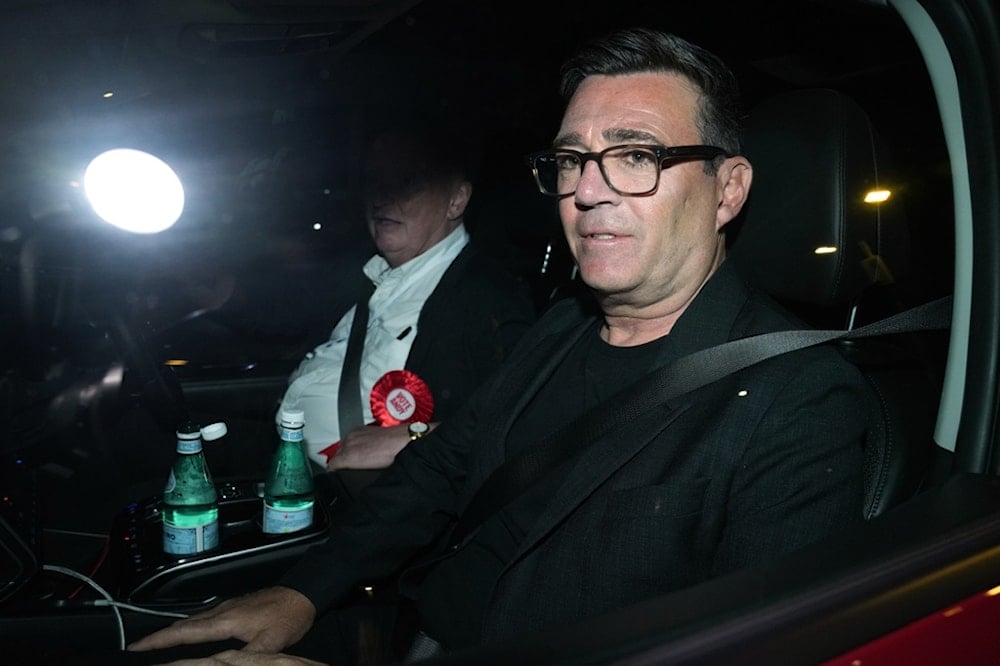
UK Labour Party's Andy Burnham leaves after winning the Makerfield by-election, paving the way for a leadership challenge against Prime Minister Sir Keir Starmer in Wigan, England, Friday, June 19, 2026. (AP Photo/Jon Super)
Andy Burnham has emerged as the leading contender to succeed Keir Starmer following the British prime minister's announcement that he will resign, setting the stage for a leadership battle that could reshape the future of the Labour Party and Britain's political landscape.
The Greater Manchester mayor's return to Parliament after his by-election victory in Makerfield had already fueled speculation about a challenge to Starmer's leadership. With the prime minister now stepping aside, attention has shifted to Burnham as the figure many within Labour believe can halt the party's declining support and confront growing political pressure from across the spectrum.
His rise comes amid a period of deep uncertainty for Britain's governing party, which has struggled to maintain public support despite securing a landslide electoral victory in 2024.
Read more: Labour peer says Starmer has 'no authority,' as pressure mounts
Starmer resigns after months of mounting pressure
Starmer announced his resignation on Monday after months of internal unrest within Labour, acknowledging growing questions over whether he remained the right person to lead the party into the next general election.
"I know the question being asked now is not who was best placed to change the Labour Party, to take us into power, and to begin the vital work of improving lives for millions of people," Starmer said during a press briefing. "Those questions have been answered. The question my party is asking now is whether I am best placed to lead us into the next general election."
The outgoing prime minister said he had accepted the verdict of party members and lawmakers regarding his future, adding that all decisions made during his tenure were intended to serve Britain's interests.
His departure follows months of poor polling, electoral setbacks, policy disputes, and increasing dissatisfaction among Labour lawmakers. The leadership crisis deepened after Burnham's victory in the Makerfield by-election, which many party figures viewed as evidence that an alternative leadership path remained viable.
Starmer said nominations for the leadership contest would open on July 9, with Labour aiming to install a new leader before Parliament returns from its summer recess in September.
From Westminster veteran to regional political force
Although Burnham has often portrayed himself as a challenger to the political establishment, he has spent much of his career at the heart of British politics.
After entering Westminster at a young age, he served in several senior government roles under former Labour prime ministers Tony Blair and Gordon Brown, eventually becoming health secretary.
Burnham twice sought the Labour leadership, first in 2010 and again in 2015. His second bid ended in defeat to Jeremy Corbyn, whose victory shifted Labour sharply to the left, after which a campaign was launched against him, in which Corbyn was labeled an anti-semite for his stances against "Israel", leading to the end of his Labour leadership.
His political standing was revitalized after becoming the mayor of Greater Manchester in 2017. The role allowed him to build an independent political identity largely removed from Labour's factional battles while establishing himself as one of the country's most recognizable regional leaders.
During his tenure, Burnham became known for repeatedly challenging central government policies and advocating greater political and economic power for northern England, earning him the nickname "King of the North" in British media.
A different political vision for Labour
Burnham is widely associated with Labour's soft-left tradition, occupying a political space between Starmer's centrist approach and the more radical platform advanced under Corbyn.
His political project has become closely linked to what supporters describe as "Manchesterism" — a model emphasizing regional development, public investment, stronger public services, and greater local control over transport, housing, and economic planning.
Supporters argue that his leadership of Greater Manchester helped improve infrastructure, expand housing initiatives, and strengthen economic growth across the region.
Critics, however, contend that some of his most ambitious promises fell short of expectations and question the extent to which Manchester's broader economic success can be attributed directly to his administration.
Nevertheless, Burnham has consistently maintained stronger approval ratings than many national politicians, particularly during a period of declining public trust in Westminster institutions.
Labour seeks a path forward amid political fragmentation
Burnham's emergence comes as Labour faces growing challenges from multiple political forces.
Nigel Farage's Reform UK has expanded its support among working-class voters frustrated with mainstream politics, while the Green Party has attracted younger and progressive voters dissatisfied with Labour's centrist direction.
The task facing Burnham will be balancing these competing pressures while preserving Labour's broad electoral coalition.
Throughout the Makerfield campaign, he sought to appeal to traditional Labour voters while avoiding positions that could alienate progressive supporters. On issues ranging from immigration to economic policy, Burnham has attempted to present himself as a pragmatic alternative capable of reconnecting Labour with voters who have drifted away from the party.
Many analysts argue that the distinction between Burnham and Starmer is less about ideology than political style. While there is considerable overlap between their policy agendas, Burnham's supporters believe his regional leadership experience and public image offer Labour a stronger platform from which to rebuild support.
Relevant Background
Labour entered government in 2024 with a substantial parliamentary majority after defeating the Conservatives. However, the party's standing has steadily weakened amid economic pressures, unpopular policy decisions, and a series of disappointing electoral results.
The leadership crisis intensified following local election setbacks and Burnham's victory in the Makerfield by-election, which many Labour lawmakers interpreted as a sign that the party needed a change in direction.
If successful in the leadership contest, Burnham would inherit a government facing economic stagnation, rising political polarization, and increasing competition from parties on both the right and left.


