
ByteDance develops custom CPUs to power AI infrastructure growth
 4 Min Read
ByteDance is developing custom CPU chips for AI data centers amid global shortages, joining Big Tech in reducing reliance on Intel and AMD, sources say.
-
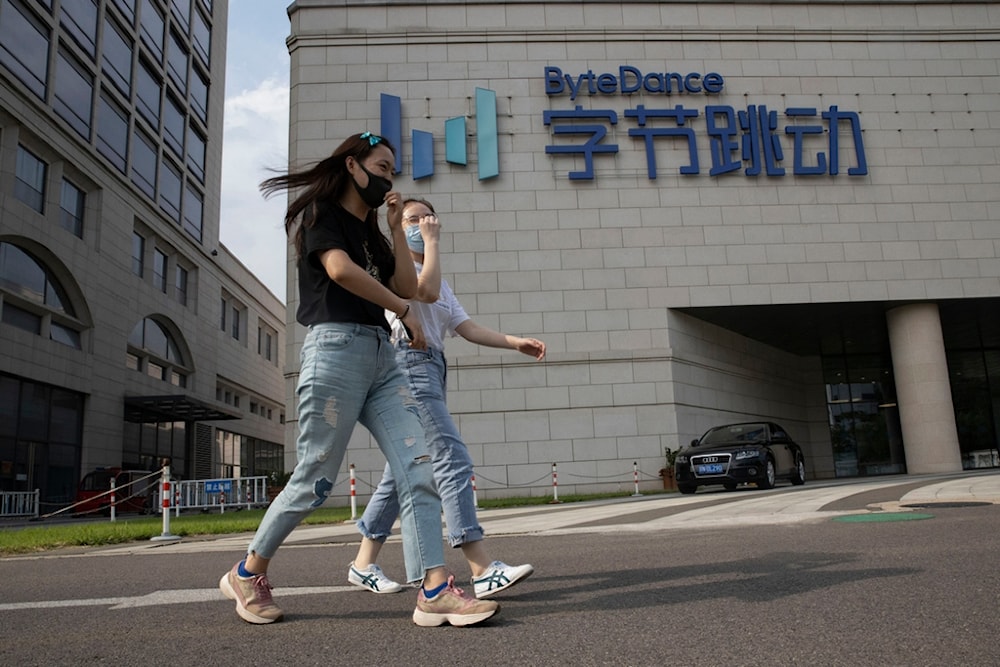
Women wearing masks to pass by the headquarters of ByteDance, in Beijing, China, August 7, 2020. (AP)
Chinese technology company ByteDance is developing its own central processing units (CPUs) to support growing artificial intelligence infrastructure needs, sources familiar with the matter told Reuters.
The move comes as rising chip prices and ongoing global supply shortages continue to constrain expansion plans across the technology sector.
The development highlights a broader industry shift toward custom silicon, particularly as companies scale AI systems that rely on “inference” workloads, where models are deployed for real-time tasks requiring significant CPU support alongside graphics processing units.
Major cloud and AI operators, including Google, Amazon, and Microsoft, have also been investing in in-house chip development to reduce costs and optimize performance for specific workloads.
Arm and RISC-V architectures under consideration
According to Reuters, ByteDance is exploring two parallel chip architecture paths: one based on Arm technology and another using the open-source RISC-V instruction set.
The dual-track approach reflects a common strategy among major technology firms, allowing companies to evaluate multiple designs before committing to large-scale production.
The company is reportedly targeting deployment of its proprietary CPUs within its own servers and data centers to support internal operations and upcoming AI products, including agent-based platforms.
Supply constraints and rising CPU costs
ByteDance currently relies on CPUs supplied by Intel and AMD, but tightening global supply conditions have increased prices significantly in recent months, with reported quarterly increases ranging from 10% to 35%.
Industry-wide shortages have prompted warnings from major chipmakers. Intel has previously indicated extended delivery times for server CPUs, while AMD has described the global CPU market as tight, with demand outpacing supply forecasts.
These pressures have accelerated ByteDance’s efforts to reduce dependence on external suppliers.
The push places ByteDance alongside a growing group of technology giants investing in proprietary chip design, as competition intensifies in the AI infrastructure market.
Nvidia, which dominates the AI GPU segment, is also expanding into CPUs as it seeks to strengthen its position in the broader AI hardware ecosystem. The company is targeting a multi-billion-dollar opportunity in data center computing as demand for AI systems continues to expand.
China bans Nvidia chip
Chinese authorities banned a specialized Nvidia gaming chip last week, a move that coincided with the chipmaker’s chief executive, Jensen Huang, travelling to Beijing alongside former US president Donald Trump, according to documents and people familiar with the matter.
The restriction, imposed at Chinese customs checkpoints on Friday, adds the Nvidia RTX 5090D V2 to an official list of banned goods. The move underscores Beijing’s determination to block US semiconductor imports, including versions downgraded to meet US export rules, while creating space for domestic rivals such as Huawei and Cambricon.
The RTX 5090D V2 was introduced last August specifically to comply with US export controls. Though targeted at Chinese gamers and 3D animators, the chip has also been purchased by AI developers cut off from more powerful Nvidia products.
China stands on its own yet again
The shift comes as Beijing intensifies efforts to reduce reliance on US semiconductor technology amid an escalating superpower rivalry over artificial intelligence.
Huawei is poised to capture the largest share of China's AI chip market this year, with sales expected to rise by at least 60 per cent as Chinese companies accelerate their search for homegrown alternatives to Nvidia, the Financial Times reported earlier this month.
Morgan Stanley forecasts that China's AI chip market will reach $67 billion by 2030, with domestic suppliers expected to provide 86 per cent of that total. The US investment bank estimates the market from local suppliers will be worth approximately $21 billion this year.
China's AI chip sector was long dominated by Nvidia, which sold products worth just over $17 billion, mostly its China-specific H20 chips, in the Chinese market during the 2025 financial year. That dominance is now being challenged as Huawei and other domestic players gain traction.


