
China rejects US sanctions bill targeting Russian energy buyers
 2 Min Read
China says it opposes a proposed US sanctions bill targeting buyers of Russian fossil fuels, calling unilateral sanctions illegal under international law.
-
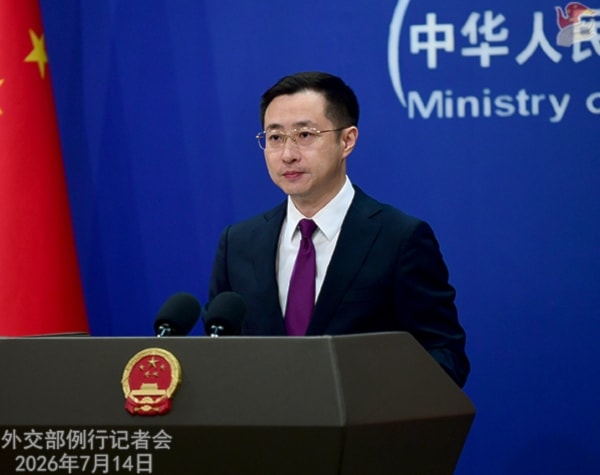
Chinese Foreign Ministry Spokesperson Lin Jian’s Regular Press Conference on July 14, 2026. (mfa.gov.cn)
China on Tuesday rejected a proposed US sanctions bill targeting countries that purchase Russian oil and natural gas, reiterating its opposition to unilateral sanctions and vowing to protect the interests of Chinese companies.
The remarks came after Washington revised legislation that would impose punitive tariffs on major importers of Russian fossil fuels.
Chinese Foreign Ministry spokesperson Lin Jian said Beijing firmly opposes the proposed legislation, arguing that unilateral sanctions imposed outside the framework of the United Nations lack international legitimacy.
"China resolutely opposes illegal unilateral sanctions, which have no international legal basis and are not approved by the UN Security Council," Lin said.
Lin added that Beijing would take "all necessary measures" to safeguard the lawful rights and interests of Chinese companies affected by any future US restrictions.
China has consistently opposed unilateral sanctions imposed without UN Security Council authorization, maintaining that such measures undermine international trade and economic stability.
Read more: China's position on Iran, Hormuz remains unchanged: Exclusive
Revised bill reduces proposed tariffs
According to Reuters, the revised legislation would reduce proposed tariffs on the five largest buyers of Russian oil and gas to 100%, down from the 500% tariff included in an earlier draft.
The updated proposal would also exempt countries that import less than 15% of their total energy supplies from Russia, provided they are taking what the legislation describes as "significant steps" to reduce those imports.
The bill would further authorize US President Donald Trump to suspend or lift sanctions if doing so is deemed to serve US national interests.
Legislation faces uncertainty after Lindsey Graham's death
It is worth noting that the proposed sanctions package was championed by the late US Senator Lindsey Graham, who was among its principal Republican sponsors.
According to The New York Times, Graham's death leaves the legislation without one of its strongest advocates in Congress, creating uncertainty over its future despite lawmakers' pledges to continue pursuing the measure.
It remains unclear whether Congress will accelerate consideration of the bill or delay its progress following Graham's death.


