
Diplomacy can still be revived, if US learns pressure fails: Araghchi
 4 Min Read
Iran's FM urges Washington to build trust, respect Iran’s rights, and honor its commitments, saying pressure “doesn’t work".
-
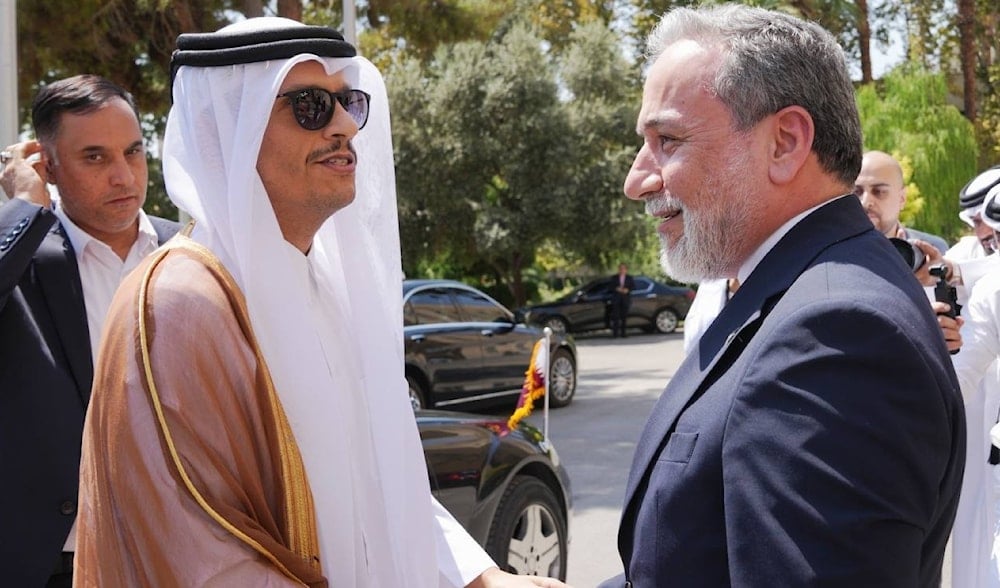
Iranian Foreign Minister Abbas Araghchi meets Qatar’s prime minister and Minister of Foreign Affairs of Qatar, Sheikh Mohammed bin Abdulrahman Al Thani, on August 28, 2026. (@araghchi / X)
Restoring diplomacy with the United States remains possible, Iranian Foreign Minister Abbas Araghchi said Friday, but argued that Washington must change its approach and recognize that pressure is ineffective.
Araghchi made the remarks in a post on X following "creative discussions" with Qatar’s prime minister and Minister of Foreign Affairs Sheikh Mohammed bin Abdulrahman Al Thani. He said putting diplomacy back on track would depend on the US understanding that “pressure doesn't work.”
Had creative discussions with H.E. the PM/FM of Qatar.
— Seyed Abbas Araghchi (@araghchi) August 28, 2026
Putting diplomacy back on track isn't impossible. It hinges on U.S. understanding of one simple fact: pressure doesn't work. The U.S. should build trust, speak respectfully, acknowledge our rights, and uphold commitments. pic.twitter.com/9yQ2pOXe5R
He demanded that Washington build trust, speak respectfully, acknowledge Iran’s rights, and uphold its commitments.
“Had creative discussions with H.E. the PM/FM of Qatar. Putting diplomacy back on track isn't impossible. It hinges on US understanding of one simple fact: pressure doesn't work. The US should build trust, speak respectfully, acknowledge our rights, and uphold commitments," Araghchi wrote.
The diplomatic push comes as Iran and Oman have also reached an agreement on a framework aimed at addressing navigation through the Strait of Hormuz.
Iran, Oman agree on framework for Strait of Hormuz navigation
On Tuesday, Iran and Oman agreed on a phased framework that could provide a practical and implementable basis for maritime navigation through the Strait of Hormuz, according to a joint statement issued by the two countries.
The framework includes establishing a temporary joint maritime navigation corridor through the strategic waterway, alongside measures aimed at ensuring safe maritime traffic.
The agreement comes as Tehran and Muscat pursue regional mechanisms for managing navigation and security in the Strait of Hormuz, one of the world’s most strategically significant maritime passages.
Temporary Hormuz navigation corridor
Under the proposed framework, Iran and Oman will establish a temporary joint maritime navigation corridor through the Strait of Hormuz.
The two sides said the framework is intended to provide a practical basis for navigation while technical negotiations continue on longer-term arrangements governing maritime traffic through the strait.
The agreement places Iran and Oman at the center of efforts to develop mechanisms for navigation and security in the waterway, which connects the Persian Gulf with the Gulf of Oman.
Read more: Iranian officials tell Pakistan army chief US failed to honor MoU
Joint mine-clearing project included in framework
The framework also includes an agreement to implement a joint project to clear mines from the Strait of Hormuz.
Mine clearance forms part of the measures envisaged by the two sides to facilitate maritime navigation and address potential threats to shipping in the strategic waterway.
The joint project will require further technical coordination between Iranian and Omani authorities as the two countries work to implement the framework.
Talks to address permanent navigation and strait management
Technical negotiations between Tehran and Muscat will continue with the aim of reaching an agreement on a permanent maritime navigation corridor and arrangements for the future management of the strait.
The two sides will also continue discussions on mechanisms for information exchange, traffic management, and the provision of maritime and security services.
The negotiations are expected to continue until an agreement is reached on these mechanisms.
The phased approach allows the two countries to establish interim arrangements while continuing talks on a longer-term framework for navigation and management.
Tehran, Muscat call for regional dialogue
Iran and Oman also stressed the importance of holding joint dialogues with countries in the region bordering the Gulf waters.
"Both sides affirmed the importance of holding joint discussions with the Gulf littoral states," a statement read. "They also emphasized the necessity of adhering to the provisions of international law and respecting the sovereign rights of coastal states."
The emphasis on regional dialogue reflects the two countries’ stated interest in addressing maritime security and navigation through cooperation among the states directly connected to the region.
The Strait of Hormuz remains a critical maritime passage, making arrangements concerning navigation, security, and traffic management a matter of direct importance to the countries of the Gulf region.
The Iranian-Omani framework therefore places regional states at the center of discussions over the waterway and its future navigation arrangements.
Read more: Iran conveys Hormuz conditions to US via Pakistani mediator: Tasnim


