
DPRK condemns US attack on Venezuela as violation of international law
 3 Min Read
Pyongyang denounces the US strike on Venezuela and Maduro’s capture as a grave breach of sovereignty, urging global condemnation and UN action.
-
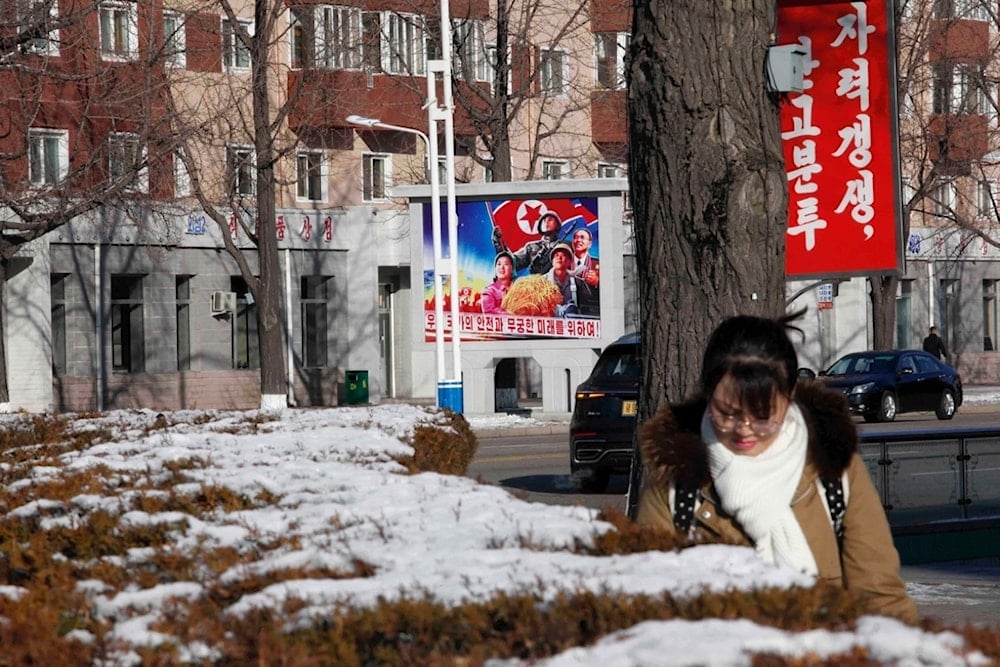
People walk in the street of the Central District, Pyongyang, The Democratic People’s Republic of Korea, on Thursday, Dec. 25, 2025. The poster reads: "For our state's safety and eternal future. self-reliance and fortitude" (AP Photo/Cha Song Ho)
The Democratic People’s Republic of Korea strongly condemned the US attack on Venezuela, describing it as a grave violation of sovereignty and international law, and urged the international community to protest Washington’s actions, the country’s Foreign Ministry said on Sunday.
In a statement carried by the Korean Central News Agency, a Foreign Ministry spokesperson said the DPRK viewed what it called the United States’ hegemonic acts in Venezuela as “the most serious violation of sovereignty” and a clear breach of the UN Charter, which is based on respect for territorial integrity and non-interference in the internal affairs of states.
The statement said the US had “grossly violated” Venezuela’s sovereignty, warning that the attack risked further aggravating global instability. Pyongyang added that the operation had already produced “devastating consequences” for regional stability and international relations.
Pyongyang warns of wider global instability
The ministry called on the international community to recognize the seriousness of the events in Venezuela and to intensify protests and condemnations of Washington’s actions.
On Saturday, US President Donald Trump said the United States had carried out a major strike on Venezuela, kidnapping Venezuelan President Nicolás Maduro and his wife, Cilia Flores, to the United States.
Media reports cited explosions in Caracas and attributed the raid to US Delta Force units. The New York Times reported, citing a senior Venezuelan official, that at least 40 people were killed, including both military personnel and civilians.
Venezuela demands proof of life, seeks UN action
Venezuelan authorities said they had no information on Maduro’s whereabouts and demanded proof that he was alive. Trump later shared an image he claimed showed Maduro aboard the USS Iwo Jima, while US media aired footage of a plane landing in New York State from which Maduro and Flores were allegedly escorted by dozens of law enforcement officers.
Several US lawmakers criticised the operation as illegal, while the Trump administration said Maduro would face trial.
Venezuela’s Foreign Ministry announced plans to appeal to international organisations and requested an urgent meeting of the United Nations Security Council, which was later scheduled for January 5.
Lawless Regime Change Attempt
This follows the kidnapping of President Maduro and his wife in a US-authorized commando raid, and his subsequent transfer to the United States, where US officials have confirmed they are being held in federal custody. Washington has attempted to frame the operation through longstanding narcotics allegations, a justification that Caracas and several international observers dismiss as a political pretext for regime change.
The episode has revived broader concerns over US extraterritorial enforcement and the precedent set by the abduction of a sitting head of state. Legal analysts warn that such actions undermine the foundations of the international system, particularly the principle of sovereign equality enshrined in the UN Charter.
The incident has also renewed scrutiny of Washington’s sustained pressure on Venezuela’s energy sector. Venezuela holds the world’s largest proven crude oil reserves, yet years of US sanctions and licensing restrictions have severely constrained its oil industry. Observers note that the kidnapping has fueled speculation that forced political change could be used to reconfigure control over Venezuela’s energy resources.


