
Draft fears rise in US as war on Iran deepens, dissent spreads
 5 Min Read
Online anxiety grows over a possible US military draft as Trump deploys troops to Iran, despite officials saying it is off the table.
-
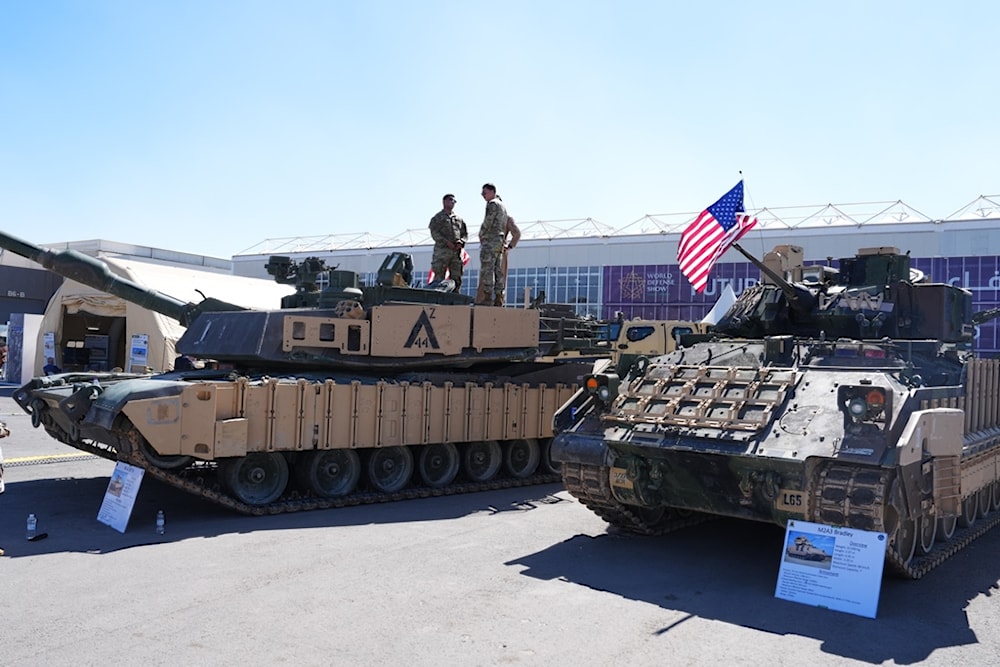
US Army personnel stand atop an M1A2 Abrams main battle tank as an M2A3 Bradley infantry fighting vehicle as it displayed nearby at the World Defense Show in Riyadh, Saudi Arabia, Sunday, Feb. 8, 2026 (AP)
Speculation about a US military draft has surfaced as US President Donald Trump continues his war against Iran, even though officials emphasize that no draft is planned. Anxiety and online debate have spread across the country, fueled by troop movements and media commentary, the Guardian reported.
In recent weeks, Trump deployed marines and army paratroopers to West Asia, signaling a potential ground operation to reopen the Strait of Hormuz. The provocative military activity has prompted discussions about what it would take to invade a country larger than Iraq, intensifying fears about a draft.
The White House has offered little clarity to quell speculation. On 8 March, Press Secretary Karoline Leavitt responded to journalist Maria Bartiromo about a possible draft, saying,
“The president, as commander-in-chief, wants to continue to assess the success of this military operation. It’s not part of the current plan right now, but the president, again, wisely keeps his options on table. There’s no greater priority or responsibility to this president than, of course, protecting the American people and protecting our troops.”
Her inconclusive answer caused debate to snowball, prompting news outlets like Task and Purpose, Yahoo, and USA Today to explain how a draft might work.
Social media users also reacted to administrative changes in the Selective Service program, which automatically registers eligible Americans in case a draft is reinstated. Misleading posts claimed young men were “automatically drafted", adding fuel to the fire.
Meanwhile, the US Army revised recruitment rules on March 20, raising the maximum enlistment age from 35 to 42 and easing restrictions for people with marijuana convictions, a move that comes years after a period in which it struggled to meet its recruitment goals.
#SendBarron
Satirical campaigns like DraftBarronTrump.com mocked Trump’s willingness to send others to war while avoiding military service for his own son. The hashtag #SendBarron trended on X and TikTok in early March.
Politicians also weighed in: California Governor Gavin Newsom suggested a possible universal service requirement, while public figures like Rob Schneider advocated for mandatory two-year service.
The debate carries political risk for Trump, who rejected draft proposals during 2024. On June 11, 2024, he wrote on Truth Social: “The Fake News Washington Post came up with the ridiculous idea that Donald J. Trump will call for Mandatory Military Service. The Story is completely untrue. In fact, I never even thought of that idea.”
Despite these denials, speculation continues as troop deployments and media coverage keep the possibility of a draft in public conversation.
US troops refuse being 'pawns' as dissent over Iran war grows
Since the early days of March, doubts were spreading among US troops over Washington’s ongoing war on Iran, with growing concern about the war's objectives, rising casualties, and the possibility of a ground invasion.
As the US intensifies its aggression, deploying additional forces to the region, reports indicate increasing unease among active-duty personnel and reservists. Several service members, speaking anonymously, described feelings of vulnerability, stress, and disillusionment, with some considering leaving the military altogether.
A military official involved in treating evacuated troops said forces are facing “inadequate protection and planning,” highlighting the toll of repeated Iranian missile and drone strikes on US bases.
At least 13 US troops have been killed and more than 230 wounded since the start of the war, according to US officials cited in the report, while Iranian authorities put the number of fatalities in the hundreds.
Concerns have also intensified over the possibility of a US ground invasion in Iran, which some military personnel described as lacking clear planning.
A ground invasion would be “an absolute disaster… we don’t have a plan for that,” one official said earlier this week, adding that the US cannot even "fully defend a single land base in the theater."
Moral and political opposition emerges
Some troops have also voiced opposition to the political motivations behind the war. One reservist reported hearing service members say, "We do not want to die for Israel — we don’t want to be political pawns."
Advocacy groups supporting military personnel reported a sharp rise in inquiries about conscientious objector status, with some organizations noting a dramatic increase in requests since the war began.
Matt Howard, co-director of the group About Face: Veterans Against The War, said his organization has increasingly been assisting active-duty troops in understanding their options for dissent.
“Folks have more options than they think they do. The military makes it seem like there is only one route, it's through their contract, and that the consequences otherwise are devastating," adding that "more and more folks are going that particular route."
A lack of a clear strategic narrative has further contributed to declining morale, according to sources.
The war has also raised broader concerns among troops about US foreign policy in the region, particularly amid the escalating US-Israeli war and its regional repercussions.
Experts warn that growing dissatisfaction within the military could impact the effectiveness of the campaign and signal deeper shifts in attitudes toward US military interventions abroad.
Read more: US war on Iran: Strategic failure and mounting costs


