
Egypt vows full support for Sudan’s stability during high-level talks
 3 Min Read
Egyptian President Abdel Fattah el-Sisi reaffirms support for Sudan's unity and stability in talks with Abdel Fattah al-Burhan, addressing the Sudan crisis and Nile Basin security concerns.
-
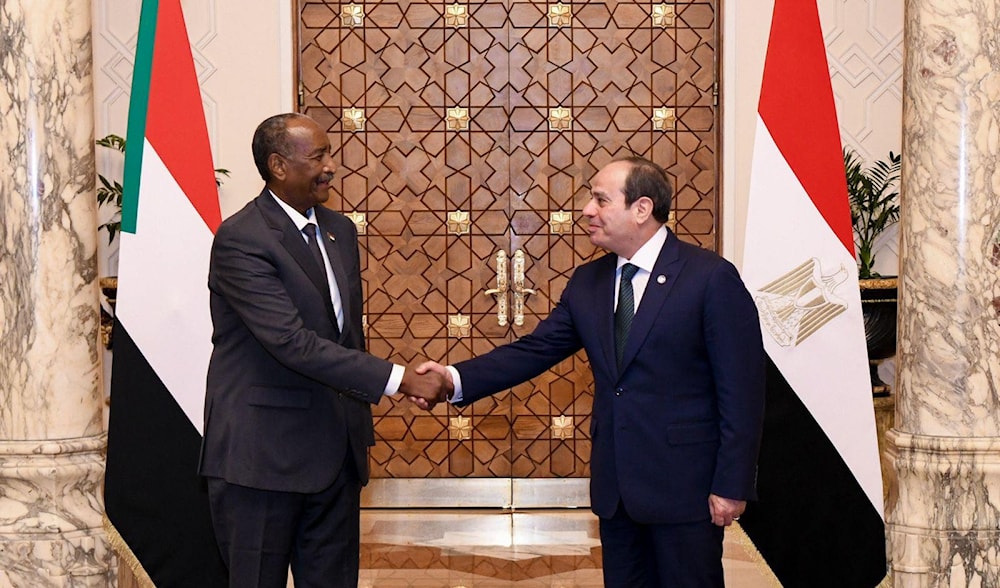
Egyptian President Abdel Fattah el-Sisi and the head of Sudan’s Transitional Sovereignty Council, General Abdel Fattah al-Burhan, in Cairo, December 18, 2025 (Facebook)
Egyptian President Abdel Fattah el-Sisi has reaffirmed Egypt’s full support for the Sudanese people as they attempt to navigate the ongoing Sudan crisis.
The statement came during a meeting in Cairo on Thursday with the head of Sudan’s Transitional Sovereignty Council, General Abdel Fattah al-Burhan, according to presidential spokesperson Mohamed El-Shennawy.
President el-Sisi emphasized Egypt’s unwavering support for Sudan’s unity, sovereignty, security, and stability and reiterated the country's readiness to provide all necessary assistance to help Sudan overcome this critical phase.
The meeting reflects the strength of Egypt-Sudan relations, particularly in light of the deteriorating humanitarian conditions in Sudan caused by the protracted conflict.
Humanitarian aid, accountability needed
El-Shennawy noted that both sides agreed on the importance of intensifying joint efforts to deliver humanitarian support to the Sudanese people. The two leaders also stressed the need to halt violations against civilians and to ensure that those responsible are held accountable.
For his part, General al-Burhan expressed appreciation for Egypt’s continued support, underlining the depth of the historic and fraternal ties between the two neighboring countries.
The meeting also covered developments in the broader region, particularly in the Nile Basin and the Horn of Africa. El-Sisi and al-Burhan reaffirmed their shared views on national security priorities and stressed the importance of continued coordination to safeguard water security.
Egypt, Sudan reject unilateral measures in Blue Nile
The two sides voiced firm rejection of any unilateral measures in the Blue Nile Basin and called for adherence to international law to ensure the equitable and sustainable use of water resources.
They emphasized that safeguarding Nile Basin security is integral to the stability and interests of all riparian states.
El Fasher siege has become Sudan’s worst humanitarian crisis
On December 12, the World Food Programme sounded the alarm, cautioning that conditions in Sudan’s besieged city of El Fasher have deteriorated to levels “beyond horrific,” with between 70,000 and 100,000 people believed to remain trapped amid mass killings, famine, and the collapse of basic services.
Speaking to journalists in Geneva, Ross Smith, WFP’s director of emergency preparedness and response, said widespread network outages have largely cut off communications with the North Darfur city, leaving humanitarian agencies with only limited information about the situation on the ground.
Smith said satellite imagery and survivor testimonies describe El Fasher as “a crime scene,” citing reports of mass killings, burned bodies, abandoned markets, and the complete absence of commercial activity. He added that there are no signs of trade routes reopening or supplies reaching the city, and confirmed that the WFP no longer has humanitarian partners operating inside El Fasher.
Smith also highlighted the situation in Tawila, where more than 650,000 displaced people are living in overcrowded, temporary conditions amid a cholera outbreak and severe shortages of basic services. He warned that without urgent funding, the WFP will be forced to reduce food rations in 2026, further worsening the humanitarian crisis.
Read more:


