
EU nears decision on using frozen Russian assets for Ukraine aid
 4 Min Read
Germany says the EU could decide next week on using frozen Russian assets to support Ukraine, despite Belgium warning the plan could constitute theft.
-
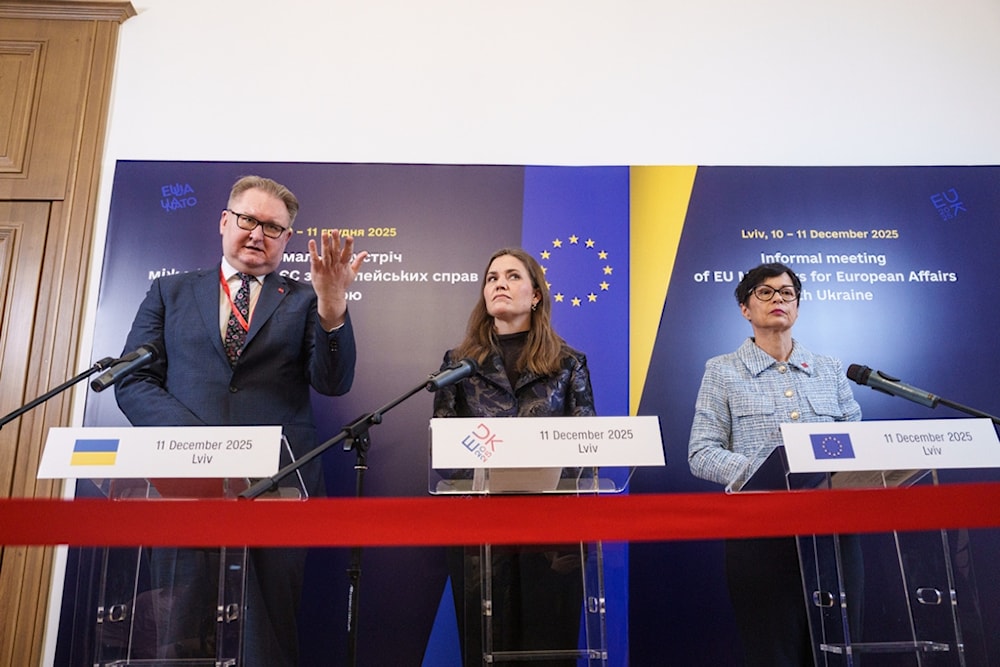
Ukraine's Deputy Prime Minister Taras Kachka, Marie Bjerre, Danish Minister for European Affairs, and Marta Kos, EU Commissioner for Enlargement in Lvov, Ukraine, on Thursday, December 11, 2025 (AP)
German Chancellor Friedrich Merz said on Thursday that a decision on whether to use frozen Russian assets to support Ukraine could be reached as early as the end of next week, signaling a significant step in one of the European Union’s most contentious debates.
Speaking at a joint press conference with NATO Secretary General Mark Rutte, Merz noted that “the process may move forward this week” and that European leaders aim to finalize discussions at the upcoming European Council meeting.
The summit is scheduled for next Thursday, and Merz said talks could extend into the following day in Brussels “to make an ultimate decision on the issue,” if needed. The move comes amid growing pressure within the bloc to accelerate financial support for Kiev, even as divisions deepen over the legality and long-term consequences of repurposing Russian funds.
Earlier on Thursday, Belgian Prime Minister Bart De Wever sharply criticized the European Commission’s proposal, calling it theft and warning that Brussels could face legal action if it proceeds. Belgium’s concerns carry particular weight, given that most of the frozen funds, around 200 billion euros, are held in European accounts, primarily within the Belgium-based securities depository Euroclear.
Following the start of the Ukraine war in 2022, the EU and G7 nations froze nearly half of Russia’s foreign currency reserves, totaling approximately 300 billion euros ($350 billion). The Kremlin has maintained that any effort to confiscate these assets would amount to theft and violate international law.
EU leaders urge use of frozen Russian assets
Leaders from seven EU member states on Monday urged the European Union to expedite plans to use frozen Russian assets to provide financial support for Ukraine.
In a joint letter addressed to European Council President Antonio Costa and European Commission President Ursula von der Leyen, the heads of Estonia, Finland, Ireland, Latvia, Lithuania, Poland, and Sweden stressed that backing Kiev remains both a moral duty and a strategic necessity.
"Supporting Ukraine in their fight for freedom and independence is not only a moral obligation, it is also in our own self-interest," the leaders wrote.
They called on the EU to move rapidly to adopt the Commission’s proposals, saying, "We must therefore move ahead quickly on the Commission's proposals to use the cash balances from Russia's immobilized assets for a reparations loan to Ukraine."
Russia warns of global financial turmoil caused by Western asset seizures
The Russian Foreign Ministry has repeatedly cautioned that Western efforts to seize sovereign assets carry broad risks for countries holding reserves in Western financial systems.
In a statement released after a UN General Assembly meeting marking the International Day Against Unilateral Coercive Measures, the ministry said, “Attempts to expropriate the sovereign assets of central banks create risks for all states that have funds in Western jurisdictions.”
Moscow argued that such moves, driven by Western governments, undermine international legal norms and set a “dangerous precedent” that could affect not only Russia but any nation with reserves held in the West.
It added that for states across the Global South and other non-Western economies, the “weaponization” of global financial systems raises new concerns about the neutrality and security of international economic institutions.
The ministry said Russia would continue working with what it called the “global majority” to counter what it views as illegitimate unilateral coercive measures imposed by Western powers.


