
Europe on edge as US navigates new Russia peace overtures
 5 Min Read
As the US explores peace talks with Russia, European leaders fear for NATO’s future, Ukraine’s security, and growing pressure on Zelensky.
-
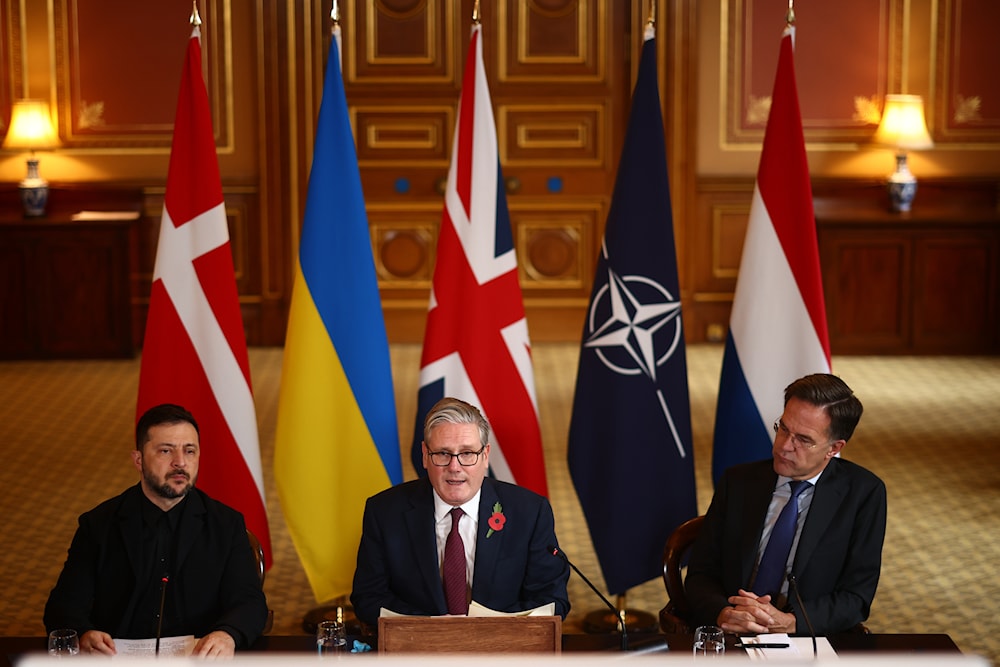
Britain's PM Keir Starmer, centre, with Ukraine's President Volodymyr Zelensky, left, and NATO's Secretary-General Rutte, attend a 'Coalition of the Willing' Ukraine meeting at London’s FCDO, Oct. 24, 2025 (AP)
European leaders are increasingly uneasy as the United States navigates potential peace talks with Russia, raising questions about the future of NATO and Europe’s ability to defend itself. The concern comes as President Donald Trump’s 33-page National Security Strategy warns that Europe faces existential threats unless it reforms its culture and policies.
For British Prime Minister Keir Starmer, French President Emmanuel Macron, and German Chancellor Friedrich Merz, the timing of the latest US moves, echoing Vice President JD Vance’s high-profile Munich speech in February, was significant. The developments coincide with a pivotal stage in Russia’s ongoing war in Ukraine.
European officials are wary of US efforts to broker agreements with Moscow, viewing them as potential concessions that undermine Western unity. Confidence in the Trump administration has been shaken, prompting existential questions: Is Europe capable of defending itself independently?
Trump takes Europe on a rollercoaster
Diplomats have compared Trump’s Ukraine policy to a rollercoaster ride, now approaching a steep descent. Allies of Kiev had hoped Ukraine would be in a stronger position, particularly after previous US sanctions on Russian energy firms and diplomatic engagement with Zelensky. Military and financial support during winter could have weakened Russia’s economic leverage, reducing Putin’s bargaining power.
Recent US-Russia peace proposals have put European leaders in a position where they must publicly express support for American initiatives while simultaneously depending on Moscow to introduce complications, an approach that is currently being tested more than ever and is complicated further by the absence of any clear alternative plan.
The situation escalated after Bloomberg News reported that US envoy Steve Witkoff advised Russia on presenting a plan for Ukraine to Trump, eroding European trust in US negotiators. Macron reportedly warned European counterparts that the United States could be on the verge of “betraying” Ukraine, while Merz accused the Americans of “manipulation".
'Unrealistic expectations'
The US strategy document noted that European officials hold “unrealistic expectations of the war” and criticized the continent’s “lack of self-confidence” in its dealings with Russia.
For the United Kingdom, the stakes are especially significant, with Starmer aiming to present Britain as Ukraine’s closest European ally and its most dependable partner to the United States, a position reinforced by the distinctive nature of the UK-US military and intelligence partnership, which renders any disruption in relations almost unimaginable.
British officials have maintained cautious optimism, pointing out that claims of an imminent deal were unfounded, that Putin seemed resistant to US proposals in recent meetings, and that the plan was reportedly adjusted, if only slightly, in favor of Ukraine.
Europe prepares for possibility of Trump withdrawing
European diplomats, however, note increased communication difficulties with both the US and Ukraine and prepare for the possibility that Trump might withdraw if no agreement is reached. John Foreman, former British military attaché to Moscow and Kiev, warned that Europe could be left to manage Ukraine’s defense largely on its own if the US disengages.
Meanwhile, Zelensky faces pressure from the United States and domestic corruption scandals that have reshuffled his leadership team, potentially weakening Kiev’s negotiating position. Europe also faces uncertainty over continued financial support for Ukraine, including disputes over using frozen Russian central bank assets to fund Kiev.
Europe’s primary goal remains preventing the United States from forcing Ukraine into a settlement without meaningful security guarantees, which could embolden Russia and lead to a wider conflict. Delegations are expected to travel to Washington in the coming days to discuss the status of negotiations.
European leaders prioritize preventing US-Europe split
Despite concerns, European leaders are counting on Trump returning to his October position of viewing Putin as an obstacle to peace and continuing pressure on Russia’s economy. Yet worst-case scenarios include Trump reducing US support for Ukraine, halting arms deliveries, and restricting intelligence sharing, leaving Europe to face the consequences alone.
Starmer, Macron, and Merz see preventing a US-Europe split as a strategic priority, highlighting Europe’s continued dependence on American security guarantees. Foreman emphasized, “Europe has relied on US security cover, underinvested in it, ignored warnings of disengagement, and failed to prepare adequately. The consequences of this strategic misjudgment are now apparent.”
The Trump administration’s National Security Strategy signals a push for political reforms in Europe “to restore conditions for strategic stability across the Eurasian landmass and reduce the risk of conflict between Russia and European states,” while reaffirming continued US engagement. As the strategy notes, excluding Europe from US security planning would amount to “self-defeat".


