
Ex-CIA chief: US attacks failed to force Iran into submission
 5 Min Read
Leon Panetta acknowledges that Washington’s prolonged war on Iran has failed to force Tehran into submission, while controversially proposing a US takeover of the Strait of Hormuz.
-
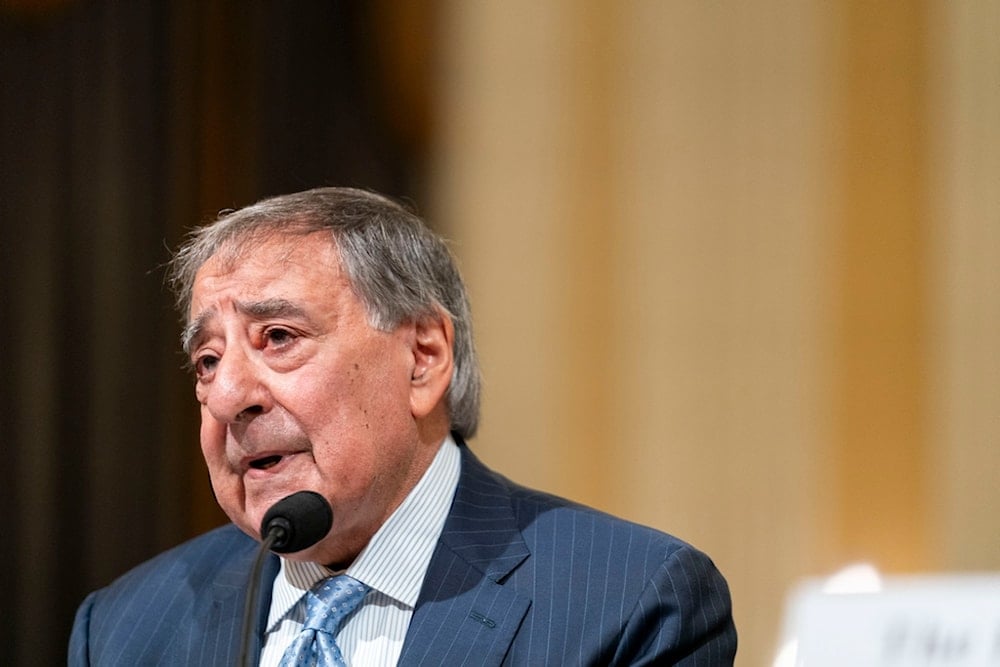
Former Secretary of Defense Leon Panetta testifies during a House Select Committee on the Chinese Communist Party hearing on Chinese government support for American adversaries, Tuesday, Jan. 30, 2024, on Capitol Hill in Washington (AP)
A former senior US official has acknowledged that Washington’s military campaign against Iran has failed to force Tehran into submission, while proposing an expansion of the same coercive strategy that has prolonged the conflict and intensified economic pressure on the American public.
Former US Defense Secretary and CIA Director Leon Panetta said the United States was in “deep trouble” nearly five months into the war, drawing parallels between Washington’s current predicament and its disastrous intervention in Vietnam.
“History tells us that forever wars do not end well,” Panetta told CNN when asked which party currently held the advantage.
His assessment represents a blunt admission that the Trump administration has entered another open-ended war without securing its stated political objectives or establishing a viable exit strategy.
Despite months of US attacks, Iran has refused to abandon its sovereign positions or submit to Washington’s military pressure, leaving the administration unable to translate its firepower into meaningful political gains.
“He continues military attacks, which intelligence makes clear is not going to move Iran. And at the same time, the American people are paying a very heavy price as a result of oil prices going sky high and the cost of living increasing as much as it is,” Panetta argued.
Washington pays price for failed coercion
US President Donald Trump initially claimed that the campaign would last only four to five weeks. Nearly five months later, the war continues with no settlement in sight, exposing the gap between the administration’s early promises and the realities of confronting a state capable of sustaining resistance and imposing economic and military costs on its aggressors.
Panetta said the prospect for ending the war “does not look well,” adding that Trump is “basically in a box right now trying to figure out if there’s a way out.”
The remarks suggest that Washington’s reliance on bombardment and economic strangulation has narrowed its own options rather than weakening Iran’s resolve.
US war support erodes
Instead of compelling Tehran to concede, the military campaign has contributed to rising energy prices, increased living costs and growing public opposition inside the United States.
Concern is now spreading among Republican officials who previously backed or tolerated the administration’s escalation.
Senate Republican Policy Committee Chair Shelley Moore Capito acknowledged that the American public is “growing weary” of the prolonged war.
“Naturally all of us are concerned because we’ve lost three wonderful, wonderful service people in the last little while,” Republican Senator Jim Justice said after four US troops were killed in recent days.
Support is also falling among Trump’s own political base. Nearly one in five MAGA voters now believe the war should end regardless of its financial or military costs, indicating that the administration’s campaign is losing legitimacy even among its core supporters.
Panetta admits Hormuz gives Iran leverage
While warning against a Vietnam-style conflict, Panetta nevertheless advocated another potentially dangerous escalation by calling for the United States to seize control of the Strait of Hormuz.
Asked by CNN host Brianna Keilar how Washington could bring Iran back into negotiations, Panetta acknowledged that the strategic waterway had become the principal source of leverage in Tehran’s confrontation with the United States.
“There’s only one way I’ve thought of to achieve any kind of leverage in dealing with Iran, and that relates to the Straits of Hormuz.”
Rather than proposing an end to US aggression as a path toward diplomacy, however, Panetta suggested taking military control of a waterway located along Iran’s southern coastline.
“What the United States has to do in order to get any kind of leverage here is, it has to take control of the Straits of Hormuz and be able to control the free access that is necessary in order to be able to restore our economy,” he continued.
Hormuz takeover threatens wider regional confrontation
The proposal exposes the economic calculations underlying Washington’s military policy. Panetta linked control of the Strait directly to restoring the US economy, effectively presenting the seizure of a strategically vital regional waterway as a means of shielding Washington from the consequences of its own war.
Panetta’s position is also inherently contradictory: while warning that continuing the conflict could reproduce the failures of past US “forever wars", he is simultaneously proposing an operation that would risk a broader naval confrontation with Iran.
“If the president doesn’t take any action to be able to take control of the Straits of Hormuz, then I think we’re only left with the hope that somehow we’re going to get back to a negotiating table,” he concluded.
Read more: Trump's Iran strategy risks becoming America's next 'forever war': NYT


