
MAGA support for US war on Iran sinks as economic costs mount
 6 Min Read
Support for the US war on Iran is declining among Trump’s MAGA base as military deaths, rising gasoline prices, and economic pressure fuel concerns ahead of the midterm elections.
-
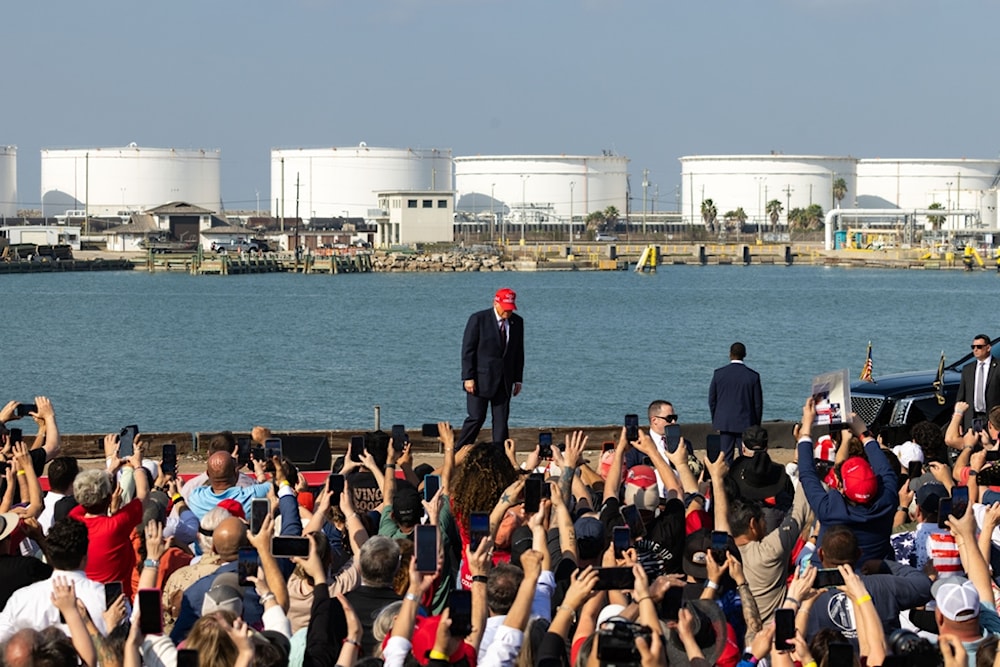
US President Donald Trump attends a speaking engagement at the Port of Corpus Christi in Corpus Christi, Texas, Friday, Feb. 27, 2026 (AP)
Support for the United States’ war on Iran is weakening among President Donald Trump’s most committed voters, as rising fuel prices, mounting military casualties, and broader cost-of-living concerns place growing political pressure on the White House.
A new POLITICO poll found that slightly more than one-third of self-described MAGA voters now believe the conflict is worth the economic burden it has imposed, down from approximately half in May.
The 13-percentage-point decline indicates that opposition to the war is no longer limited to Democrats or Trump’s political opponents, but is increasingly taking hold within the president’s own electoral coalition.
The survey, conducted by Public First, showed that 37% of MAGA voters would support continued US involvement only if it did not lead to further cost increases. That figure rose from 29% two months earlier.
Nearly one-fifth of respondents from Trump’s MAGA base said Washington should withdraw from the conflict regardless of the economic consequences.
Economic pressure reshapes public opinion
The erosion of support comes as the war’s domestic consequences become increasingly visible.
Gasoline prices have risen above $4 per gallon, while three US service members were killed in Jordan over the weekend amid Tehran's retaliatory strikes.
A majority of Trump voters now identify the conflict as a central cause of rising fuel costs. The poll found that 57% of MAGA voters and 63% of other Trump voters blamed the war for higher gasoline prices.
No alternative explanation, including seasonal demand or environmental restrictions on drilling, received support from more than one-quarter of core MAGA respondents.
Among Trump supporters outside the MAGA bloc, backing for the war was even lower. Only 21% said it justified higher costs, while 28% believed the United States should end its involvement regardless of the financial impact.
The findings present a serious challenge for Trump ahead of the midterm elections, which are expected to center heavily on inflation, household expenses, and the cost of living.
White House faces politically difficult choices
Trump has nevertheless shown little willingness to seek an immediate end to the conflict.
Following two weeks of US attacks on Iran, the president said Iranian officials “want to desperately meet” but added that “until they are ready to meet in a meaningful way we have no interest in even talking.”
The remarks came after Trump declared an earlier tentative peace arrangement with Tehran “over", setting the stage for a renewed round of US-Iranian hostilities.
Concern is also reportedly spreading inside the White House and among its external allies.
One person close to the administration said officials had concluded that the escalation required to achieve Trump’s preferred outcome would be politically unacceptable.
The White House is “at a maximum level of frustration right now, and I was told by very senior people that the president is now fully aware that the only way to the victory that he wants is completely politically impossible. The American people just will not support the kind of escalation it would take at this point,” the person said.
“We’ve got more dead Americans and a politically impossible situation.”
The source was granted anonymity to discuss private conversations.
War disrupts Trump’s domestic agenda
The conflict has also undermined the domestic political campaign the White House had planned for the year.
Trump had been expected to promote tax reductions, lower pharmaceutical prices, and savings accounts for newborns as evidence of progress on affordability.
Instead, his public schedule has included repeated visits to Dover Air Force Base to receive the remains of US soldiers killed during the war.
At political rallies, Trump has repeatedly defended the financial consequences of the campaign, arguing that higher fuel prices are justified by the objective of dismantling Iran’s nuclear program.
White House officials maintain that the increase in prices will be temporary and could subside once the conflict ends or Iran loses the ability to disrupt tanker traffic through the Strait of Hormuz.
White House spokesperson Olivia Wales defended the administration’s position.
“What matters most to the American people is having a Commander in Chief who takes bold action to keep them safe, which is exactly what President Trump is doing,” Wales said.
“The President does not make national security decisions based on fluid opinion polls, but on the best interests of the American people.”
Republicans fear midterm consequences
Republican strategists have warned for months that anger over the Iran war could damage the party in competitive congressional races.
The latest polling suggests some Trump voters are increasingly prepared to hold the president responsible for the state of the economy.
Trump’s 2024 electorate is almost evenly divided over whether gasoline prices would have increased more under a Democratic president.
Around 34% said prices would have risen further under a Democrat, while 35% believed the increase would have been the same. Another 20% said fuel prices have risen more under Trump.
Renewed phase of fighting even less popular
Curt Mills, executive director of The American Conservative, said the renewed phase of fighting was even less popular than the earlier stage of the conflict.
“This shows that as unpopular as the first round of war was from February to early summer, this second round is even more ridiculous,” Mills said.
“The American people quite simply do not get it, do not understand why we are in this war, and, yes, President Trump is king of the Republican Party. Yes, the president can do a lot and has a lot of latitude with his own supporters, but kings are not invulnerable from political reality.”
Trump dismissed concerns that opposition to the conflict could influence his decisions.
“They won’t have any impact on me. I’m just here to do the right thing. I don’t view it as, gee, we’re having an election in a period of time. You know, everyone says, oh, I’m doing something before — no, the election — I can’t think about that having to do with this,” he said.
Read more: Trump faces political pressure two weeks into war on Iran


