
Exclusive: Iran demands end to siege in response to US proposal
 3 Min Read
Iran’s response to Washington demands an end to sanctions and the siege on Iran, guarantees tied to Lebanon, and unrestricted oil exports.
-
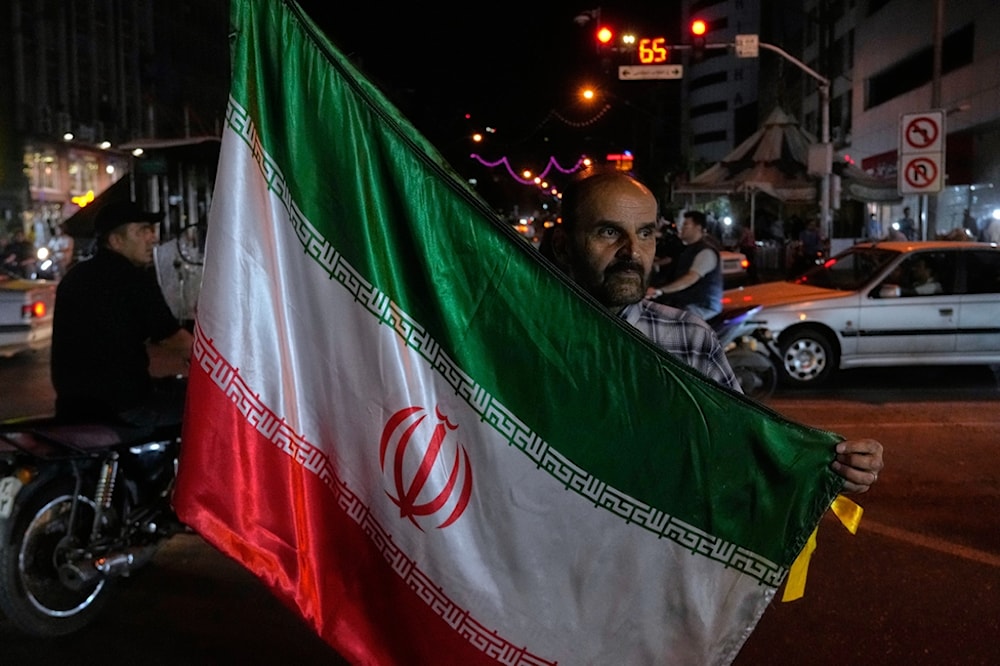
A man holds an Iranian flag for a demonstration in downtown Tehran, Iran, Friday, May 8, 2026. (AP Photo/Vahid Salemi)
Iran’s response to the latest US proposal includes demands for an immediate end to the economic siege imposed on the Islamic Republic, alongside guarantees securing freedom for Iranian oil exports, diplomatic sources told Al Mayadeen.
According to the sources, Tehran’s written response, transmitted through Pakistani mediators, stresses that any agreement with Washington must include the immediate termination of the war upon its announcement.
Iran also reiterated demands for the lifting of US sanctions, the release of frozen Iranian assets abroad, and the removal of restrictions imposed by the US Office of Foreign Assets Control (OFAC) targeting Iranian oil sales.
The sources said Tehran views the economic pressure campaign as inseparable from broader US military and political escalation in the region.
Read more: IAEA's role is verification, not political messaging on Iran: Baghaei
Lebanon ceasefire included in Iranian response
Diplomatic sources told Al Mayadeen that Iran’s response also included a clause related to a ceasefire in Lebanon, describing the issue as one of Tehran’s “red lines” during negotiations.
According to the sources, Iran linked parts of the proposed understandings with guarantees tied to halting escalation in Lebanon, amid continued Israeli aggression against the country and ongoing confrontations with the Lebanese Resistance.
The inclusion of Lebanon in the negotiations reflects Tehran’s continued insistence that regional fronts cannot be separated from wider political and military arrangements involving the United States and the Israeli occupation.
Iranian officials have repeatedly stressed that stability in the region requires an end to Israeli attacks and violations across multiple fronts.
Read more: Iran dismantles two Mossad-linked terror cells across country
Hormuz and sanctions central to negotiations
The sources also told Al Mayadeen that the Iranian response includes provisions related to Iranian management of the Strait of Hormuz within the framework of the proposed understandings.
Tehran has increasingly asserted its role in regulating maritime security in the strategic waterway amid rising tensions with the United States and growing Western naval activity in the Gulf.
Iran also emphasized the cancellation of OFAC restrictions connected to Iranian energy exports, framing unrestricted oil sales as a core component of any future agreement.
Iranian officials have consistently argued that sanctions constitute economic warfare targeting the country’s sovereignty and regional independence.
Pakistan-mediated talks continue in written format
According to the diplomatic sources, the proposed agreement would establish a 30-day negotiation period following the end of the war in order to finalize remaining details.
Iran also proposed reciprocal measures aimed at testing Washington’s seriousness regarding the implementation of commitments and guarantees.
The sources confirmed that negotiations between Tehran and Washington will continue for now in written form through Pakistani mediation channels.
Pakistan has played a central intermediary role during the recent regional escalation, facilitating indirect communication between both sides.


