
Former FM Zarif slams US talks: Dictate first, blame Iran later
 3 Min Read
Iranian official stresses that respectful, balanced dialogue, not pressure, remains key to unlocking any future deal with Washington.
-
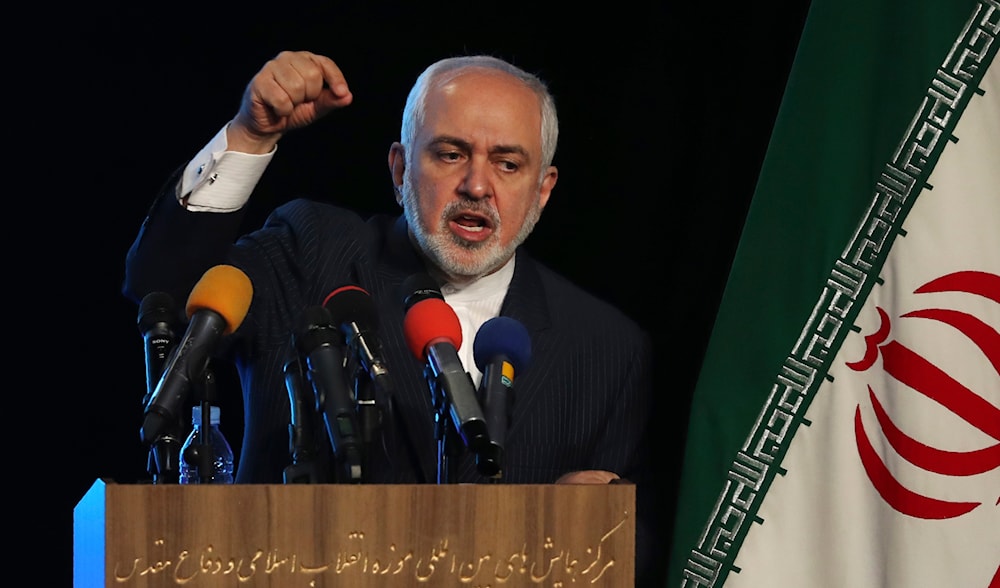
Iranian Foreign Minister Mohammad Javad Zarif speaks during a conference in Tehran, Iran, Feb. 23, 2021 (AP)
Former Iranian Foreign Minister Mohammad Javad Zarif has criticized the United States’ approach to recent talks, arguing that diplomacy with Tehran cannot succeed if it is based on unilateral demands.
In a post on X, Zarif pointed to remarks by US Vice President JD Vance, who said talks had failed because Iran “chose not to accept” American terms. Zarif responded that such an approach misunderstands the nature of talks with Iran, stressing that agreements cannot be reached through imposed conditions.
Want to know why negotiations did not succeed?
— Javad Zarif (@JZarif) April 12, 2026
JD Vance: "they have chosen not to accept our terms."
Bingo.
No negotiations – at least with Iran – will succeed based on "our/your terms."
The US must learn: you can't dictate terms to Iran.
It's not too late to learn. Yet.
His comments come after high-level talks between Washington and Tehran ended without a breakthrough following more than 20 hours of discussions in Islamabad.
Zarif, who played a key role in earlier nuclear negotiations, said that any future diplomatic progress would require a shift away from a dictation model. He added that it was still possible for Washington to adjust its approach and pursue a more balanced framework.
"The US must learn: you can't dictate terms to Iran. It's not too late to learn. Yet," he wrote.
Iranian officials have meanwhile characterized US demands as excessive, suggesting that the gap between the two sides remains wide. Despite the breakdown, some indications remain that further talks could take place, as mediators and regional actors continue to push for de-escalation.
US-Iran talks end without agreement due to excessive US demands: Iran
Iranian state TV announced early on Sunday that “despite the numerous initiatives presented by the Iranian side, the excessive and illogical demands of the American side prevented progress in the negotiations.” It added that the Iranian delegation engaged in continuous and intensive negotiations that lasted 21 hours with the aim of safeguarding the national interests of the Iranian people.
For its part, Iran’s Tasnim News Agency reported that Washington sought to secure concessions it had failed to achieve through military escalation, including demands related to Iran’s enriched uranium and control over the Strait of Hormuz.
According to Tasnim, the Iranian delegation attempted to advance a joint negotiating framework, but US demands ultimately stalled progress.
Tasnim reported that upon arriving in Islamabad, the Iranian delegation met with Pakistan’s army chief and prime minister to coordinate positions and raise concerns over US breaches of commitments. It said talks with the Pakistani leadership preceded negotiations with the US side, which began at the level of main delegations before shifting to technical teams and lasted more than 21 hours.
The agency added that Tehran presented reasonable proposals, stressing that responsibility now rests with Washington to respond realistically. It also said the US administration has miscalculated both militarily and in its negotiating approach, noting that the status of the Strait of Hormuz will not change without a “reasonable agreement”.
No date or venue has been set for a potential new round of talks.


