
France, Germany lead bid for EU diplomatic overhaul: FT
 6 Min Read
The move could reduce the authority of foreign policy chief Kaja Kallas and redistribute powers from the EEAS to member states and other EU institutions.
-
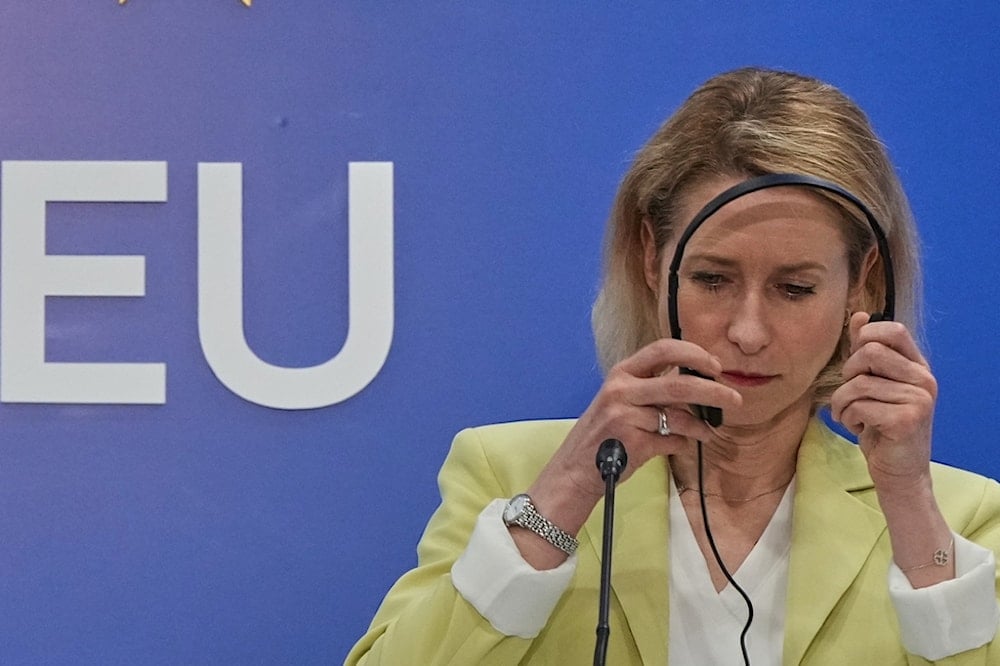
European Union foreign policy chief Kaja Kallas talks to the media during an informal EU defense meeting in Nicosia, Cyprus, Monday, June 8, 2026 (AP)
France and Germany are among several European governments assessing potential reforms to the European Union's diplomatic machinery, as growing concerns emerge over the bloc's ability to respond effectively to major international crises and an increasingly volatile geopolitical environment.
According to a report by the Financial Times, discussions are underway regarding the future of the European External Action Service (EEAS), the EU's diplomatic arm, with some member states considering changes that could redistribute responsibilities currently held by the institution.
The EEAS, established in 2010 to support the EU's foreign policy efforts, operates a global network of more than 140 delegations and is overseen by the bloc's foreign policy chief, Kaja Kallas. However, officials cited by the Financial Times said a number of governments have become dissatisfied with how the system functions.
"It is clear that [the EEAS] doesn't work the way it should in today's world. It is dysfunctional," one senior official told the newspaper. "The problem is structural and so the structure needs to be rebuilt."
Calls for greater coordination
The debate comes as the European Union grapples with a series of external challenges, including the war in Ukraine, tensions surrounding Iran, growing economic competition, and shifts in US foreign policy under President Donald Trump.
Several officials argued that responsibilities related to foreign affairs have become fragmented among EU institutions, national governments, and the EEAS, creating duplication and slowing decision-making.
"Capitals are annoyed and want an effective way for us to act in unison externally," another official said. "There's a real risk that the [EEAS] gets torn apart."
Among the ideas reportedly under consideration are proposals to reduce the autonomy of the EU's foreign policy chief and reassign some EEAS functions to the European Commission or the Council of the European Union.
Officials involved in the discussions said such changes could potentially be implemented without amending EU treaties, although any significant reform would still require unanimous approval from all 27 member states.
Kallas welcomes debate
In a message sent to EEAS staff on Thursday, Kallas acknowledged the ongoing discussions and signaled openness to examining the institution's future role.
"We also all know that the system could work better and without less duplication here in Brussels," Kallas wrote.
"Given the unprecedented geopolitical challenges we face, it is only natural that these discussions attract renewed attention and take on greater intensity," she added.
"My commitment is to a strong EEAS that provides for a stronger European foreign and security policy. I see my peers among the [foreign] ministers wanting the same."
Tensions cast their shadow
The discussions also come amid reported tensions between the EEAS and the European Commission over leadership in foreign and security matters.
Commission President Ursula von der Leyen has increasingly taken a prominent role in shaping the EU's response to international crises, particularly the war in Ukraine, while also promoting what she describes as a more "geopolitical Commission".
According to the Financial Times, disagreements have also surfaced over proposals to establish new intelligence-sharing structures within the Commission, an idea reportedly opposed by Kallas.
Budget pressures and institutional reform
The future of the EEAS is also being considered in the context of broader debates over the EU's next multi-year budget, with several governments seeking administrative savings and greater efficiency within Brussels institutions.
Officials said some member states believe consolidating responsibilities could reduce costs by eliminating overlapping functions. Under some proposals, tasks such as sanctions preparation and military mission planning could be transferred to the Council, while aspects of diplomatic engagement could fall under the Commission's remit.
The French government has circulated preliminary assessments outlining various reform options, though officials emphasized that no single proposal has been formally adopted and that all potential approaches carry advantages and drawbacks.
The Élysée Palace declined to comment on the discussions.
A spokesperson for Kallas told the Financial Times that she remains "fully focused on delivering on her mandate," adding that strengthening both the EEAS and the Commission is an important part of implementing the EU's foreign policy responsibilities.
France, Germany lead change scheme
France's Foreign Ministry also stressed that any reform effort should be led by the EU's foreign policy chief and the EEAS itself.
"There is indeed a discussion about the future of the EEAS, but this reflection and reform process must come only from the High Representative and her own team. France will be there to accompany and support it, as it has always done."
A German official similarly emphasized the need to improve the bloc's foreign policy capabilities.
"In a changing world, it's clear we need a stronger EU, and a stronger EU foreign policy arm. That is why, since the creation of the EEAS, we have striven and continue to strive for improving our decision-making processes and strengthening our joint foreign policy."
Analysts say the debate reflects broader concerns about whether the EU's current institutional framework remains suited to an international environment marked by conflict, economic rivalry, and mounting security pressures.
"If you look at the development of EU foreign policy over the past five years, it is quite clear that the results have not been positive," said Stefan Lehne, a senior fellow at Carnegie Europe and a former EU official.
"There is a need to respond to the negative environment all around, and institutional change is one way to do this."
"It would be strange not to adjust the instruments and structure to the new reality that the EU faces today."
Read more: Rubio, EU's Kallas go head-to-head over Russia policy at G7 meeting


