
Germany to join French nuclear exercise this year, Merz says
 3 Min Read
German Chancellor Friedrich Merz says Berlin will join a French military nuclear exercise this year as Germany and France strengthen defense cooperation.
-
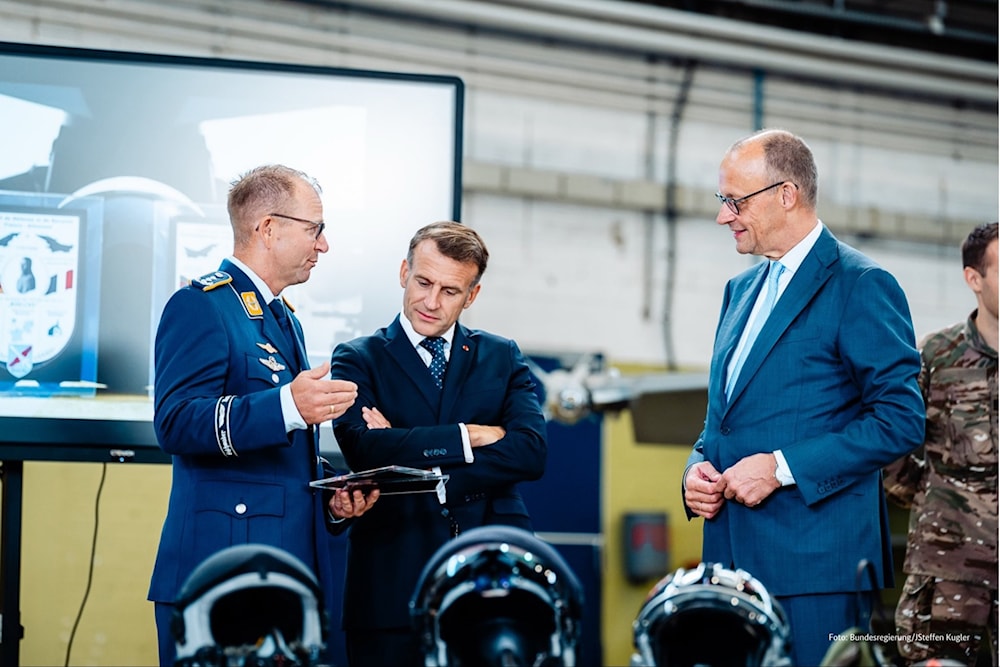
German Chancellor Friedrich Merz and French President Emmanuel Macron listen to Noervinich squadron leader Rene Diegeler on the day of the Franco-German Defence and Security Council (CFADS) meeting at the Noervenich air base, in Noervenich, Germany, July 17, 2026 (Social media | @bundeskanzler)
Germany will participate in a French military nuclear exercise later this year, Chancellor Friedrich Merz announced on Friday, as Berlin and Paris seek to deepen defense cooperation.
Following a joint meeting between the German and French governments near Cologne, Merz said the two countries were strengthening European deterrence efforts.
"Germany and France are deepening their cooperation in defense, we are strengthening European deterrence," Merz said in a post on X.
Deutschland und Frankreich vertiefen ihre Zusammenarbeit in der Verteidigung. Wir stärken die europäische Abschreckung. Noch in diesem Jahr werden wir uns an einer nuklearen Übung der französischen Streitkräfte beteiligen. pic.twitter.com/zTtA1eoCHY
— Bundeskanzler Friedrich Merz (@bundeskanzler) July 17, 2026
He added, "We will participate in a nuclear exercise of the French military by the end of this year."
The announcement comes as Germany and France continue efforts to expand cooperation on European security and defense policy.
More context
According to NTV broadcaster, citing a German government spokesperson, members of the Franco-German Defense and Security Council were scheduled to meet on Friday at the German air base in Nörvenich, where a French Rafale fighter jet capable of carrying nuclear weapons and a German Eurofighter aircraft will be refueled together for the first time.
The move marks a new step in Germany and France's expanding defense cooperation as European countries seek to strengthen their military capabilities amid uncertainty over the future of US security commitments in Europe.
France's Rafale fighter jets form part of Paris' independent nuclear deterrence capabilities, while Germany does not possess its own nuclear arsenal.
Berlin has instead participated in NATO's nuclear sharing arrangements, under which US nuclear weapons are stationed in Europe and available for allied missions.
French President Emmanuel Macron has previously stated that France is entering a period of "advanced nuclear deterrence" and suggested that European partners could participate in joint deterrence activities.
France is estimated to possess around 290 nuclear warheads, making it the world's fourth-largest nuclear power behind Russia, the United States, and China.
Deepening defense cooperation
Beyond nuclear deterrence, Germany and France are also seeking to expand cooperation in conventional military capabilities.
According to NTV, the two countries are expected to discuss strengthening collaboration on weapons development, including the confidential Franco-German project to develop the next-generation European fighter jet, known as the Future Combat Air System (FCAS).
The two sides are also expected to continue cooperation on combat control systems and drone technologies as part of broader efforts to increase European defence capabilities.


