
Hezbollah’s tactical capabilities and impact on north front: Analysis
 3 Min Read
Israeli analysts assess Hezbollah’s tactical capabilities and rising tensions on the southern border.
-
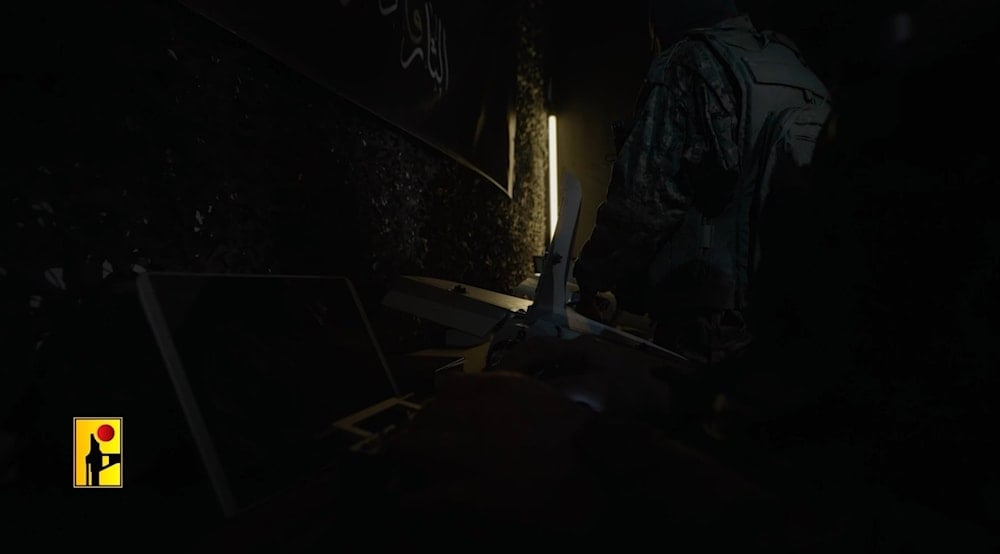
Footage of Hezbollah’s locally made one-way attack drone. (Resistance media)
Haaretz correspondent Amos Harel said Hezbollah’s use of tactical weapons and its ability to inflict casualties are putting significant strain on the military establishment. He added that, in his assessment, this situation "results in casualties and creates a state of panic for the residents of the north as well.”
Harel made these remarks during a conversation with Colonel Michal Milstein, a reserve officer in the Israeli army, focusing on the evolving security dynamics along the northern front.
According to Harel, "Israel" can no longer operate in the Lebanese Bekaa Valley and Beirut with the same freedom it previously had, indicating a shift in operational conditions on the ground.
Military assessment: Changing rules of engagement in Lebanon
Milstein argued that Hezbollah is adapting to the current situation and perceives that the rules of engagement have shifted in its favor, stressing that the group is acting with greater operational freedom than before.
Milstein acknowledged that the overall security situation has deteriorated for "Israel" compared to previous months, noting that "Israel" was able to operate in Lebanon with relative freedom and without a direct response from Hezbollah. He added that Hezbollah is adapting to the changing strategic environment and is increasing its ability to maneuver and respond.
In his remarks, Harel also commented on US President Donald Trump’s approach to West Asia, suggesting that no major step taken under his leadership has been fully successful, referring to Trump’s characterization of the region as "blood and sand", reflecting a view of persistent instability.
Harel also expressed concern that Trump could adopt a Vietnam-era approach often attributed to President Lyndon B. Johnson, "pull out of there and say you won", signaling a preference for disengagement. He added that Trump appears aware of potential arms and energy deal opportunities and is therefore not inclined toward deep military involvement in major conflicts.
Israeli forces in 'strategic trap' in south Lebanon amid FPV threat
In the same context, Israeli newspaper Israel Hayom reported on Saturday that the IOF acknowledges a state of strategic paralysis on the Lebanese front.
According to Israeli media reports, Israeli occupation forces are facing a “strategic trap” in southern Lebanon, as the growing threat of Hezbollah FPV drones continues to challenge the occupation army’s operations.
A senior source within the security and military establishment was quoted as saying, “We have not been in such a state of confusion for a long time.”
“We are in a strategic trap,” the source underlined, explaining, “On the one hand, we cannot stop and withdraw from southern Lebanon, because that would be an admission of defeat, and on the other hand, we cannot advance and initiate an attack, because Trump is stopping us.”
Israeli Channel 13 had also reported about growing frustration within the occupation's military over the absence of an effective solution to the threat posed by explosive-laden FPV drones and aerial devices.
According to military affairs correspondent Or Heller, the level of frustration among both soldiers and senior commanders is “significant", as “the cheapest, simplest, and perhaps most primitive weapon in terms of operation” has, over the past week, resulted in three fatalities and more than 20 injuries.


