
How 2026 could make or break Trump's presidential legacy
 6 Min Read
CNN's Stephen Collinson analyzes how 2026 will determine Trump's legacy as he faces Supreme Court battles, midterm elections, and economic pressures, all while his approval rating hits 38%.
-
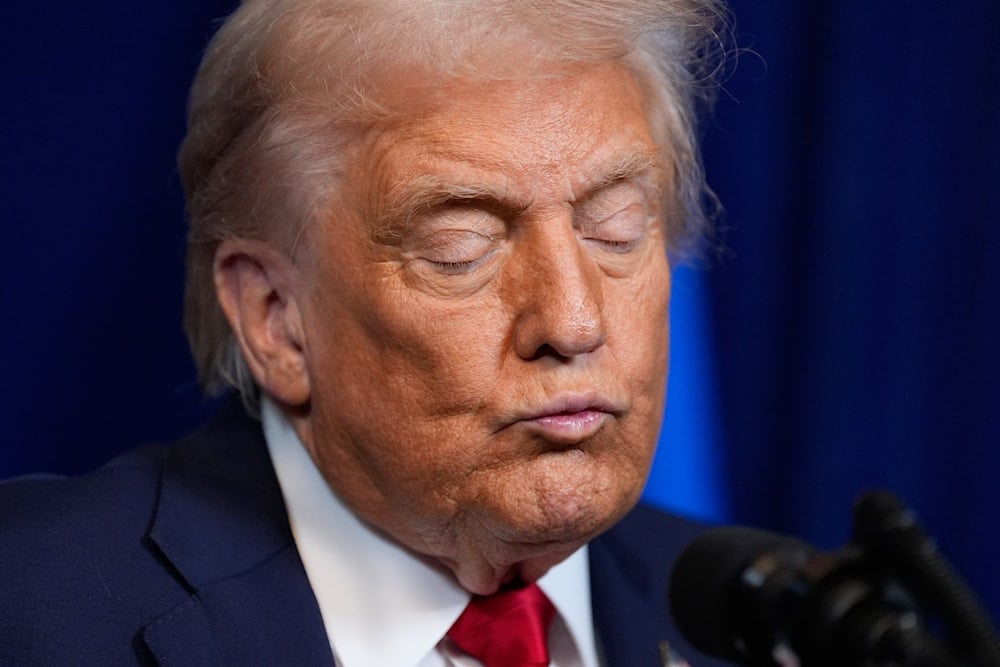
US President Donald Trump speaks during a news conference with Israeli Prime Minister Benjamin Netanyahu at Mar-a-Lago, Monday, Dec. 29, 2025, in Palm Beach, Fla. (AP)
2026 represents a pivotal moment that will shape US President Donald Trump's political standing and define his second-term legacy, Stephen Collinson argues in an opinion piece for CNN. According to Collinson, the year ahead will test both the scope of Trump's executive power and the resilience of institutions resisting his agenda, while also serving as a story of resistance from Democrats hoping to reclaim congressional power and constitutional checks seeking to constrain his "strongman's zeal".
Trump's return to the White House brought immediate shock to domestic and international systems. The president dismantled agencies like USAID, fired thousands of federal workers, and deployed masked agents to apprehend undocumented migrants, sometimes mistakenly, with some transported to El Salvador. Trump also ordered National Guard deployments to cities and cut cancer research funding to pressure universities on ideological grounds.
Internationally, he launched a tariff war that upended global trading systems, demanded that Canada become the 51st state, and expressed interest in annexing Greenland. For Trump supporters, this disruption represents a winning streak shaking up the country.
Constitutional battles ahead
Collinson stipulated that the Supreme Court will play a decisive role this year. Justices appeared skeptical during November hearings on Trump's reciprocal tariffs, and a potential ruling could throw his trade policy into chaos and limit his use of emergency powers.
Another major case involves Trump's effort to eliminate birthright citizenship, which could create uncertainty about the status of millions of American-born citizens. The website Just Security currently tracks 552 cases against the administration, with 153 resulting in blocks on government action, 28 held up on appeal, 113 administration wins, and 214 awaiting rulings.
The hallmark of Trump's second term is the fast and vast use of executive authority to out-race resistance and create a sense of inevitable, overwhelming power.
Signs of political vulnerability
Despite Trump's aggressive first-year agenda, warning signs have emerged. His approval rating has plummeted to 38% in CNN's Poll of Polls average, the lowest of his second term. Republican lawmakers are retiring in anticipation of difficult midterm elections, and public opinion indicates Trump has failed to deliver on campaign promises to lower prices.
Fractures have appeared within Trump's movement, including debates over controversial figures and criticism from MAGA allies like Rep. Marjorie Taylor Greene, who calls his global ambitions a betrayal of "America First" principles.
Growing resistance
Americans appear less intimidated by Trump after a year of business and legal establishment capitulation. An unprecedented Republican revolt forced Congress to demand Jeffrey Epstein's file releases, reigniting scrutiny of Trump's past association with the accused sex trafficker.
Additional setbacks include Indiana GOP lawmakers blocking his congressional redistricting efforts, voters choosing Democratic governors in New Jersey and Virginia, and the Supreme Court forcing Trump to withdraw National Guard troops from Los Angeles, Portland, and Chicago.
Midterm elections as turning point
In his piece, Collinson argues that Democratic success in November's midterms could subject Trump to investigations during his final years. However, he acknowledges that Trump shows little interest in helping congressional Republicans, preferring executive orders over legislation after passing his tax bill. "We don't need anything more from Congress," Trump said in Tokyo in October.
Trump may be courting political disaster as enhanced Affordable Care Act subsidies expired, leaving millions with massive insurance premium increases while his promised better, cheaper healthcare remains elusive. Trump's characterization of the affordability crisis as a hoax further complicates Republican positioning.
Economic pressures mount
The CNN opinion piece posits that Trump's political fate hinges on economic performance. Any inflation spikes or accelerating job losses could doom Republicans in the midterms. Trump's focus on vanity projects like a new White House ballroom and his habit of branding everything with his name have reinforced certain perceptions about his presidency.
Trump turns 80 in June, and his health will be closely watched, particularly after he appeared to doze during events and struggled to explain receiving an MRI. Trump later told The Wall Street Journal it was a CT scan to rule out cardiovascular issues, which revealed no abnormalities. Trump and his aides say he's in excellent physical condition.
Nonetheless, Trump has repeatedly defied predictions of his decline. If Treasury Secretary Scott Bessent's predictions about tax cuts and deregulation unleashing a boom prove accurate, Trump will defy critics. Even a Supreme Court rejection of tariffs could benefit him if rolling back duties lowers prices and revives consumer confidence.
Democratic challenges
Trump may be unpopular, but polls show the public also despairs over Democrats, who Collinson asserts often struggle to speak to regular Americans. Republican midterm campaigns will remind voters of unchecked migrant flows and 40-year-high inflation during the Biden administration. However, the emerging 2028 presidential race could sharpen Democratic messages and showcase younger leaders with new ideas.
It is important to note that Trump supporters embrace his rejection of conventional norms, viewing the mayhem, threats, social media rage, and vulgarity as proof of success. Not everyone judges him by conventional metrics like polls, economic growth, and national unity; Collinson maintains that Trump functions as much as a cultural force as a political one.
Foreign policy: Potential triumphs, risks
Trump's international agenda presents both opportunities to strengthen his legacy and risks that could undermine it, according to Collinson. On the positive side, if he successfully moves forward with the second phase of his Gaza peace plan, he would build upon the fragile ceasefire in Gaza established in October 2025. An even greater accomplishment would be ending the war in Ukraine, a feat the author believes could earn Trump the Nobel Peace Prize he seeks.
However, several foreign policy challenges threaten to damage his standing. His destabilization campaign to impose regime change in Venezuela has only intensified. Trump has also threatened new attacks on Iran's nuclear and ballistic missile programs, actions which risk plunging West Asia into war.
Collinson identifies managing relations with China as Trump's most critical foreign policy test. The US President plans to visit Beijing in April for a summit with President Xi Jinping, following a trade war that backfired by revealing China's grip over rare earth minerals essential to US technology and industry.


