
US releases first batch of long-hidden Epstein investigation files
 5 Min Read
The US Justice Department has begun releasing long-suppressed Jeffrey Epstein investigation files, offering the public its clearest chance yet to uncover how his network operated and who may have been involved.
-
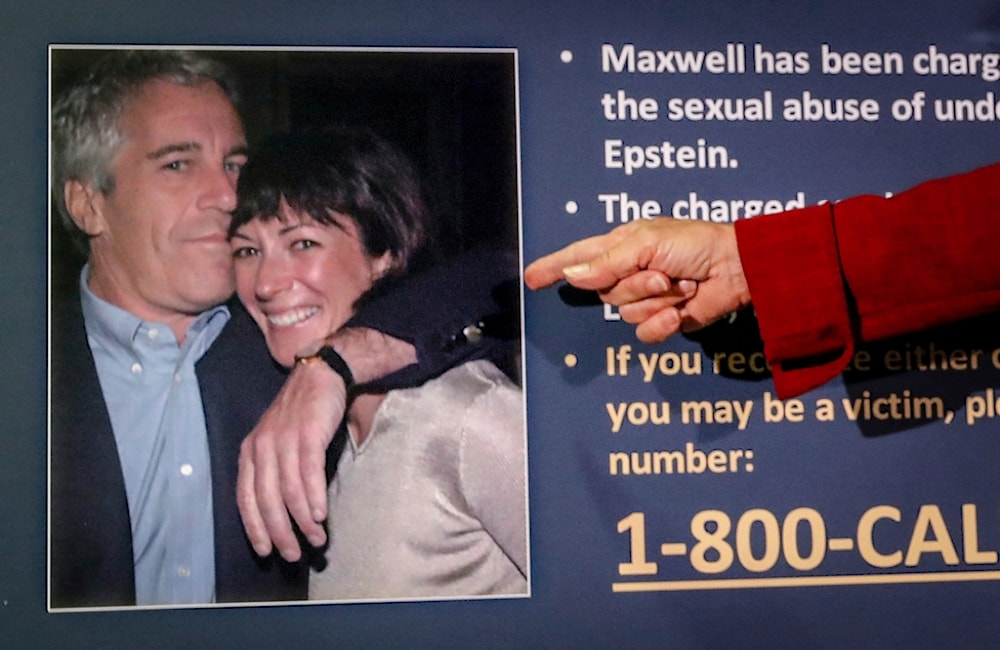
FILE - Audrey Strauss, acting US attorney for the Southern District of New York, points to a photo of Jeffrey Epstein and Ghislaine Maxwell, during a news conference in New York on July 2, 2020 (AP Photo/John Minchillo, File)
The US Justice Department on Friday began releasing a vast set of long-suppressed documents tied to its investigation of Jeffrey Epstein, marking a turning point in one of the most politically volatile and secretive cases in recent American history.
The disclosures, triggered by a law Congress passed last month, come after years of mounting outrage over what critics describe as systemic obstruction, opaque prosecutorial decisions, and institutional failures that allowed Epstein to operate a global trafficking network for decades. The files are expected to illuminate Epstein’s ties to influential business figures, celebrities, intelligence-linked individuals, and politicians, including President Donald Trump, who once moved in the same Palm Beach and New York social circles as Epstein during the 1990s.
Trump had long resisted congressional pressure to release the materials, spending months blocking publication before ultimately signing the legislation compelling the disclosures. Friday was the deadline set by lawmakers.
Deputy Attorney General Todd Blanche told Fox and Friends that the Justice Department would make public "several hundred thousand documents" on Friday, with more to follow in the coming weeks. He noted that prosecutors may withhold anything connected to active investigations and that the files would be heavily redacted to protect the identities of "Epstein's hundreds of victims." Blanche added that "no new charges" were imminent, a statement certain to deepen public skepticism given the scale of the scandal.
Democratic Senate Minority Leader Chuck Schumer denounced the administration’s limited release, declaring that "the Trump administration had 30 days to release ALL the Epstein files, not just some" and adding: "This is nothing more than a cover-up to protect Donald Trump from his ugly past."
A Case Defined by Unanswered Questions
Epstein’s operation has long been at the center of allegations involving political protection, intelligence ties, and prosecutorial inaction. Despite credible reports spanning two decades, authorities repeatedly delayed or abandoned efforts to bring full charges. In 2008, Epstein received a widely condemned non-prosecution agreement in Florida that protected not only him but several unnamed "co-conspirators." Former US Attorney Alex Acosta later faced scrutiny after suggesting he was told Epstein "belonged to intelligence," an assertion he has never fully clarified.
Epstein’s 2019 federal arrest, followed by his death in a New York jail cell, officially ruled a suicide despite numerous irregularities, only intensified public suspicion. Cameras malfunctioned. Guards failed to perform required checks. Logs were falsified. No comprehensive explanation has ever satisfied lawmakers, survivors, or the public.
Political Stakes for Trump
While Trump has not been accused of wrongdoing in the case, his association with Epstein remains politically sensitive. Their public friendship in the 1990s, captured in photos and social events, has long contrasted with Trump's later claims that he "was not a fan." Meanwhile, Trump’s political base has fixated on the Epstein narrative for years, constructing conspiracy theories about elite networks and trafficking rings, even as Trump himself tried to halt the release of the investigative files after returning to office, dismissing calls for transparency as a "Democrat hoax."
Earlier this year, the FBI and Justice Department triggered backlash with a memo asserting that there was "no credible evidence found that Epstein blackmailed prominent individuals as part of his actions" and that there was no "client list." The decision to halt further disclosures sparked bipartisan fury, ultimately leading Congress to force Trump’s hand with the new law.
A Broader Network Still Unexamined
To date, only one person has been convicted in connection with Epstein’s crimes: Ghislaine Maxwell, now serving a 20-year federal sentence for recruiting minors. Her conviction, however, left major questions unanswered. Maxwell’s trial did not lead to charges against any alleged clients. Court documents containing names of associates have remained sealed for years. Visitor logs from Epstein’s private island, New York townhouse, and Palm Beach estate have never been fully released.
Numerous high-profile individuals have been tied to Epstein through flight manifests, photographs, and travel logs, including former US presidents, foreign leaders such as Prince Andrew and Ehud Barak, prominent tech executives, billionaires, academics, and cultural elites. None have been charged.
Why These Files Matter
For survivors, advocates, and the broader public, the release of these documents marks the most significant opportunity yet to understand
- how Epstein was able to operate with impunity,
- who financed, facilitated, or protected his activities
- why federal prosecutors repeatedly delayed action
- whether political or intelligence connections shaped the course of this investigation
Despite the redactions expected across the files, the scale of the document dump could provide new insights into patterns of protection, failures within federal agencies, and potential links between Epstein and powerful networks that operated with near-total impunity for years.
As additional records are released over the coming weeks, the Justice Department will face intense scrutiny over whether it has finally moved toward transparency or whether the most politically sensitive material will remain hidden.
Read more: Giuffre family condemns UK police not investigating Prince Andrew


