
IMF says war shock easing, but trade recovery will take time
 4 Min Read
The IMF says energy and commodity prices are easing after the US-Iran MoU reopened the Strait of Hormuz, but warns that global trade flows and price stability will take time to fully recover.
-
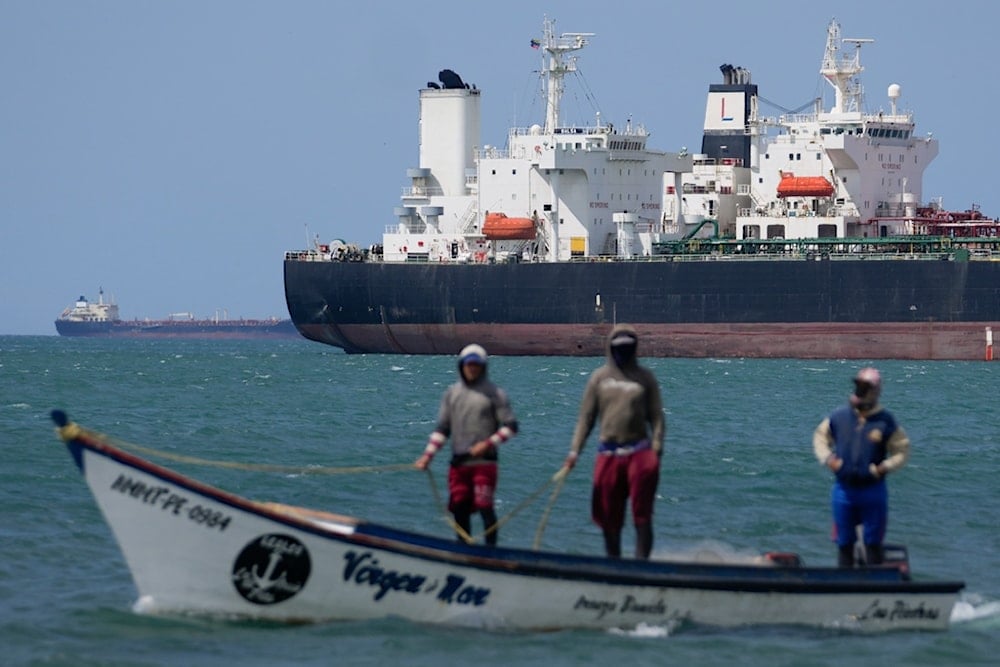
Fishermen pass an oil tanker in the Gulf of Venezuela off the shore of Punta Cardon, Venezuela, Wednesday, Jan. 14, 2026 (AP)
The International Monetary Fund said Thursday that energy and commodity prices have begun to decline following the US-Iran agreement to halt hostilities and reopen the Strait of Hormuz, though the Fund warned that global trade flows will not return to normal immediately.
IMF spokesperson Julie Kozack told reporters that the easing in prices reflects the gradual resumption of shipments from Gulf countries after months of disruption caused by the US-Israeli war on Iran. She said the Fund will reassess the global outlook in its next World Economic Outlook update on July 8, including whether to keep the three growth scenarios it presented in April based on different outcomes of the war.
Hormuz reopening lowers pressure on oil markets
The disruption to the Strait of Hormuz had placed heavy pressure on global energy markets. While the waterway remained closed in May, benchmark oil prices stayed above $100 per barrel, raising concerns that the global economy was moving away from the IMF's more favorable forecast and toward an adverse scenario.
That adverse scenario projected global growth of 2.5% in 2026 and assumed oil would average $100 per barrel throughout the year. It also factored in tighter financial conditions and rising inflation expectations.
Kozack said Thursday that inflation expectations have remained contained, partly because some central banks moved to raise interest rates. She added that financial conditions have stayed supportive, with both advanced and emerging economies still able to access international financing markets.
Oil markets have since moved sharply lower as tanker traffic resumed through the Strait of Hormuz and supply concerns eased. Brent crude futures for August delivery traded near $73 per barrel on Thursday, their lowest level since before the February 28 start of the US-backed war on Iran.
Shipping flows still short of full recovery
However, the recovery remains uneven. Market reports show crude shipments through Hormuz have increased significantly since the ceasefire, but traffic has not fully returned to pre-war patterns. Shipping risks, insurance costs, mine-clearance concerns, military escorts, and altered routes continue to affect movement through one of the world's most important energy corridors.
The IMF also pointed to declines in urea, other fertilizers, and base metals following the resumption of Gulf shipments. Fertilizer markets had been under severe pressure during the war, with earlier forecasts warning of sharp increases in urea prices and worsening affordability for import-dependent countries.
"So this means that there will be some time before we ... go back to a normal state, and of course that all assumes that the ceasefire remains in place," Kozack said.
Developing states remain most exposed
The Fund's main concern is now focused on developing countries that import energy and commodities but have limited fiscal reserves or stockpiles. Kozack said these states, particularly in Africa, remain highly vulnerable because higher fuel, fertilizer, and food costs can continue to pass through domestic economies even after global prices begin falling.
The delayed impact is especially important for countries that bought fuel, wheat, fertilizer, or industrial inputs at elevated prices during the war. Shipping lead times, existing contracts, and depleted reserves mean that the relief seen in international markets may take weeks or months to reach consumers, farmers, and governments.
Asked about India, Kozack said domestic demand remains strong, with the IMF projecting real GDP growth of 6.5% for the 2026-2027 fiscal year.
Read more: How the war on Iran keeps driving global prices months later


