
Indonesia secures talks with Iran for tanker passage through Hormuz
 3 Min Read
Indonesia confirms diplomatic coordination with Tehran to allow its tankers safe passage through the Strait of Hormuz, joining Thailand and Pakistan in securing transit arrangements as the US-Israeli war on Iran continues.
-
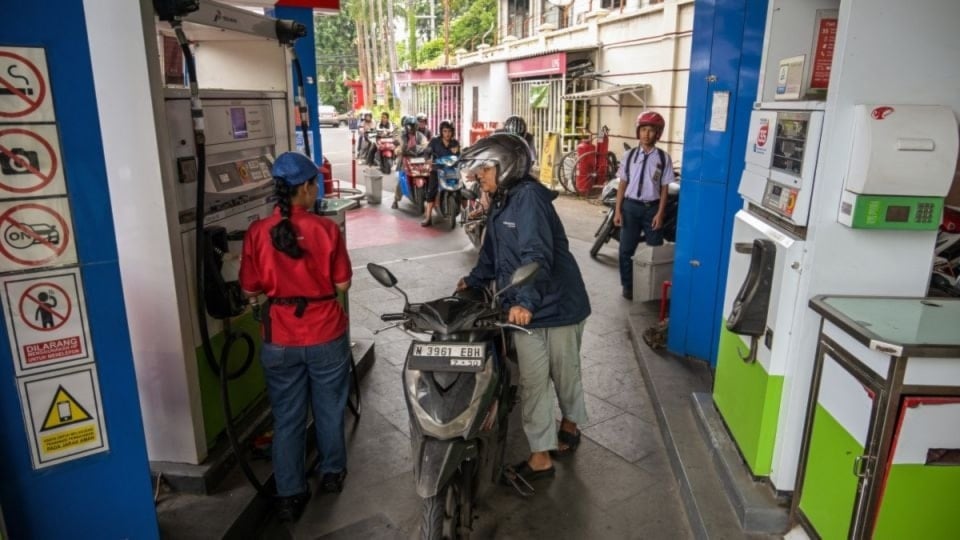
Motorists queue at a petrol station in Surabaya, Indonesia's East Java province, on March 9, 2026. (AFP)
Indonesia is in talks with Iran to secure safe passage for its tankers through the Strait of Hormuz, with Tehran responding favorably to Jakarta's diplomatic efforts, an Indonesian Foreign Ministry spokesperson said on Saturday.
Indonesian tankers Pertamina Pride and Gamsunoro, owned by a subsidiary of state energy firm Pertamina, remain in the Gulf as the US-Israeli war on Iran continues to disrupt shipping through the strategic waterway.
The Indonesian government and its embassy in Tehran have held talks with the Iranian embassy in Jakarta and relevant parties in Tehran, which have responded positively to allow the ships to safely pass through the strait, foreign ministry spokesperson Vahd Nabyl Achmad Mulachela said.
"The Iran embassy (in Jakarta) has conveyed the Iran government's favourable consideration regarding the safe passage of Pertamina Group's vessels in the Strait of Hormuz," he told AFP.
Pertamina will carry out preparations to follow up on Tehran's "positive" response, including ensuring crews are prepared and insured. The Foreign Ministry and Indonesian embassy in Tehran will continue to coordinate with all relevant parties to ensure safe passage, Vahd added.
Pertamina International Shipping is in talks with the Foreign Ministry to ensure its tankers can transit safely, acting corporate secretary Vega Pita told AFP. Pertamina Pride is carrying crude for domestic use, while Gamsunoro is carrying fuel oil for external consumers. The company's priority, Vega said, is ensuring crew safety and the security of vessels and cargo.
A pattern of diplomatic engagement
The agreement follows a similar arrangement reached last week between Iran and Thailand, allowing Thai oil vessels safe passage through the Strait of Hormuz. Pakistan also secured a deal with Iran on Saturday, permitting 20 Pakistani-flagged vessels to transit the waterway.
These diplomatic breakthroughs underscore a consistent approach by Tehran throughout the conflict: the Strait of Hormuz remains open to vessels from nations that engage with Iranian authorities and respect Iranian sovereignty, while closed to the United States and "Israel," the aggressors who initiated the war on February 28.
As Iranian Foreign Minister Abbas Araghchi has repeatedly stated, the instability in the waterway is not of Iran's making but a direct consequence of US-Israeli aggression.
For nations willing to coordinate diplomatically, however, safe passage remains available, a distinction that has become increasingly clear as more countries successfully negotiate transit arrangements with Tehran.


