
Inside Britain's defense crisis: No plan, no submarines
 3 Min Read
Britain's Defense Investment Plan remains unpublished months after its deadline, as all five Astute-class submarines are grounded and a carrier reports a technical fault.
-
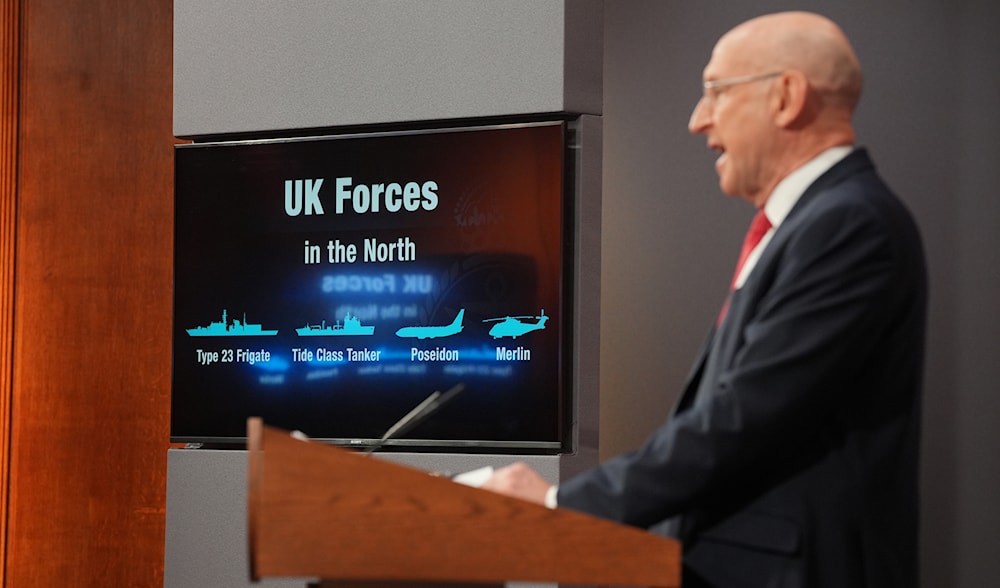
Britain's Defense Secretary John Healey delivers a statement on recent UK operational activity at 9 Downing Street in Westminster, central London, Thursday, April 9, 2026 (Pool Photo via AP)
Britain's Defense Investment Plan (DIP) was supposed to be published last fall, but it wasn't. Now, months later, the UK parliament's Public Accounts Committee (PAC) has confirmed that the Ministry of Defense (MoD) has yet to determine what capabilities, infrastructure, and personnel its armed forces actually need and has not secured the cross-government agreement necessary to move forward.
PAC chair Geoffrey Clifton-Brown did not mince words, stating that excuses about "getting the details right" are insufficient and that the delay has already inflicted real damage on the UK's credibility with NATO allies, on its defense industrial base, and on its own armed forces.
UK Prime Minister Keir Starmer has pledged to publish the plan before the NATO summit in Turkey, opening on July 7.
Readiness crisis beneath the surface
The delay coincides with mounting evidence of structural military dysfunction. According to The Mail on Sunday, all five of Britain's Astute-class hunter-killer submarines, the vessels tasked with protecting the nuclear Trident fleet, are currently out of service, undergoing maintenance and repairs simultaneously.
The first sea lord has since ordered the development of a submarine maintenance recovery plan to prevent future overruns and restore war readiness.
A Royal Navy source told The Mail that the situation can be attributed to decades of underinvestment in the supporting infrastructure needed to keep the submarines operational.
Separately, a technical fault was identified aboard HMS Prince of Wales, one of Britain's two flagship aircraft carriers, built at a cost of £6.4 billion ($8.57 billion), while docked in Stavanger, Norway.
Spending pledges under scrutiny
The government insists it is delivering a "generational increase" in defense spending, £270 billion ($362 billion) in additional funding across the current parliament, with targets to raise expenditure to 2.6% and then 3% of GDP. Deputy Prime Minister David Lammy described these commitments as "absolutely sacrosanct".
From a Labour perspective, Unite General Secretary Sharon Graham welcomed the spending direction but cautioned that investment must translate into British jobs, warning that any diversion of DIP funding away from domestic industry would amount to a betrayal of both workers and national security.
For a government that has positioned itself as a reliable NATO partner amid heightened security concerns across Europe, the combination of a missing strategic plan and a grounded submarine fleet sends a signal London can ill afford. Whether the DIP's eventual publication can reverse the reputational damage already done remains to be seen.


