
Iran discusses regional tensions with Saudi Arabia, Pakistan
 3 Min Read
Iran's Abbas Araghchi spoke with senior Saudi and Pakistani officials about rising regional tensions, stressing diplomacy and coordination to restore stability.
-
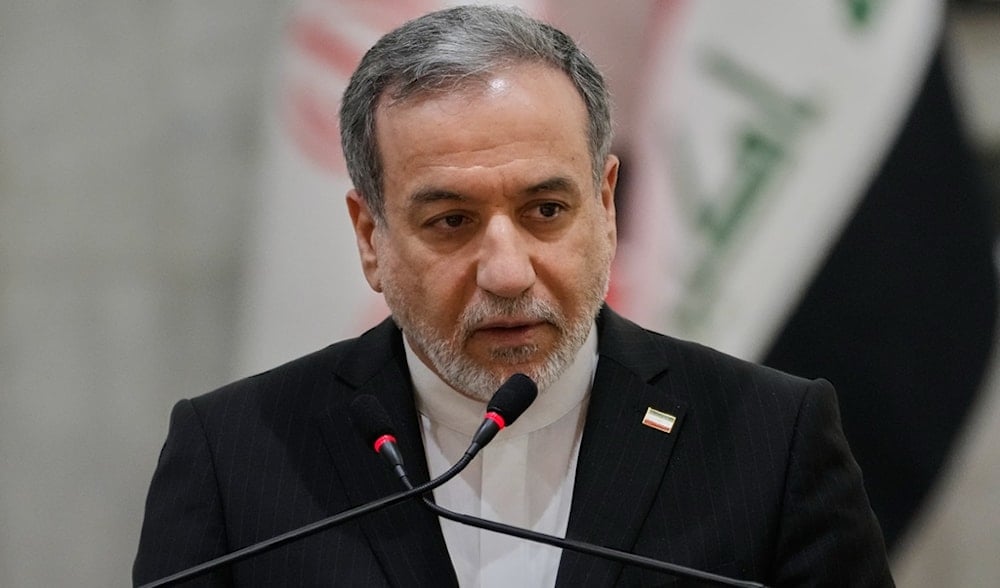
Iranian Foreign Minister Abbas Araghchi speaks during a news conference with his Iraqi counterpart Fouad Hussein after their meeting at the foreign ministry in Baghdad, Iraq, Sunday, June 28, 2026. (AP Photo/Hadi Mizban)
Iranian Foreign Minister Abbas Araghchi held separate phone calls with Saudi Foreign Minister Faisal bin Farhan and Pakistan's Army Chief Field Marshal Asim Munir to discuss the latest regional developments, according to the Iranian Foreign Ministry.
During his call with bin Farhan, Araghchi exchanged views with his Saudi counterpart on the latest developments in the region, including escalating tensions and growing insecurity.
Iran and Saudi Arabia stress diplomatic efforts
The two foreign ministers stressed the need to continue cooperation and diplomatic efforts to prevent tensions from expanding and to restore stability across the region, the Iranian Foreign Ministry said.
The call comes as regional tensions continue to escalate, prompting renewed diplomatic contacts between countries seeking to contain the fallout and prevent further destabilization.
Tehran and Pakistan call for regional coordination
In a separate phone call, Araghchi and Munir discussed regional developments, with both sides exchanging views on escalating tensions, increasing insecurity, and their repercussions for the region.
The Iranian Foreign Ministry said the two officials emphasized the need for coordination among regional countries in responding to developments and using their shared capabilities to consolidate peace and security.
US weighs military pullback
The United States is considering reducing its military presence across West Asia following its war on Iran, as Iranian strikes exposed the vulnerability of US forces and military infrastructure throughout the region, CNN reported.
The discussions reflect growing pressure on Washington to reassess a military footprint that has expanded over decades and subjected US forces to increasing risks. The war on Iran demonstrated that the extensive network of American bases across West Asia can be directly targeted despite the Pentagon's efforts to maintain them as pillars of US regional power.
The United States currently has roughly 50,000 troops stationed across the region, alongside major naval and air assets, per CNN.
According to the CNN report, US officials are discussing options that could involve reducing the number of troops and military installations, although no final decision has been made and there is no established timetable for such a move.
Iranian strikes expose vulnerability of US bases
Iran's retaliation to the US hostilities demonstrated the reach of its missile capabilities and the vulnerability of American military infrastructure, with Iranian missiles targeting positions in Bahrain, Qatar, Saudi Arabia, and Kuwait, putting American forces and strategic installations across the region under direct pressure.
The strikes caused significant damage to US military infrastructure. A CIA outpost in Riyadh was also reportedly destroyed, further highlighting the vulnerability of American intelligence and military networks.
The attacks challenged the assumption that Washington can maintain a sprawling military presence in West Asia without exposing its forces to substantial retaliation.
US officials are also examining the possibility of underground facilities and other hardened infrastructure, while some installations damaged during the war may not be rebuilt.


