
Iran moves to formalize control over Strait of Hormuz
 4 Min Read
Iran’s parliament reviews draft laws to assert sovereignty over the Strait of Hormuz as the US and the Israeli occupation escalate the war on the Islamic Republic.
-
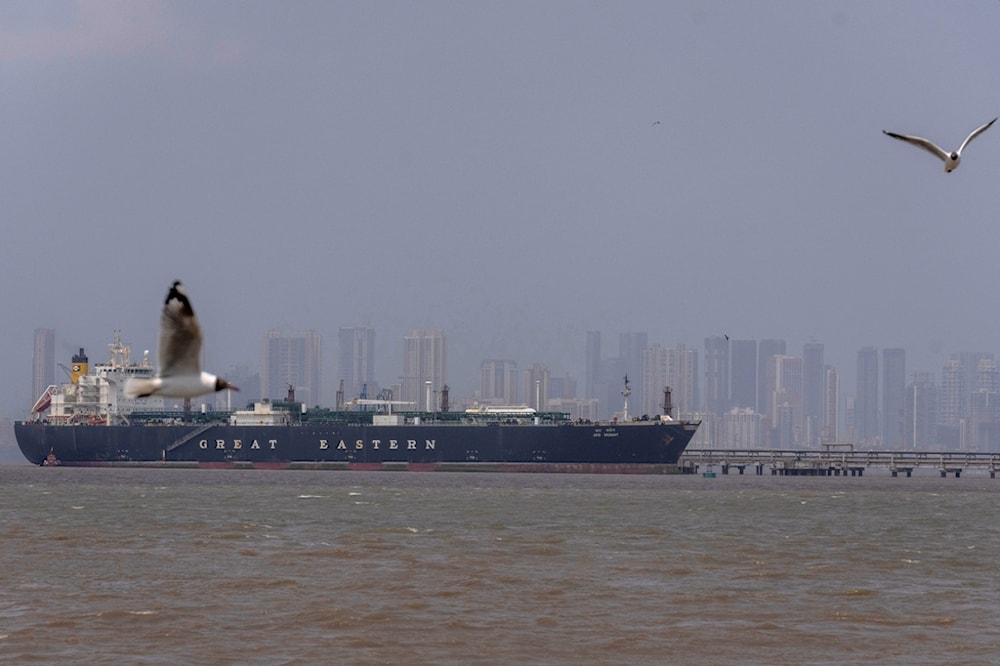
The Indian flagged LPG carrier Jag Vasant, transporting liquefied petroleum gas, is seen at the Mumbai Port in Mumbai, India, after it arrived, clearing the Strait of Hormuz, Wednesday, April 1, 2026 (AP)
Iran’s parliament has begun reviewing draft legislation aimed at asserting sovereignty over the strategic Strait of Hormuz, according to state media reports on Sunday.
The Islamic Consultative Assembly discussed proposed laws covering the legal, environmental, security, and economic dimensions of the waterway, as well as the legal foundations for exercising administrative control.
According to the Islamic Republic News Agency (IRNA), lawmakers agreed to form a joint committee comprising relevant specialized parliamentary bodies to review the proposals and draft a comprehensive legal framework.
Committee formed to fast-track draft law
The committee is tasked with preparing a unified bill on sovereignty over the strait, which will later be presented for debate and voting in a public parliamentary session.
Earlier, Abbas Goudarzi, spokesperson for the parliament’s presiding board, said the Strait of Hormuz had become a strategic advantage for Iran under current security conditions.
He stressed that the waterway would not return to its previous status.
US escalation to lead to defeat
An informed Iranian source warned that threats by US President Donald Trump to target Iranian infrastructure are aimed at diverting attention from what was described as a “historic day,” cautioning that further escalation would intensify US losses.
Speaking to Tasnim News Agency, the source said that any move by Washington to act on threats against power stations and bridges in Iran would not shift the trajectory of the war but instead deepen the ongoing defeat the US is experiencing.
The source warned that escalation would not only affect US interests across the region but could also have repercussions extending into US territory. However, Tasnim clarified that this does not imply missile strikes on the United States, noting that such claims had already been raised by Trump prior to the war and continue to be repeated.
Trump threatens Iran power plants, again
US President Donald Trump escalated his threats against Iran on Sunday, warning in separate statements to Fox News and the Wall Street Journal that Tehran has until Tuesday evening to reopen the Strait of Hormuz or have its energy infrastructure bombed, even as Iran flatly denies any negotiations are underway.
Speaking to Fox News on Sunday evening, Trump claimed a deal with Iran was possible "by Monday" and asserted that negotiations were already underway, statements Iran has consistently and categorically rejected.
Earlier in the day, he had posted on Truth Social: "Tuesday will be Power Plant Day, and Bridge Day, all wrapped up in one, in Iran. There will be nothing like it!!! Open the F**kin' Strait, you crazy b**tards, or you'll be living in Hell - JUST WATCH! Praise be to Allah. President DONALD J. TRUMP."
In a separate interview with the Wall Street Journal, Trump outlined the consequences should the negotiations, only he claims exist, fail. "If they don't come through, if they want to keep it closed, they're going to lose every power plant and every other plant they have in the whole country," he said.
Asked about the humanitarian cost to Iran's 93 million people, Trump dismissed the concern, saying "no, they want us to do it," claiming Iranians are "living in hell." Trump also made clear the scale of destruction he envisions. "That country will take 20 years to rebuild, if they're lucky, if they have a country," he said.


