
Iran’s Security Chief meets Oman’s Sultan amid renewed talks with US
 3 Min Read
Iran’s top security official, Ali Larijani, met Sultan Haitham in Muscat to discuss US-Iran negotiations, days after indirect talks resumed in Oman.
-
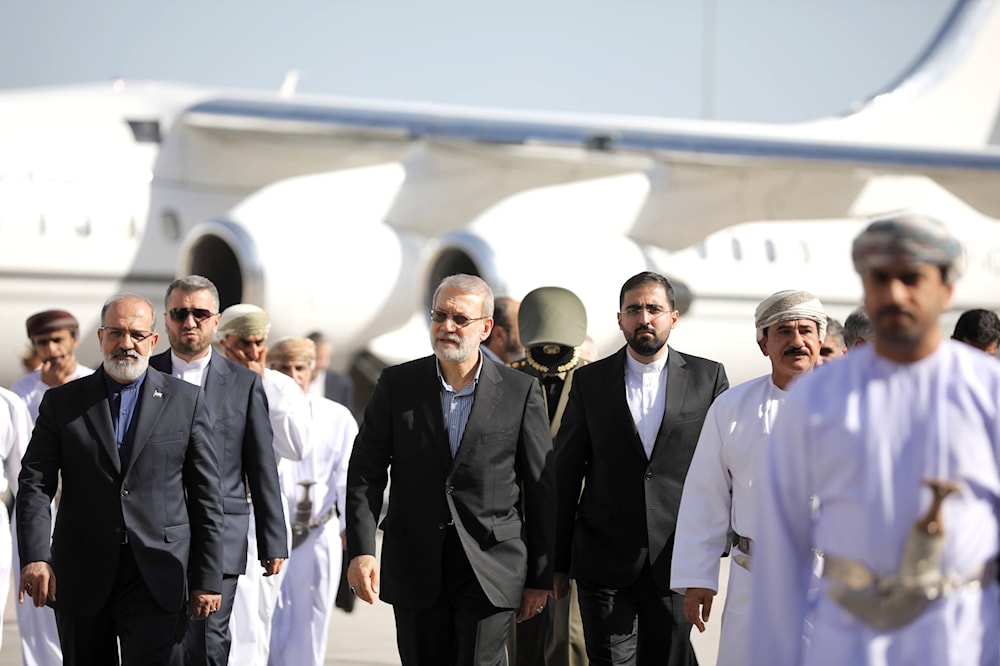
In this photo released by Iran's Supreme National Security Council office, Secretary of the Supreme National Security Council Ali Larijani, center, arrives in Muscat, Oman, on February 10, 2026. (Erfan Kouchari/Iran's Supreme National Security Council Office via AP)
Iran’s top security official, Ali Larijani, met with Oman’s Sultan Haitham bin Tariq in Muscat on Tuesday, just days after indirect talks resumed between Tehran and Washington in Oman.
According to the official Oman News Agency, the meeting focused on "the latest developments in the Iranian-American negotiations." Larijani currently heads Iran’s Supreme National Security Council, a key body shaping the country’s strategic foreign policy direction.
The two sides discussed "ways to reach a balanced and just agreement" and underlined the importance of returning to the path of dialogue and negotiation.
Larijani is also scheduled to meet Omani Foreign Minister Badr Albusaidi, who played a mediating role in Friday’s indirect talks between US and Iranian officials. His regional diplomatic tour comes shortly after Iran and the United States resumed indirect communication in Oman, marking the first such contact since the 12-day war on Iran in June, which briefly involved US military participation.
Following his meetings in Oman, Larijani is expected to travel to Qatar, according to Iranian Foreign Ministry spokesperson Esmail Baghaei. Oman has long served as a trusted intermediary between Iran and the West, facilitating critical backchannel discussions during periods of heightened regional tension.
Military buildup overshadows diplomacy
The renewed nuclear negotiations come against the backdrop of a continued US military buildup in the region, sparking concern in Tehran and among regional observers about the potential for renewed escalation.
Tensions remain elevated following the 12-day war on Iran last year, launched jointly by the United States and the Israeli occupation, even as indirect diplomatic efforts between Tehran and Washington were underway.
The aggression prompted a swift and decisive Iranian military response, which reportedly compelled the Israeli occupation to request a ceasefire through Washington. Iranian officials have repeatedly warned against the use of diplomacy as a cover for military action, stressing that any future miscalculation by adversaries will be met with even greater retaliation.
Tehran maintains that any genuine diplomatic engagement must be accompanied by credible security guarantees and a halt to all hostile activities, particularly amid a volatile regional environment and continued Western military presence.
1st round of nuclear talks
On Friday, Iran’s Foreign Ministry announced that the first round of indirect nuclear talks had officially begun in the Omani capital, Muscat.
Also, Omani Foreign Minister Badr Al-Busaidi said that the talks were serious and helped clarify positions on both sides.
Describing the discussions as serious and constructive, Omani Foreign Minister Badr Al-Busaidi published a post earlier today on X saying the Muscat talks clarified Iranian and US positions and outlined possible paths toward progress.


