
Iran’s Larijani heads to Muscat as nuclear talks with US resume
 3 Min Read
As Iran and the US resume indirect nuclear talks in Muscat, Tehran warns against using diplomacy as cover for aggression.
-
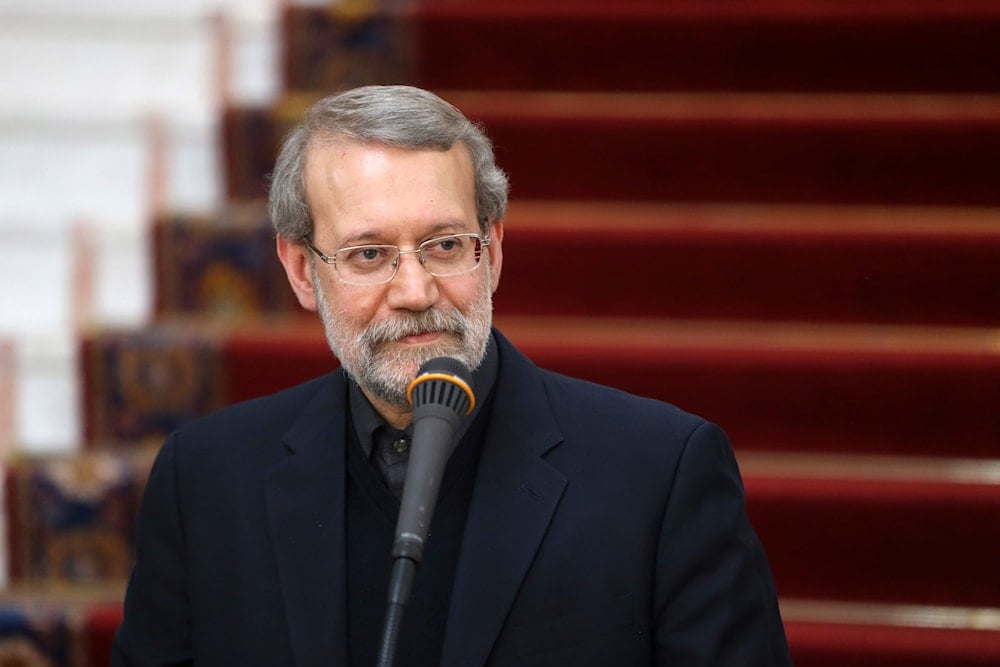
Iranian parliament speaker Ali Larijani speaks to the media during a joint press briefing with French Senate President Gerard Larcher, after their meeting in Tehran, Iran. (AP)
The Secretary of Iran’s Supreme National Security Council (SNSC), Ali Larijani, is set to visit Muscat, Oman, as preparations advance for a second round of indirect nuclear negotiations between Tehran and Washington. The upcoming talks follow an initial round held recently in the Omani capital.
According to Fars News Agency, Larijani will lead a high-level delegation to Muscat on Tuesday, where he is expected to meet with senior Omani officials to discuss regional and international developments, as well as ways to enhance bilateral cooperation.
The first round of indirect talks between Iran and the United States took place on Friday in Muscat, marking the renewal of nuclear negotiations that had previously stalled amid escalating regional tensions.
Iranian Foreign Minister Abbas Araghchi, who led Tehran's negotiating team, described the discussions as a "good start," indicating that both sides expressed willingness to continue dialogue.
Military buildup overshadows diplomacy
The renewed nuclear negotiations come against the backdrop of a continued US military buildup in the region, sparking concern in Tehran and among regional observers about the potential for renewed escalation.
Tensions remain elevated following the 12-day war on Iran last year, launched jointly by the United States and the Israeli occupation, even as indirect diplomatic efforts between Tehran and Washington were underway.
Despite the parallel negotiations, the aggression prompted a swift and decisive Iranian military response, which reportedly compelled the Israeli occupation to request a ceasefire through Washington. Iranian officials have repeatedly warned against the use of diplomacy as a cover for military action, stressing that any future miscalculation by adversaries will be met with even greater retaliation.
Tehran maintains that any genuine diplomatic engagement must be accompanied by credible security guarantees and a halt to all hostile activities, particularly amid a volatile regional environment and continued Western military presence.
1st round of nuclear talks
Earlier this week, Iran’s Foreign Ministry announced that the first round of indirect nuclear talks had officially begun in the Omani capital, Muscat.
In a statement, the ministry said Foreign Minister Abbas Araghchi stressed during the opening meeting that Iran is committed to pursuing diplomacy as a means of safeguarding its national interests. He also underscored Tehran’s full readiness to defend its sovereignty against any form of aggression or external pressure.
According to the statement, Araghchi presented Iran’s positions, proposals, demands, and concerns to Omani Foreign Minister Badr al-Busaidi within the framework of the negotiations.


