
Iran sets seven conditions for starting negotiations with US
 4 Min Read
Iranian official Mohsen Rezaei says Tehran has informed Washington of seven conditions for starting negotiations and demands recognition of Iran’s rights.
-
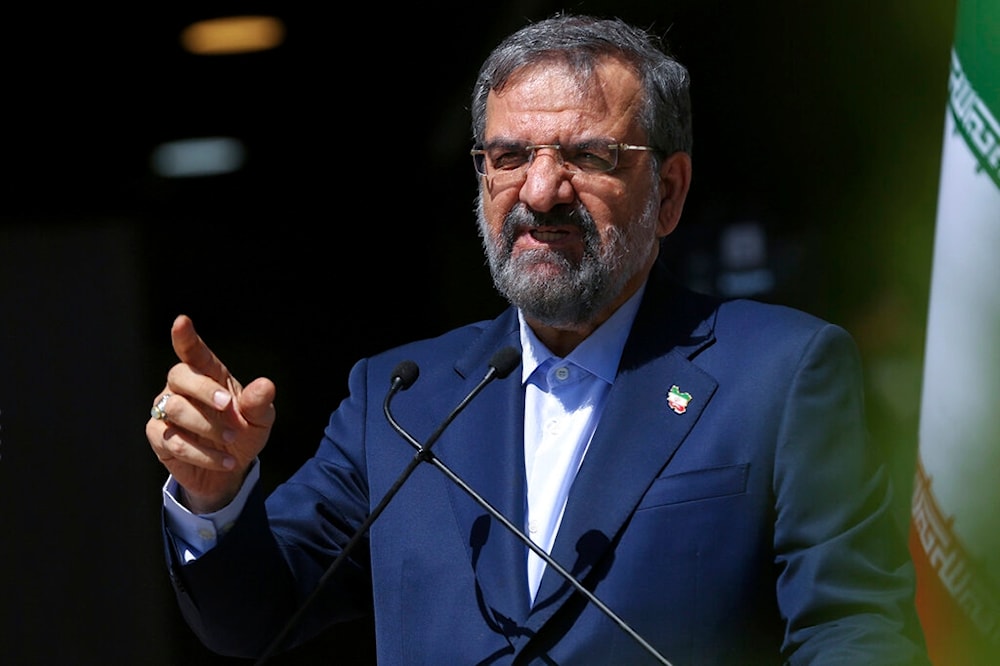
Then-presidential candidate Mohsen Rezaei speaks with state-run TV journalists upon arrival to attend the final debate of the candidates, at a state-run TV studio in Tehran, Iran, Saturday, June 12, 2021 (AP)
Iranian Supreme National Security Council Secretary Major General Mohsen Rezaei said Tehran has informed the US government of seven conditions for starting any negotiations.
In a post on X, Rezaei said Iran had formally communicated its conditions to Washington, adding that Tehran's position was clear regarding any potential negotiations.
"If Washington wants to get out of the quagmire it created for itself and avoid becoming further entangled in it, it has no choice but to accept Iran's rights," Rezaei said.
The Iranian official did not disclose the seven conditions in his post. However, Iranian officials have previously outlined demands related to ending military action against Iran, lifting restrictions and addressing the consequences of the ongoing conflict.
Iran has previously outlined conditions for talks
Earlier in August, former Iranian Supreme National Security Council Secretary Mohammad Bagher Zolghadr outlined a set of conditions linked to the reopening of the Strait of Hormuz.
Among the conditions he cited were an end to US threats against Iran, the permanent termination of the war against Iran as well as wars in Lebanon, Palestine, Yemen, and Iraq, the lifting of the maritime blockade on Iran, the withdrawal of US military forces from the region, compensation for war-related damages, and the lifting of sanctions.
Iranian strikes leave US bases ‘irreparably’ damaged
Iranian strikes have caused extensive damage to US military installations across West Asia, with a senior US service member saying the damage at bases in Kuwait and Saudi Arabia is “irreparable,” according to a report by ABC News.
Photos and videos obtained by the US outlet show damaged buildings and military equipment at three US bases in Kuwait and a Saudi base hosting US assets, some of which were reportedly evacuated amid the strikes.
“These bases have been irreparably damaged. And if we choose to rebuild them, it's going to be a decades-long undertaking,” the senior US service member told ABC News on condition of anonymity.
The service member also accused the Pentagon of failing to provide sufficient transparency over the extent of the damage, saying, “There are drone strikes and ballistic missile strikes actively landing on bases every day.”
A Pentagon inspector general report released Monday said “hundreds of buildings and structures” had been damaged at US bases across the region. ABC News also reported that the Pentagon has not publicly provided a full assessment of the damage to US installations in Kuwait, Bahrain, Qatar, the UAE, Saudi Arabia, Iraq, Oman, and Jordan.
US casualty figures face new scrutiny
The scale of the damage comes as questions have also emerged over the Pentagon’s public accounting of US military deaths during the war.
An exclusive report by The Washington Post, citing six US officials familiar with the War Department’s internal casualty records, said more US service members have died in West Asia since the war began than the Pentagon has publicly disclosed.
Five officials told the newspaper that at least 22 US military personnel had died since February 28, four more than the 18 fatalities listed in the Pentagon’s public Defense Casualty Analysis System (DCAS). A sixth official put the number at 23.
The officials said not all of the additional deaths were directly caused by the war, but involved US personnel deployed in West Asia amid ongoing hostilities. One official also said three US contractors based in the region had died since combat operations began.
According to DCAS data cited by The Post, 14 fatalities are currently listed under Operation Epic Fury, the Trump administration’s designation for the Iran war. Four additional deaths are recorded under a separate “Overseas Operations” category, following a July ceasefire between Washington and Tehran that subsequently collapsed.


