
Iran strategy of 'moody' Trump: Yelling, posts, and mixed signals
 4 Min Read
Trump has opposed a ground operation on Iran’s Kharg Island out of fear of losses, as advisors are concerned over his condition amid erratic statements and unplanned threats against Iran.
-
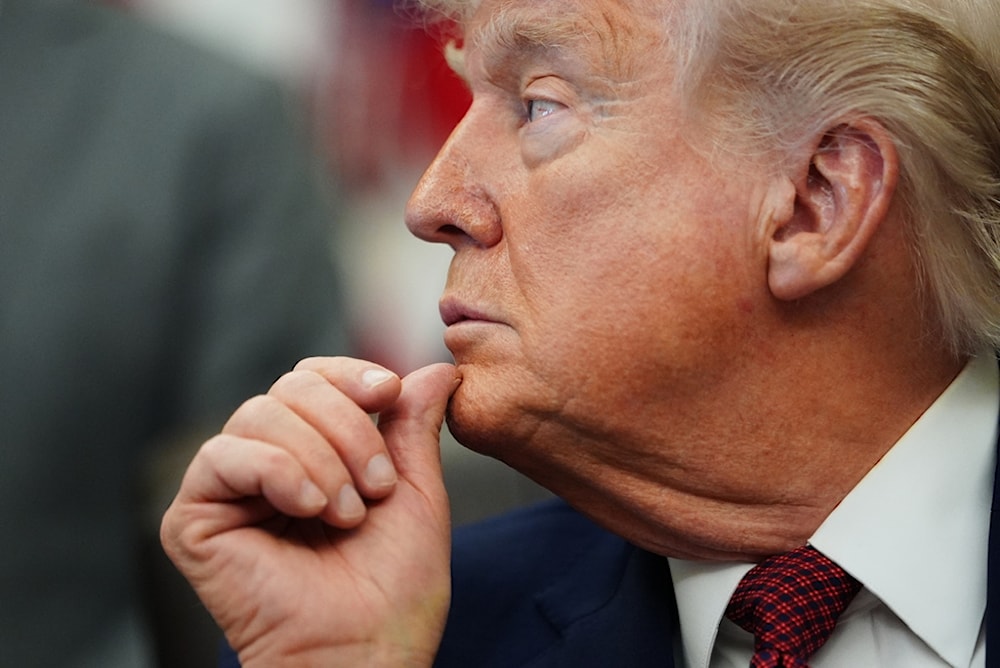
US President Donald Trump listens to speeches before signing an executive order in the Oval Office of the White House, Saturday, April 18, 2026, in Washington (AP)
US President Donald Trump shouted at aides for hours, demanding an immediate rescue mission after learning that Iran had shot down a US fighter jet over its territory earlier this month, The Wall Street Journal reported, citing informed sources.
The report said Trump feared a repeat of the Iran hostage crisis and demanded an immediate search-and-rescue operation for the crew of the downed F-15E aircraft, which was brought down in early April.
According to the sources, Trump’s aides received real-time updates on the rescue mission but limited the information shared with the president, providing only key points and avoiding detailed discussions out of concern that his reaction could disrupt the operation.
According to the newspaper, Trump has been reluctant to authorize ground operations, including a proposed mission on Kharg Island, due to fears of high US casualties, even as he continued to make forceful public statements on the war.
Advisors urge reduced media appearances
Separately, the report said Trump’s advisors had urged him to reduce media interviews, warning that such appearances tend to highlight inconsistencies in his statements. Sources indicated that while Trump initially agreed, he later returned to his usual approach.
According to the report, Trump would at times joke with White House Press Secretary Karoline Leavitt, saying he had shared important information with a journalist before it was officially communicated, leaving her to learn of it through published reports.
The report added that Trump frequently improvises posts on his Truth Social account. A US official cited by the newspaper said a post published on April 7, 2026, in which Trump threatened to “destroy Iranian civilization,” was not part of a coordinated national security strategy.
Trump's health condition questioned
Following a series of what the report described as contradictory statements on Iran and other issues, some psychologists have raised concerns about Trump’s condition. John Gartner, a former professor at Johns Hopkins University, said Trump has shown signs of frontotemporal dementia since 2019.
Medical analyst Vin Gupta wrote that Trump is “moody", “unable to complete sentences,” and “often confused", according to the report.
Despite early expectations that the war would be short, the war has extended beyond US initial timelines, with a ceasefire remaining uncertain and key regional trade routes disrupted.
The report also highlighted divisions with US allies, with European countries declining to join Trump, adding to tensions within the Western alliance.
Majority of Americans say Iran war not in US national interest
Support for military action in Iran remains weak, with just 38 percent of Americans backing the war, a new Politico poll published Yesterday has shown, with views remaining largely unchanged from the days following the joint US-Israeli aggression, even as the administration has now had weeks to make its case to the public.
A majority of respondents said the war is not in the interests of the American people, and a plurality remain unconvinced that the president has clear objectives. This skepticism includes a notable portion of his own 2024 supporters.
Nearly half of all respondents said the president has spent too much time focusing on international affairs rather than domestic issues, according to the survey conducted by Public First. This view was shared by 29 percent of his own 2024 voters.
Read more: Trump Iran war poll shows low public support and doubts over strategy


