
Billions up in smoke: Iran battered US military bases across Gulf
 5 Min Read
AP documented damage at 26 sites housing US military equipment.
-

This satellite image taken over Al Dhafra Air Base in the United Arab Emirates on March 11, 2026, shows three significantly damaged hangars, struck by Iran only days prior (© Airbus DS 2026 via AP)

Iranian strikes have inflicted billions of dollars in damage on US military equipment and prompted changes to Washington's deployments in the Middle East, according to an Associated Press investigation documenting extensive losses across the region.
Two regional officials told AP that the United States had relocated many of its military assets away from the Gulf. One said the transfers included aircraft, air defense equipment, and communications systems essential to maintaining base operations.
Using satellite images from several providers and interviews with four regional officials, AP verified damage associated with more than 115 missile and drone strikes claimed by Iran or regional Resistance groups through August. The attacks damaged or destroyed structures at 26 military bases and other locations containing US equipment.
The findings indicate that Iran concentrated its early attacks on radar installations and aircraft hangars before expanding its campaign against the infrastructure needed to sustain American deployments.
US Central Command declined to comment for the investigation. Pentagon spokesman Sean Parnell maintained that American "forces and bases are well protected and America's military is stronger than ever."
"Our service members in CENTCOM have everything they need to continue their historic success ensuring Iran never obtains a nuclear weapon," Parnell told AP.
Early-warning radars among first targets
The investigation identified early-warning equipment among the first targets struck after the US and "Israel" launched the war in late February. Within its opening two days, Iranian retaliatory attacks destroyed protective enclosures around US radar systems at Kuwait's Camp Arifjan and Naval Support Activity Bahrain.
-
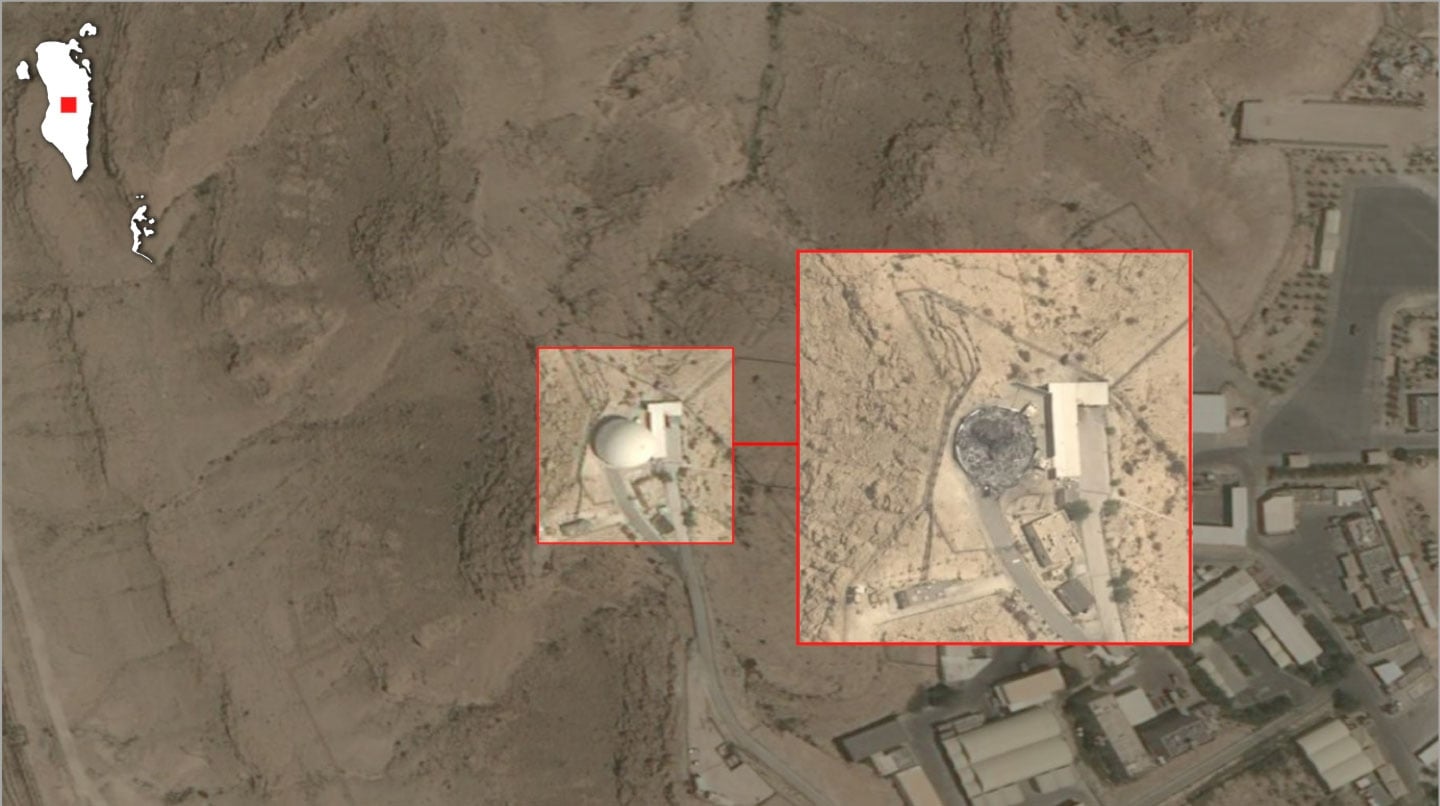
The US radar site on Bahrain’s highest point was destroyed by an Iranian ballistic missile on June 11 (AP)
Mobile radar equipment at Saudi Arabia's Prince Sultan Air Base and Jordan's Muwaffaq Salti Air Base was also hit.
-

This satellite image taken over Muwaffaq Salti Air Base in Jordan on July 20, 2026, shows a series of housing structures destroyed in a strike on the base that month (© Airbus DS 2026 via AP)
N.R. Jenzen-Jones, director of Armament Research Services, said Iran had prioritized critical radar installations whose replacement or repair would be costly and difficult. Such attacks were likely "intended to disrupt and degrade the U.S. and allies' ability to respond to further strikes," he said.
A radar reportedly destroyed in Jordan belonged to a system of which the US Army possesses only 13 worldwide, according to manufacturer Raytheon. Budget records put the cost of each at approximately $500 million.
Another radar in Qatar sustained substantial damage, although its destruction has not been confirmed. Qatar acquired it under a 2013 agreement worth $1.1 billion, and AP reported that it appeared to be the region's only installation of its kind.
Surveillance aircraft, refueling tankers damaged
During the war's first month, Iran carried out more than 50 successful attacks against 18 locations containing American military equipment, with sites housing aircraft featuring prominently among the targets.
At Prince Sultan Air Base, a March strike damaged the rear portion of a Boeing E-3 Sentry surveillance aircraft. A regional military official who subsequently visited the installation said the same attack also damaged several other aircraft, including two refueling tankers.
-

This satellite image provided by Airbus shows a destroyed facility at Prince Sultan Air Base in Saudi Arabia on May 1, 2026 (Airbus DS 2026 via AP)
The official described wrecked accommodation and dining facilities, damaged equipment, and debris scattered around the base. AP also cited an October update from the Congressional Research Service reporting damage to 15 US aircraft at regional installations.
In the United Arab Emirates, another regional military official reported damage at Al Dhafra Air Base to hangars, surveillance drones, and an early-warning radar system.
-

This satellite image taken over Al Dhafra Air Base in the United Arab Emirates on March 11, 2026, shows three significantly damaged hangars, struck by Iran only days prior (© Airbus DS 2026 via AP)
Kuwait bases sustain extensive destruction
Kuwait accounted for the largest concentration of attacks identified in AP's review. At Ali Al Salem Air Base, at least 30 strikes damaged or destroyed a minimum of 15 aircraft hangars, numerous storage facilities, and 10 buildings.
Camp Buehring also sustained extensive destruction. Most of its hangars were rendered unusable, while attacks hit facilities supporting troops stationed there. Its gym was destroyed in March, and a military retail outlet was struck in late July. Regional officials also described severe damage to a garage and dining facility.
The deadliest known attack on American personnel during the war occurred at Kuwait's Port Shuaiba, where a March 1 drone strike killed six soldiers.
Commercial satellite imagery restricted
AP said efforts to establish the full extent of the destruction were hindered by restrictions on commercial satellite imagery. Major providers holding US contracts delayed or blocked public access at American officials' request, sometimes on national security grounds.
For Camp Buehring, high-resolution imagery from reliable providers remained unavailable for months. When images became accessible again in late August, AP identified more than 30 damaged or destroyed structures since imagery had been halted in early March.
Raphael Cohen, director of the RAND School of Public Policy's National Security Program, said modern warfare leaves armed forces "susceptible to large-scale, cheap drone attacks."
"This should be a wake-up call for the United States," he said.
The investigation comes as President Donald Trump considers further strikes after Tuesday's midterm elections, according to AP, while Tehran has pledged major retaliation.
Renewed fighting could deepen the losses and complicate decisions about whether Washington will rebuild damaged installations and replace equipment across the region.
Read more: Iranian strikes damage US missile defense radars in Jordan, UAE


