
Iran war pushes inflation in South Korea to 30-month high
 2 Min Read
South Korea's consumer inflation rose to a 30-month high of 3.2% in June, driven by a surge in oil prices following the US-Israeli war on Iran.
-
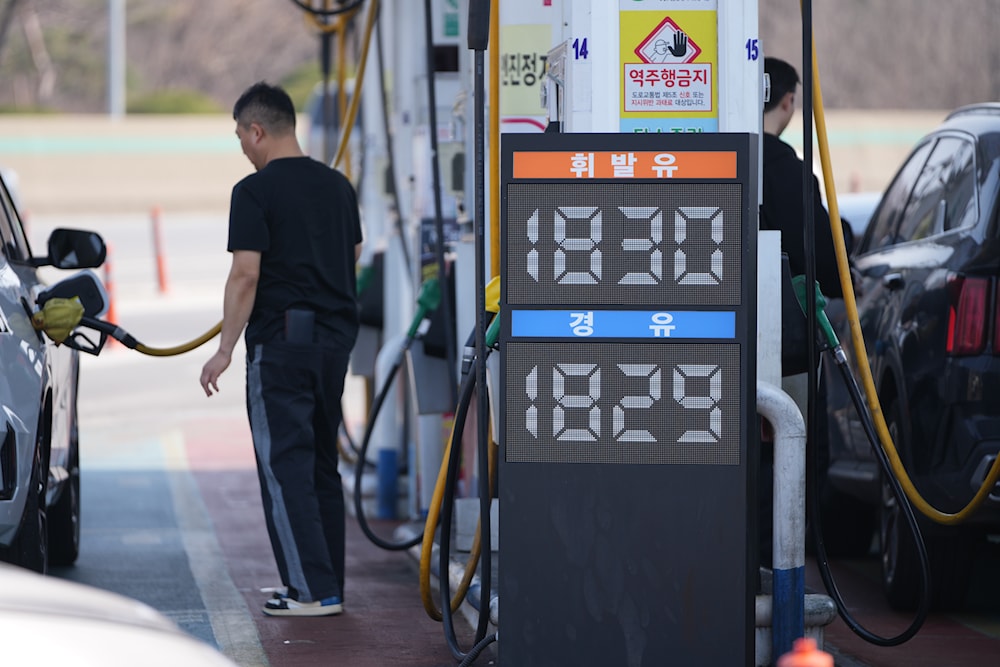
A man fuels up cars near signs of gas prices at a gas station in Seoul, South Korea, on March 10, 2026 (AP)
South Korea’s inflation climbed to its highest level in two and a half years in June, adding pressure on the Bank of Korea to tighten monetary policy as strong export growth and rising costs keep price pressures elevated due to the US-Israeli war on Iran, the Wall Street Journal reported.
Official data released on Thursday showed that the consumer price index rose 3.2% year-on-year in June, up from 3.1% in May and above the central bank’s 2% target for the second consecutive month. The reading marked the fastest annual increase since December 2023 and matched the median estimate in a WSJ survey of seven economists.
On a monthly basis, consumer prices increased 0.1% in June after rising 0.5% in May.
Core inflation, which strips out volatile food and energy prices, stood at 2.5% year-on-year and remained flat from the previous month, suggesting that underlying price pressures remain persistent.
Energy costs and currency pressures
Fuel prices were among the strongest contributors to the increase. Petroleum products posted sharp annual gains, with gasoline prices rising 23% and diesel prices jumping 34% in June, according to ministry figures.
The data point to continued inflationary pressure from earlier increases in raw material costs, as well as the impact of a weaker won. Although the US-Iran ceasefire has helped ease energy-related concerns, cost pressures are still filtering through South Korea’s economy.
The latest figures are expected to strengthen the case for a rate increase at the Bank of Korea’s next policy meeting on July 16.
Read more: DPRK condemns US approval of missile sale to South Korea


