
Iran will rise from sanctioned state to global player: Mokhber
 2 Min Read
Iran signals plans to leverage the Strait of Hormuz against the West following a joint US-Israeli aggression, as regional tensions escalate.
-
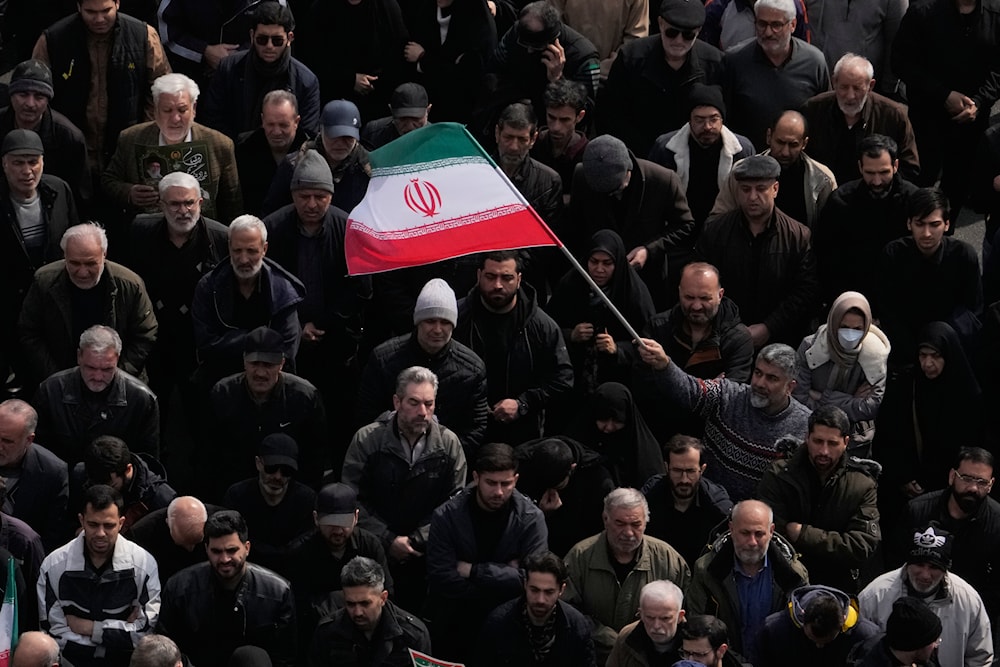
A man waves an Iranian flag as a crowd attends the funeral procession for senior Iranian military officials and civilians killed during the US-Israeli war on Iran in Tehran, Iran, Wednesday, March 11, 2026 (AP)
Iran intends to leverage the strategic Strait of Hormuz to assert its power regionally and globally following recent attacks, Mohammad Mokhber, advisor and aide to Iran's leader, asserted.
In a statement on Thursday, Mokhber stated that “the West and the system of hegemony were imposing sanctions on Iran until today, but after the end of the aggression and the establishment of a new system for the Strait of Hormuz, Iran will rise from a sanctioned state to a powerful state in the region and the world.”
He added that “Iran will impose sanctions on the West using the strategic location of the Strait of Hormuz and will not allow their ships to pass through the strait,” affirming that the establishment of a new system for the waterway is “one of the outcomes of the aggression against Iran.”
Araghchi speaks with Egypt, Turkey, FMs
Meanwhile, Iranian Foreign Minister Abbas Araghchi held a series of phone calls with his counterparts in Egypt, Turkey, and Pakistan on Thursday to discuss the rapidly escalating situation in the region.
During the calls, Araghchi said that “the US-Israeli aggression on infrastructure in Iran is an escalation of tensions and a destabilization of the region,” stressing that the situation poses a broader threat beyond Iran’s borders.
He also urged “vigilance and coordination among the countries of the region in confronting these threats.”
Araghchi further stated that the “terrorist US-Israeli aggression will be met with serious consequences,” adding that “Iran will spare no effort in defending national sovereignty.”
On the other hand, Saudi Foreign Minister Faisal bin Farhan convened a meeting in Riyadh with the foreign ministers of Egypt, Turkey, and Pakistan on the sidelines of a consultative gathering of Arab and Islamic states. The ministers discussed military tensions in the region and explored ways to enhance joint coordination to ensure regional security and stability.
The officials emphasized the importance of continued consultations and unified efforts to address growing security challenges, stressing the need for collective action to prevent the region from sliding further into escalation.


