
Iranian people’s call: We are not afraid of war - IRGC commander
 4 Min Read
Iranian advisor Yahya Safavi says Iran will fully control the Strait of Hormuz, warning that any new US war could expand toward the Red Sea.
-
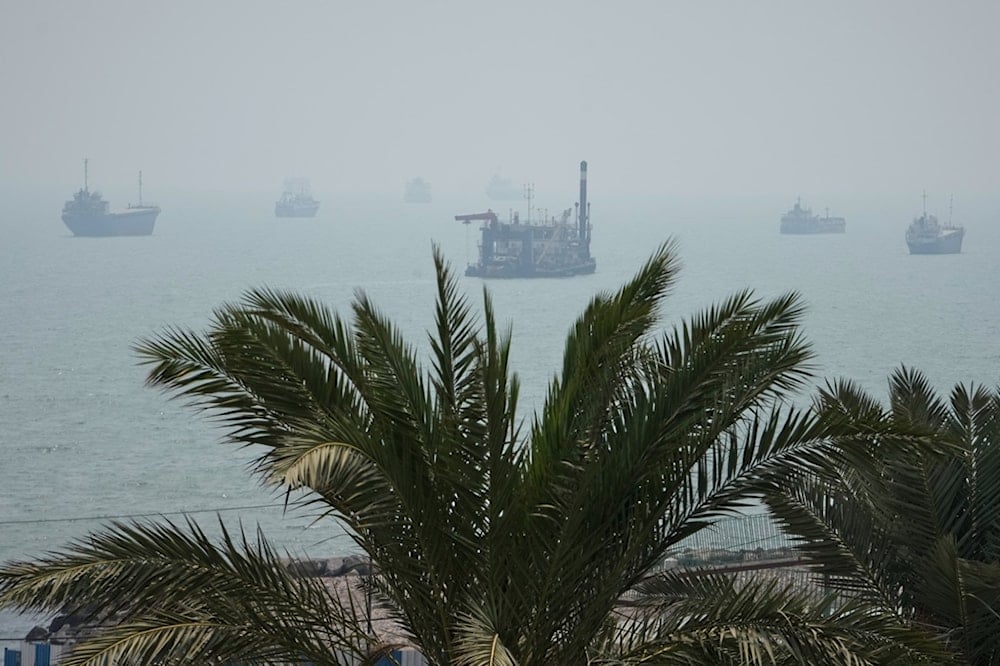
A floating dredging platform and commercial vessels lie anchored amid haze in the Strait of Hormuz off Bandar Abbas, Iran, Monday, September 7, 2026 (AP)
Iran is not afraid of war, asserted Major General Ahmad Vahidi, Commander-in-Chief of the Islamic Revolution Guard Corps, noting that this represents “the clear and steadfast call of the Iranian people.”
In a post on X, Vahidi added that “this call was voiced by President Masoud Pezeshkian from the podium of the United Nations and reached the ears of the entire world.”
«از جنگ نمیترسیم»؛ ندای بلند و استوار ملت ایران است؛ ندایی که از تریبون سازمان ملل متحد، به زبان رئیسجمهور محترم طنینانداز شد و به گوش جهانیان رسید.
— فرمانده کل سپاه پاسداران انقلاب اسلامی (@IRGC_HQ) September 24, 2026
Defense doctrine has changed
On his part, Acting Iranian Defense Minister Majid Ibn al-Reza separately warned against addressing the Iranian people through "the language of force and threats."
"From the podium of the United Nations, Iran's message was clear: Iran's defense doctrine has changed," he said.
Ibn al-Reza added that the development of defensive capabilities in line with the new doctrine was continuing at an accelerated pace, stressing that Iran possesses "a range of initiatives and capabilities."
Meanwhile, Iran's Judiciary Chief Gholam-Hossein Mohseni Ejei said Iranian President Masoud Pezeshkian's address to the United Nations was substantive and contained points reflecting dignity.
Ejei also said that the United States and the Israeli entity had committed numerous war crimes during their aggression against Iran.
Strait of Hormuz will never return to its past status: Safavi
On the issue of the Strait of Hormuz, senior Iranian military advisor Major General Yahya Safavi said that the Islamic Republic will fully manage and control the Strait of Hormuz, stressing that the strategic waterway will not return to its previous status.
Safavi said Iran and Oman reached a mechanism for managing the Strait of Hormuz, noting, however, that the United States created obstacles to its implementation.
"We have reached a mechanism with Oman to manage the Strait of Hormuz, but the Americans have created obstacles in this regard," Safavi said.
He stressed that "the Strait of Hormuz will never return to what it was before."
Safavi warns of wider regional escalation
Safavi had previously warned the United States and "Israel" against attacking Iran, saying that any such assault would expand the theater of war.
"If the Americans and Zionists attack us, the war front will expand. If the Americans start a new war, a new front could open before their eyes centered around the Red Sea and Bab al-Mandab Strait," he said.
Safavi further warned that linking the Gulf, the Red Sea, the Strait of Hormuz, and the Bab al-Mandab Strait would alter the course of the war.
Hormuz opening conditions different now
Yesterday, Iranian Supreme National Security Council Secretary Mohsen Rezaei said the United States had sought to “destroy Iran” during the ongoing war but instead, in his assessment, had helped turn Iran into the world’s fourth-largest power.
Speaking to Iranian state television, Rezaei also sharply criticized US President Donald Trump’s address to the United Nations General Assembly, calling it one of Trump’s major mistakes and arguing that his focus on Iran demonstrated the country’s growing power.
Rezaei’s remarks came amid renewed tensions between Tehran and Washington, as both sides have continued to signal openness to diplomacy while maintaining sharply divergent positions over the terms for ending the war. Trump warned in his UNGA address that he faced a choice between reaching a deal with Iran and “annihilating” the Islamic Republic.
Iran sets new conditions for US negotiations
Rezaei said Iran had not changed its fundamental positions but maintained that the next phase of diplomacy would differ from previous negotiations.
He said Iranian President Masoud Pezeshkian would respond to Trump’s misconceptions, adding that Tehran’s approach to negotiations had entered a new stage.
“If the United States does not implement our conditions, the Strait of Hormuz will never be reopened, and our conditions today are different from before,” Rezaei said.
He added that Iran had communicated its conditions to intermediary countries involved in diplomatic contacts with Tehran and that negotiations with Washington would not take place unless those conditions were implemented.
Rezaei’s comments follow recent Iranian statements setting conditions for renewed negotiations with the United States. Earlier this month, he said Tehran had conveyed seven conditions to Washington, including an end to the war, the release of frozen Iranian assets, and an end to the US naval blockade, according to reporting on his remarks.


