
Rezaei: Hormuz opening conditions different now; no talks without them
 5 Min Read
Iranian Supreme National Security Council Secretary says Tehran will not reopen the Strait of Hormuz or resume US talks until Washington meets its new conditions.
-
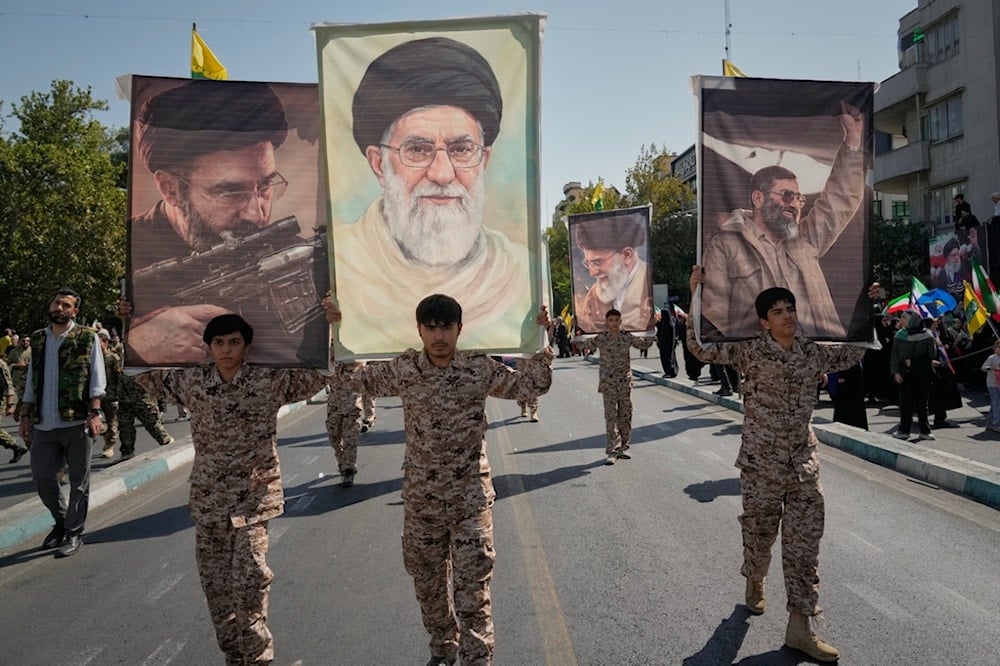
Uniformed participants carry a portrait of Iranian Leader Sayyed Mojtaba Khamenei, left, and three portraits of his late father and predecessor, Sayyed Ali Khamenei, during a parade in Tehran, Iran, Friday, September 18, 2026 (AP)
Iranian Supreme National Security Council Secretary Mohsen Rezaei said the United States had sought to “destroy Iran” during the ongoing war but instead, in his assessment, had helped turn Iran into the world’s fourth-largest power.
Speaking to Iranian state television, Rezaei also sharply criticized US President Donald Trump’s address to the United Nations General Assembly, calling it one of Trump’s major mistakes and arguing that his focus on Iran demonstrated the country’s growing power.
Rezaei’s remarks came amid renewed tensions between Tehran and Washington, as both sides have continued to signal openness to diplomacy while maintaining sharply divergent positions over the terms for ending the war. Trump warned in his UNGA address that he faced a choice between reaching a deal with Iran and “annihilating” the Islamic Republic.
Iran sets new conditions for US negotiations
Rezaei said Iran had not changed its fundamental positions but maintained that the next phase of diplomacy would differ from previous negotiations.
He said Iranian President Masoud Pezeshkian would respond to Trump’s misconceptions, adding that Tehran’s approach to negotiations had entered a new stage.
“If the United States does not implement our conditions, the Strait of Hormuz will never be reopened, and our conditions today are different from before,” Rezaei said.
He added that Iran had communicated its conditions to intermediary countries involved in diplomatic contacts with Tehran and that negotiations with Washington would not take place unless those conditions were implemented.
Rezaei’s comments follow recent Iranian statements setting conditions for renewed negotiations with the United States. Earlier this month, he said Tehran had conveyed seven conditions to Washington, including an end to the war, the release of frozen Iranian assets, and an end to the US naval blockade, according to reporting on his remarks.
The Strait of Hormuz has become a central issue in the confrontation between Tehran and Washington, with Iran maintaining that reopening the strategic waterway is tied to the conditions it has set for ending the war. Recent reporting has also indicated that Washington has sought assurances over navigation through the strait as part of efforts to reach an agreement.
Rezaei warns against US military moves
Rezaei said Tehran did not welcome an expansion of wars in the region and continued to support peaceful solutions, while warning that Iran would respond to any US military demonstrations.
“Iran will never tolerate any US military show of force,” he said, referring to warnings previously issued to countries in the region.
Rezaei further warned neighboring states against cooperating with Washington to restrict Iranian air traffic, saying such cooperation could have consequences for their own airports.
He also asserted that Iran had been the first country to bring down US F-35 aircraft and AWACS aircraft, arguing that developments during the war had changed perceptions of Washington’s military power.
Rezaei said US losses resulting from the policies of the Trump administration had also affected the prominence given to Trump by US media.
His comments reflect Tehran’s broader argument that the war has altered the balance of power in the region. Iranian officials have repeatedly said that military pressure has not compelled Iran to abandon its positions and have continued to link any diplomatic process to guarantees and concrete conditions.
Rezaei responds to Trump’s UN remarks
Trump’s UNGA address on September 22 centered heavily on Iran. The US president said he faced a “big decision” over whether to reach a deal with Tehran or “annihilate” the Islamic Republic, while also indicating that diplomacy remained possible.
Rezaei said Trump’s remarks were a major error and said the US president had appeared as a “failed criminal,” adding that Pezeshkian would respond to "Trump’s illusions".
The Iranian official’s remarks came as diplomatic contacts between the two countries resumed on the sidelines of the UN General Assembly. US and Iranian officials held an indirect meeting on Tuesday, with Trump later describing the discussions as positive and indicating that another meeting could follow.
At the same time, Tehran has continued to insist that diplomacy cannot proceed under threats or pressure. President Pezeshkian said in his UN address on Wednesday that Iran remained open to dialogue but would not accept negotiations conducted through force or intimidation.
Rezaei likewise emphasized that Iran’s position had changed in response to developments during the war, particularly regarding the conditions attached to any future negotiations and the reopening of the Strait of Hormuz.
He said the United States was responsible for the global closure of strategic waterways through its policies, while stressing that Iran did not seek an expansion of regional wars and supported peaceful solutions.


